

Culture & Community | Arts & Culture | Youth Arts Journalism Initiative | Lunar New Year | Yale University
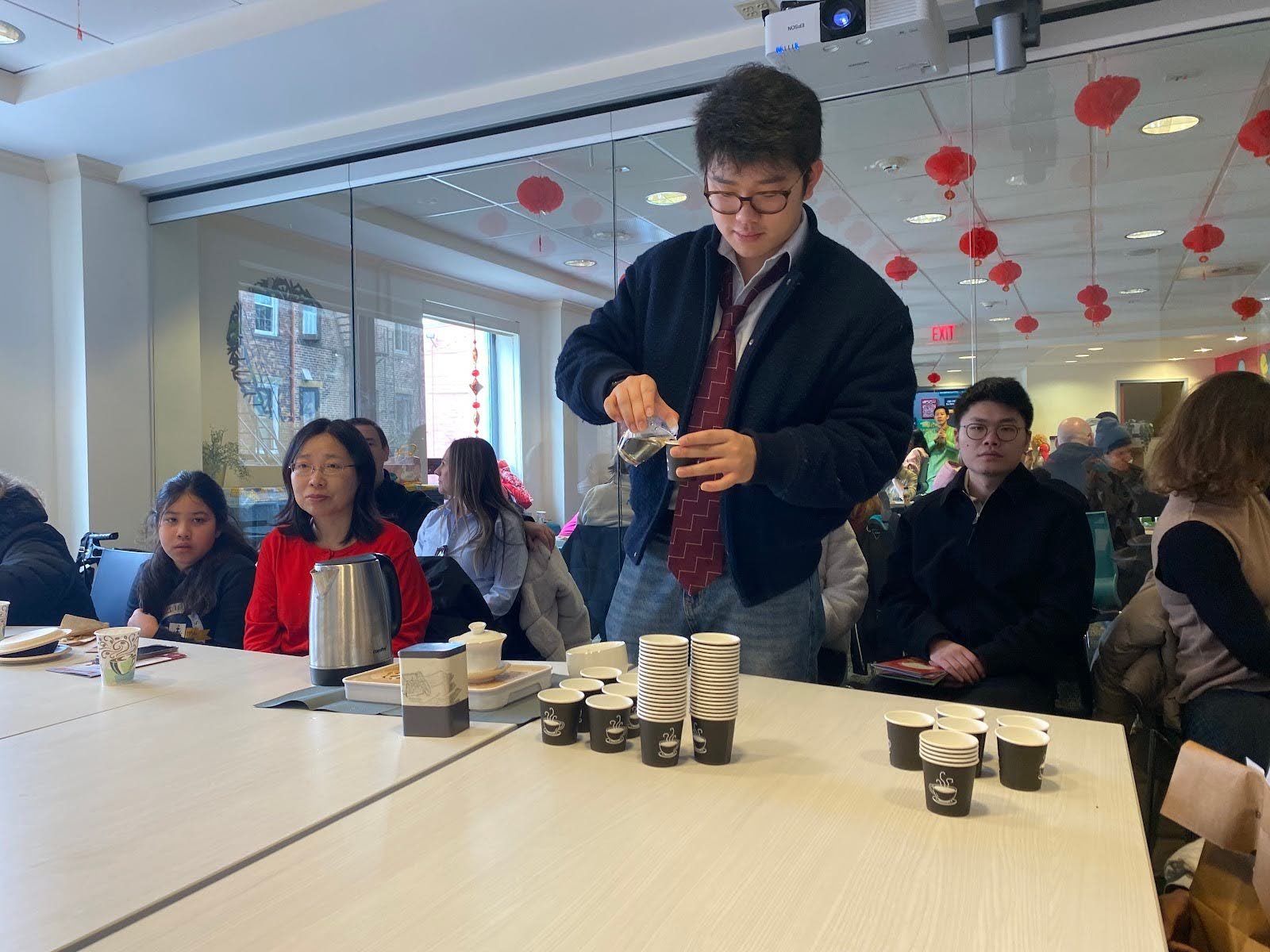
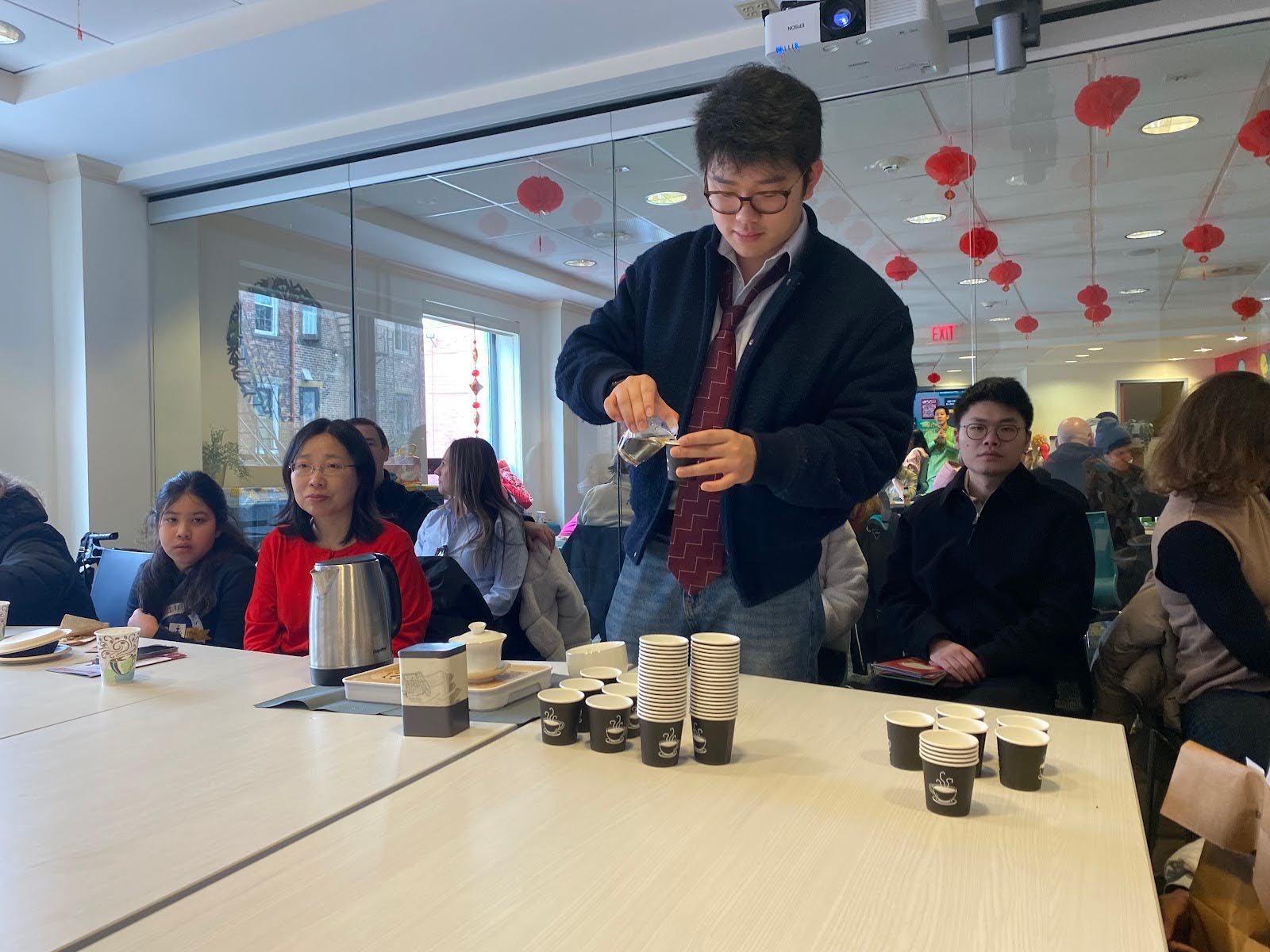
Aaron Combs, a sophomore at Yale who is part of the university's World Tea Enthusiasts Association, or T.E.A. Ruby Szekeres Photos.
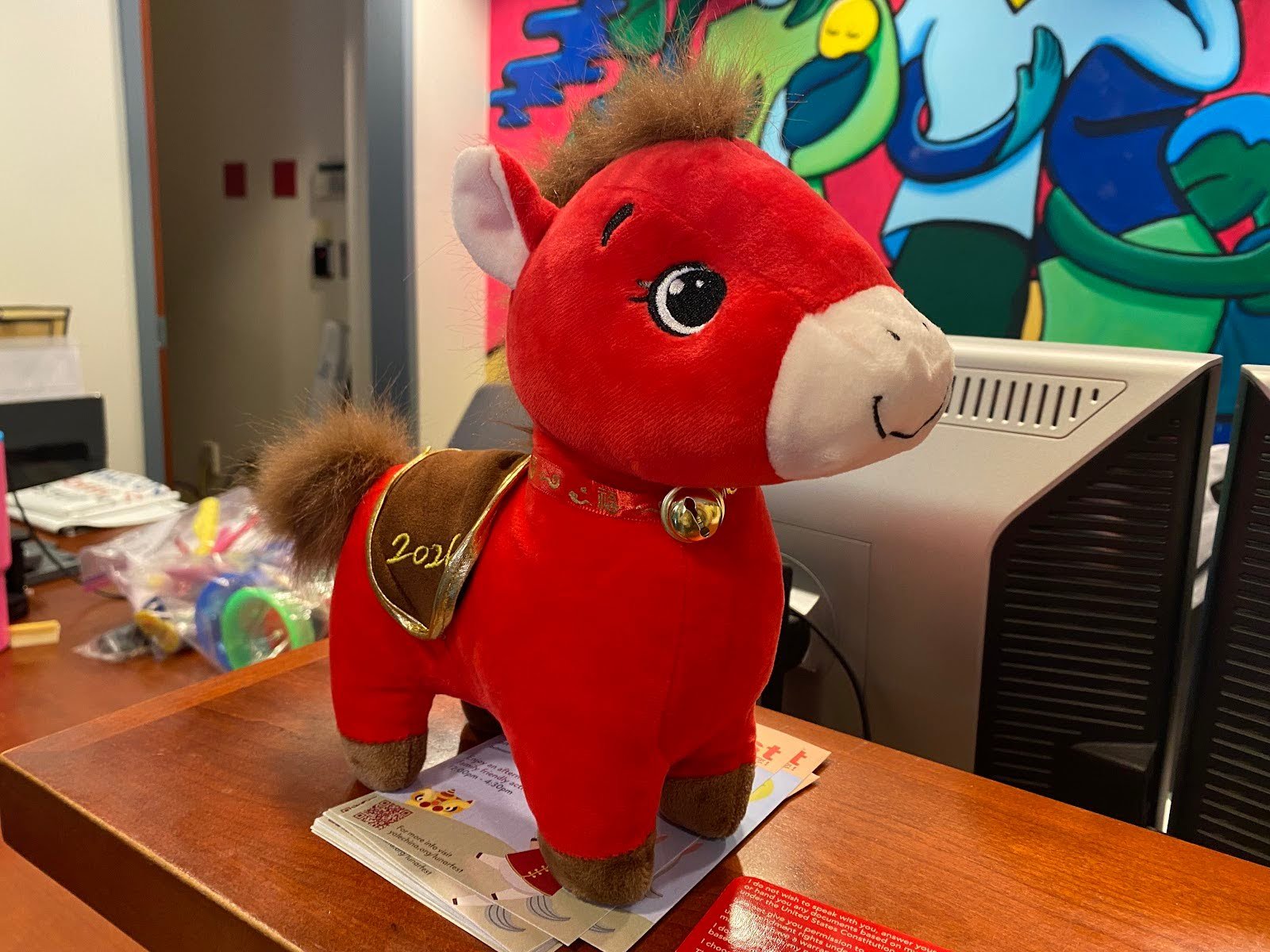
Surrounded by red paper lanterns on one side and dainty paper cups on the other, Aaron Combs poured hot water over white tea leaves, and ushered in the Year of the Fire Horse on Temple Street. On a table nearby, a smiling, plush red fire horse took the day in, promising the burning power of a galloping stallion.
Combs, a sophomore and member of the World Tea Enthusiasts Association (T.E.A) at Yale, was there to demonstrate the traditional art of Gongfu tea, a traditional brewing method that has its roots in Southern China. This ancient technique comes from more than just sipping water soaked in dried leaves; it is a ritual that connects tea drinkers to hundreds of years of history, building a cultural bridge in the process.
Surrounded by eager participants, Combs first described the different parts of the tea set in front of him, a more minimalist version of the authentic Gongfu set of over 30 pieces. First, he pointed out a multi-part tea tray, made in such a way that any spilled tea falls into a hidden reservoir. It might seem like a small touch, he acknowledged, but it is essential to the care and artfulness that goes into Gongfu.
He moved on to the gaiwan, a small bowl with a lid that is used to brew the tea. Then he showed attendees the tea pitcher and tea cups. He added that other sets may include different tools such as tongs, a spoon, and a tea pet—a small unglazed clay figure that absorbs excess tea, changing smell and color.
Combs explained that the first step is to put the white tea leaves in the gaiwan and add hot, but no longer boiling, water to it. It is very important that the water isn’t boiling, in fact, because this can ruin the leaves. A black tea (known as red tea in China) or an oolong requires hotter water than a white tea or green tea, he added.
A few moments later, Combs poured the brew into the tea cups, warming them as a gesture of hospitality. From the cups, he poured the hot water and leaves over the tray and “fed” it to the tea pet, cleansing both the leaves and his mind.
“This is because you are washing away greed and improving oneself,” he said.
Now the leaves were ready to make tea. Again, Combs added water to the gaiwan, but this time left the mixture steeping (he said that it needs a minimum of 30 seconds). It was important, he explained, to make sure the lid was never completely covering the gaiwan to prevent the leaves from getting damaged. This was the real first brew.
He passed small cups down to everyone to taste. A slightly bitter, aromatic scent rose from the cups, which were warm to the touch. “It’s about your senses.” Combs said. “You’re meant to hear the sound of the leaves and you’re meant to smell the tea.”
He then repeated the process, explaining that the same leaves would work for four to six more brews, each different in scent and flavor as the leaves continued to open. Other members of the club brought out tea to those waiting outside the room.
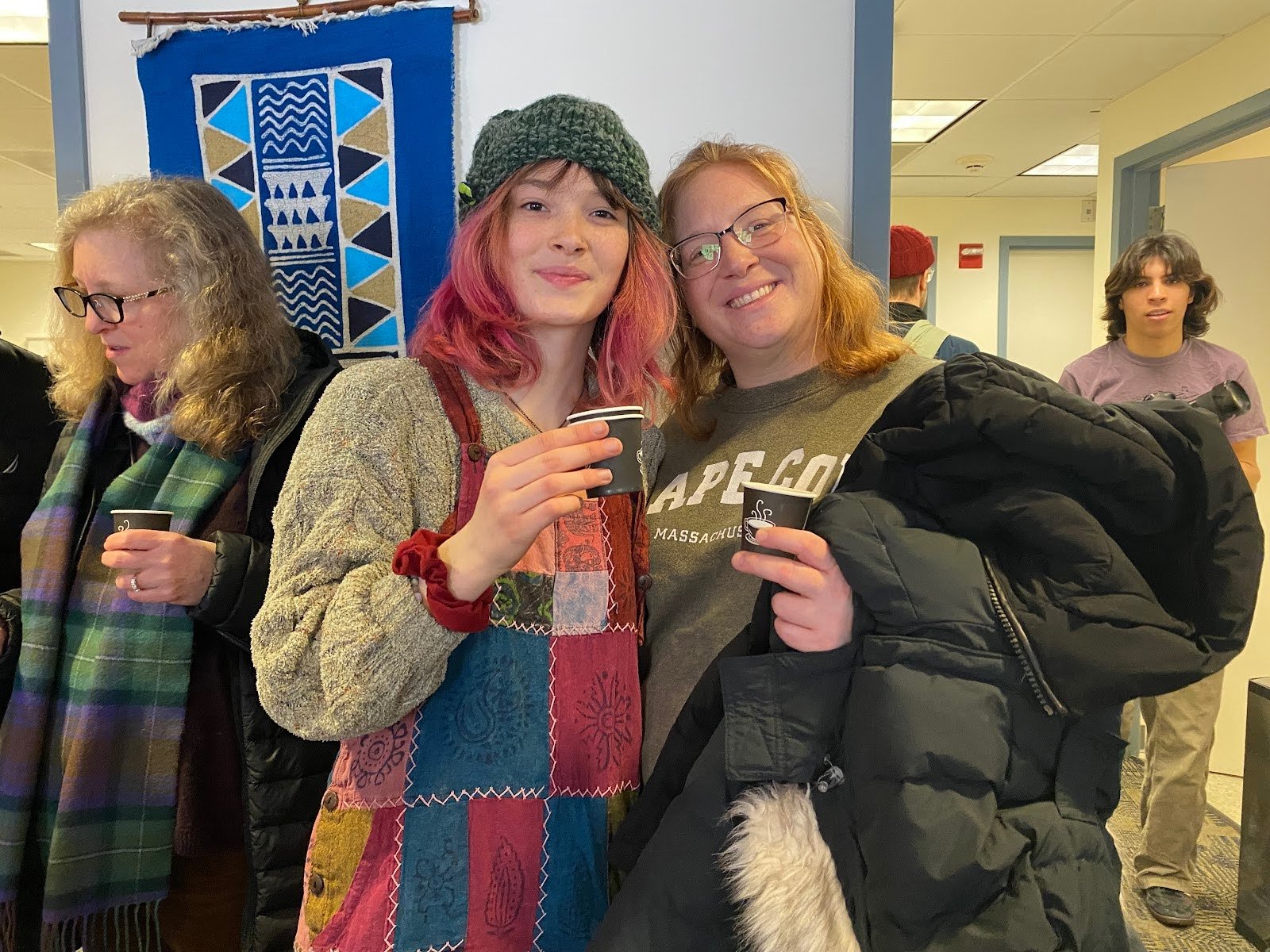
Isabelle and Heather Meachen.
As they cradled their cups, waiting for the next tea tasting, mother-daughter duo Heather and Isabelle Meachen said they were excited to be checking out their first LunarFest, a celebration that this year turned 15 years old. On other days, Isabelle is a familiar face at Creative Arts Workshop (CAW), where she works. Saturday, CAW was also participating in LunarFest, with calligraphy, screen printing and Chinese fan painting.
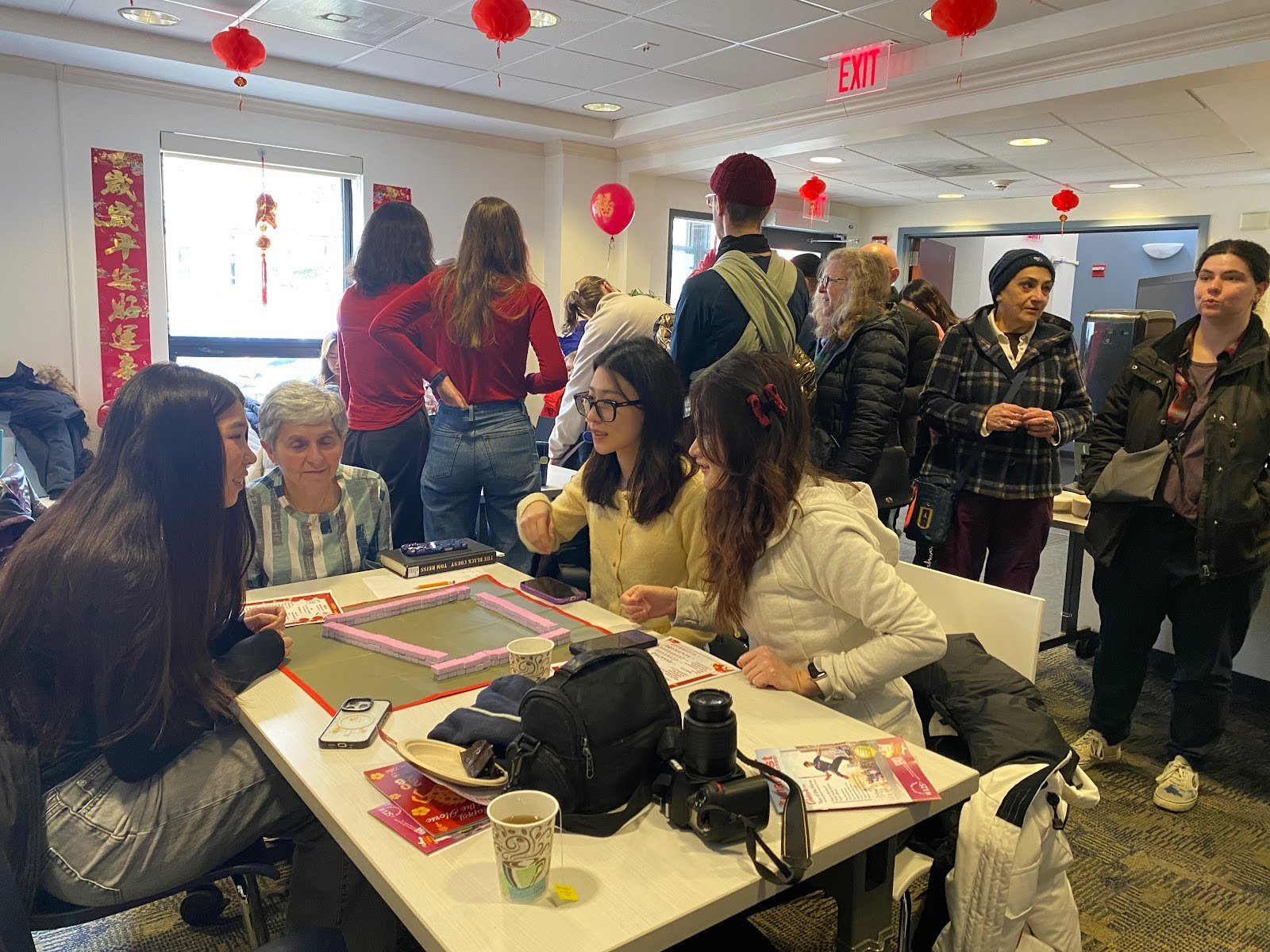
But Saturday is her day off, and she was excited to explore other LunarFest events across the Whitney-Audubon Retail District. So far, her favorite was playing mahjong—a Chinese game using tiles, skill and memory—also inside OISSg. It reminded her of the games she played passing the time at her grandparent’s house, she said. She was also glad to celebrate the tea, which she enjoyed greatly.
“It’s perfect for a cold day and we can appreciate the culture,” she said.
World T.E.A. President Mercuri Lam also carried the importance of tea with her. Growing up in China, Lam discovered her love for tea when she realized that she couldn’t ingest large amounts of caffeine. To the surprise of many, the more aged and fermented tea leaves are, the less caffeine they have, she said. She became president this year as a sophomore. The former leaders, who founded the club around 2023, graduated in 2025, handing the reins to Lam because of her experience with tea.
While Saturday’s event was focused on Chinese tea, Yale’s World T.E.A. looks at tea from all cultures. Members meet every other week to discuss ways to spread their appreciation for tea. The week after LunarFest, they would be doing a matcha workshop sponsored by a matcha tea company. They also showcase teas to children, adults and groups of all kinds.
“How much of the tea leaves do you use?” Susan Bettigole asked during the first demonstration as she sipped her tea. Combs smiled. awkwardly pausing to respond. Bettigole and her friend laughed. “Don’t mind us grandmas," she said.
“Well,” Combs said, still smiling. He explained that there is an amusing joke among his friends that you can tell if someone is from the East or the West depending on if they use measuring units or not. Even an estimate is impossible for him.
“The tea leaves and water ratios all depend on the group you're serving and is all experience,” he said Later, he recommended that those who want to start their tea journeys look into online resources and start off with simple sets.
Later Bettigole said that she was very impressed with the event. Coming from Milford, she always enjoys attending Yale’s programs and this won’t be her last. “I’m always looking forward to next year.”
This article comes from a graduate of the 2024 Cohort of the Youth Arts Journalism Initiative. Ruby Szekeres is a junior at Oak Meadow School.