


CitySeed | Dixwell | Sanctuary Kitchen | Arts & Culture | Culinary Arts | Dixwell Community Q House
Abiba Biao Photos.
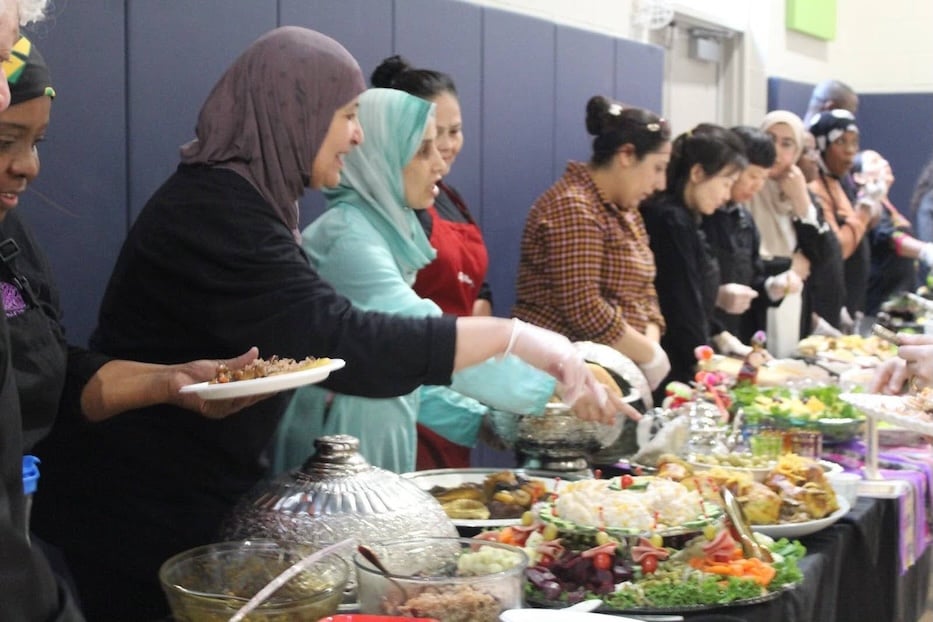
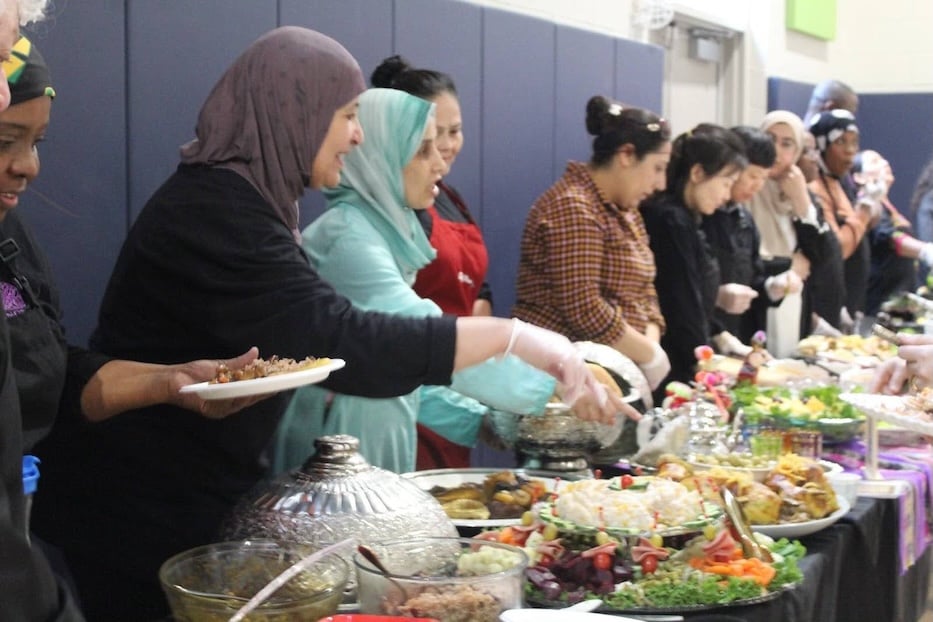
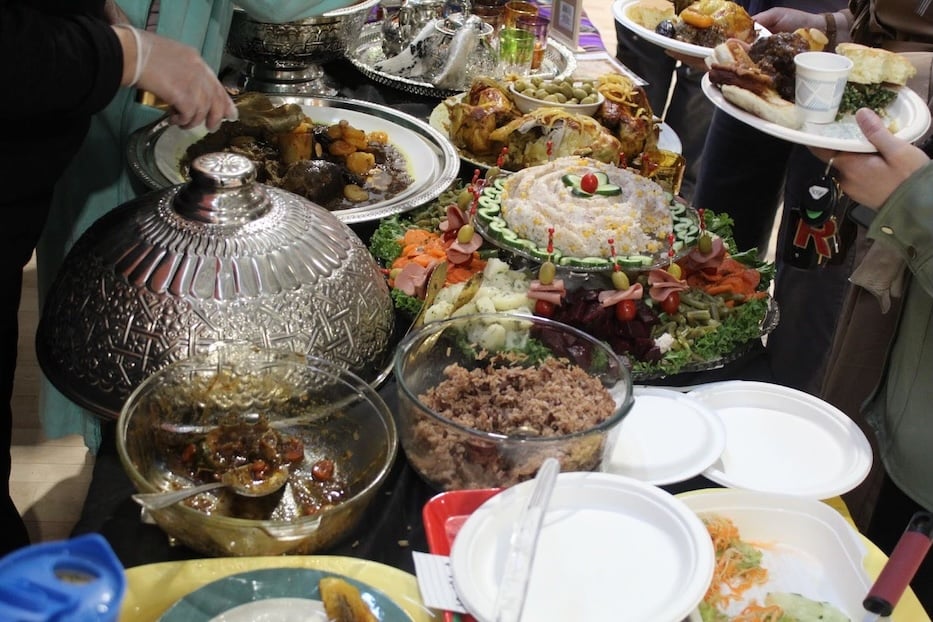
Across the table was a feast that spanned continents. From Jamaica to Morocco, Peru to Thailand, attendees could taste the world, bite by bite.
That's thanks to Sanctuary Kitchen, a program of CitySeed that last Wednesday held its first cultural luncheon at the Dixwell Community "Q" House on Dixwell Avenue. Organized with 14 members of Sanctuary Kitchen's Culinary Training Program, the meal brought global flavors to a historic New Haven landmark, becoming a testament to the diverse and polyphonic community that makes the city such a vibrant place to live.
Cuisines spanned countries including Angola, China, Ethiopia, Jamaica, Morocco, Mexico, Peru, Syria, Thailand, and Togo. Read more about that here.
Sanctuary Kitchen is a program under CitySeed. Now in its sixth year, the Culinary Training Program trains residents of the Elm City—many of whom are newcomers to New Haven and to this country—“to prepare food, work on a team, and succeed as part of a kitchen staff in a professional environment,” as stated on its website.
Carol Byer-Alcorace, director of culinary education at Sanctuary Kitchen, said that the program is a safe space away from the political developments of the outside world that helps members build camaraderie and gain professional and educational support.
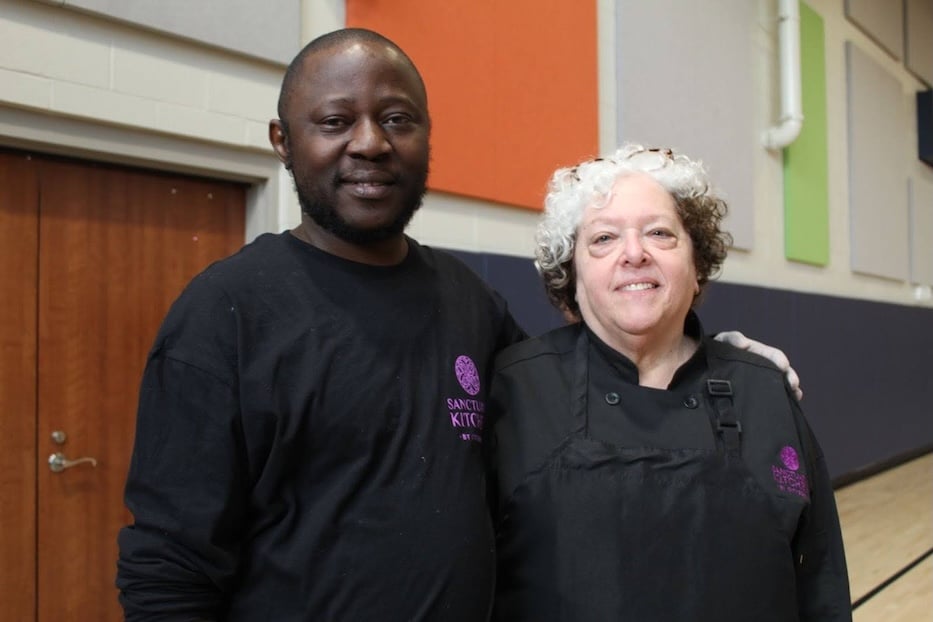
Mario DiVioka and Carol Byer-Alcorace, director of culinary education at Sanctuary Kitchen.
“Even though there's a lot of cultural conflict outside of the kitchen in terms of who our cohort members are, that disappears,” she said. “As soon as they walk in the kitchen, that disappears, people share, they make friendships. They share food secrets, which they might not necessarily do, and they, sort of, demystify some of the things that are in their culture.”
The current cohort consists of 15 students. Students complete 12 weeks of classroom training followed by six weeks of “hands-on community partnership with businesses in the city,” Byer-Alcorace said. That includes workforce readiness, culinary training, and English for Speakers of Other Languages (ESOL) classes.
After graduation, each cohort produces a cookbook, with recipes and dishes served at the cultural foods day will be included in the book. Applications for the seventh cohort will open in mid-July.
“When I finish a cohort, I always go, ‘Oh, this is the best cohort I ever had. I love everybody.’ And then I get another one, and I'm like, ‘Oh, my God, I love everybody.’"
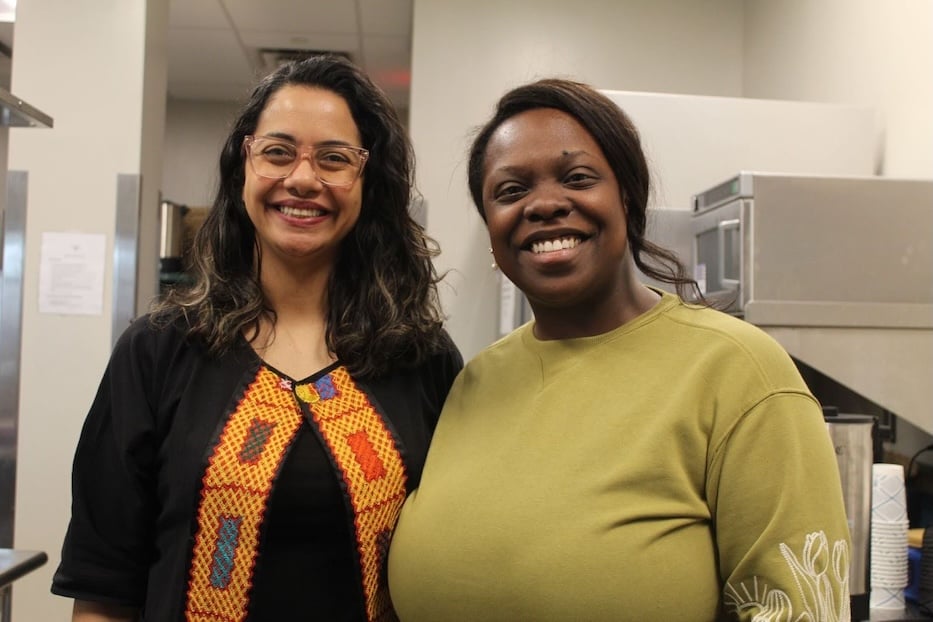
Lizia Booth-Carvalho and Sasha Fay, who work in food business for CitySeed.
Doing the event at the Q-House also holds special significance, Byer-Alcorace said, describing the organization's partnership with Sanctuary Kitchen as “accommodating and supportive.” Previously, Sanctuary Kitchen and CitySeed have used the Q House only for its kitchen and conducted classes elsewhere. This year, the program has held both its cooking instructional classes at the Q House.
While the original intention was to have a simple cultural foods tasting, the high interest from culinary training program students prompted them to host a big event. “I wanted them to make the food that they eat in their homes,” she said.
Sasha Fay, director of food business at CitySeed, seconded Byer-Alcorace’s sentiment.
“This cultural luncheon is a way for them to have, like, a peer review on the food that they make,” she said, “and they're also for some CitySeed folks that come in and try the food and people at the house to try the food.”
“So it's a great opportunity for them to have a part of this culinary training program, but also express their love of food, and their love and their culture, and their love of community here today,” Fay continued.
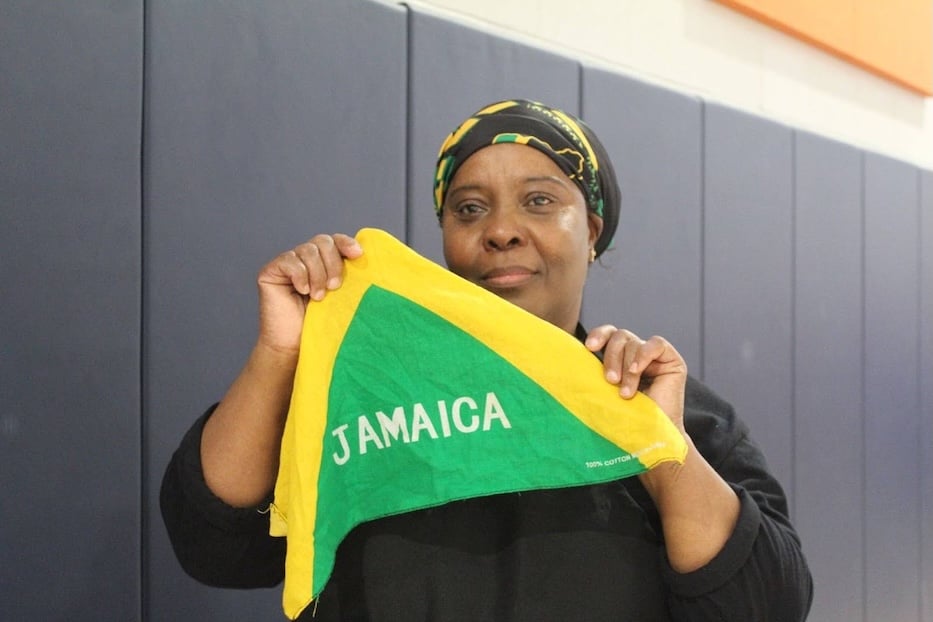
Melvina Williams: Gratitude for the program.
Melvina Williams, a member of this year’s culinary training program, came with a tray of Jamaican oxtail, rice and peas, and pineapple ginger juice. By the end, nothing was left in sight, each container completely empty.
“Everything was gone,” she said, thrilled about the flood of attention she had received. “Everybody keep coming back and said ‘Oh, I heard about the juice. I heard about the juice.’ Everybody come for the juice."
As attendees made their way out of the gymnasium, Williams responded to the many utterances of “thank you” that came her way after getting plates of her food.
She also showed no signs of stopping, saying that she plans to continue cooking after graduating from the program. She hopes to serve the community though cooking, and continue to use the skills she learned from CitySeed.
“I want it to grow,” she said of the program. “So I’m going to hand out lunch by doing, you know, some cooking, or some baking.”