

Culture & Community | Education & Youth | Arts & Culture | Wilbur Cross High School | Ramadan
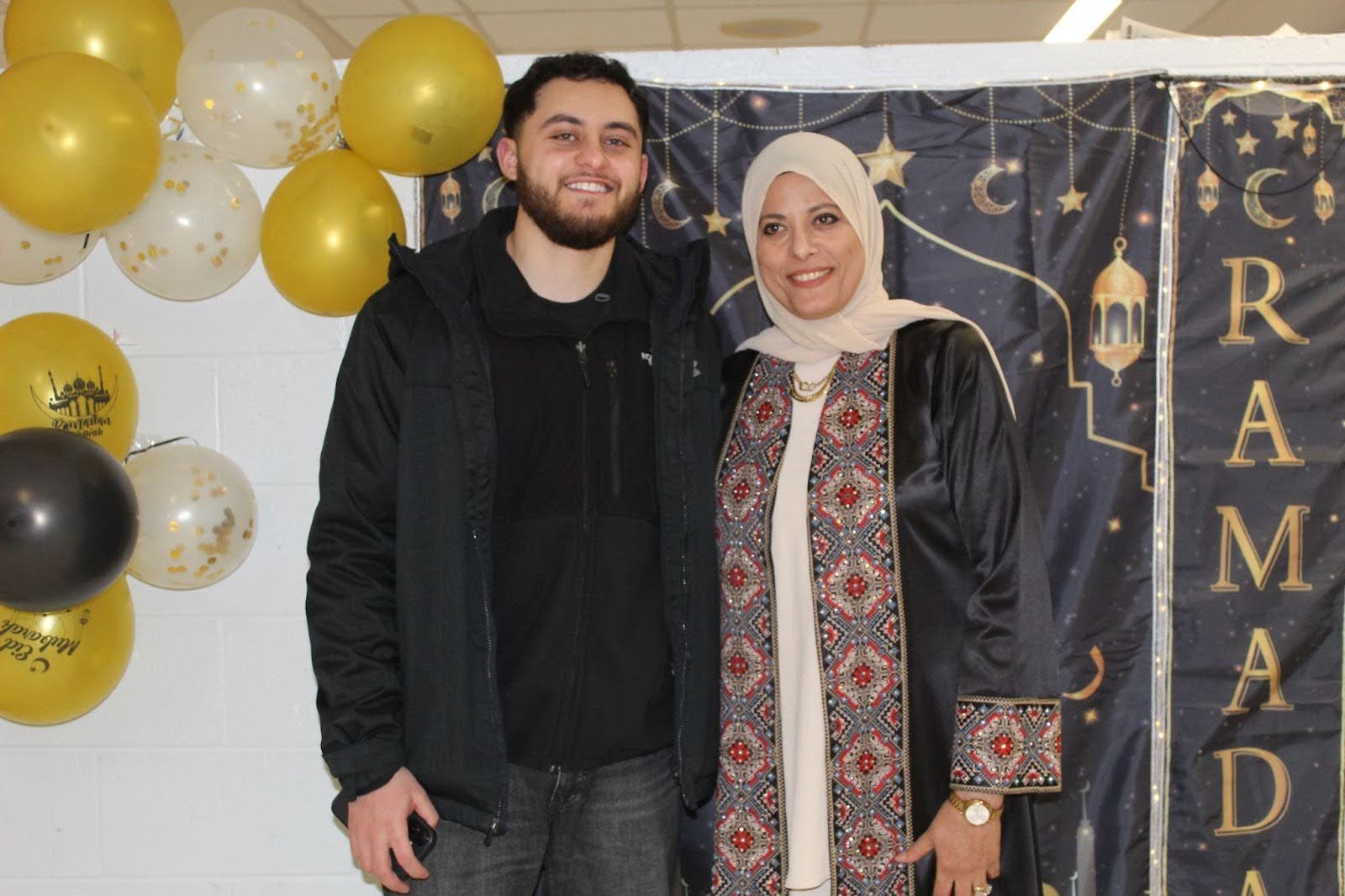
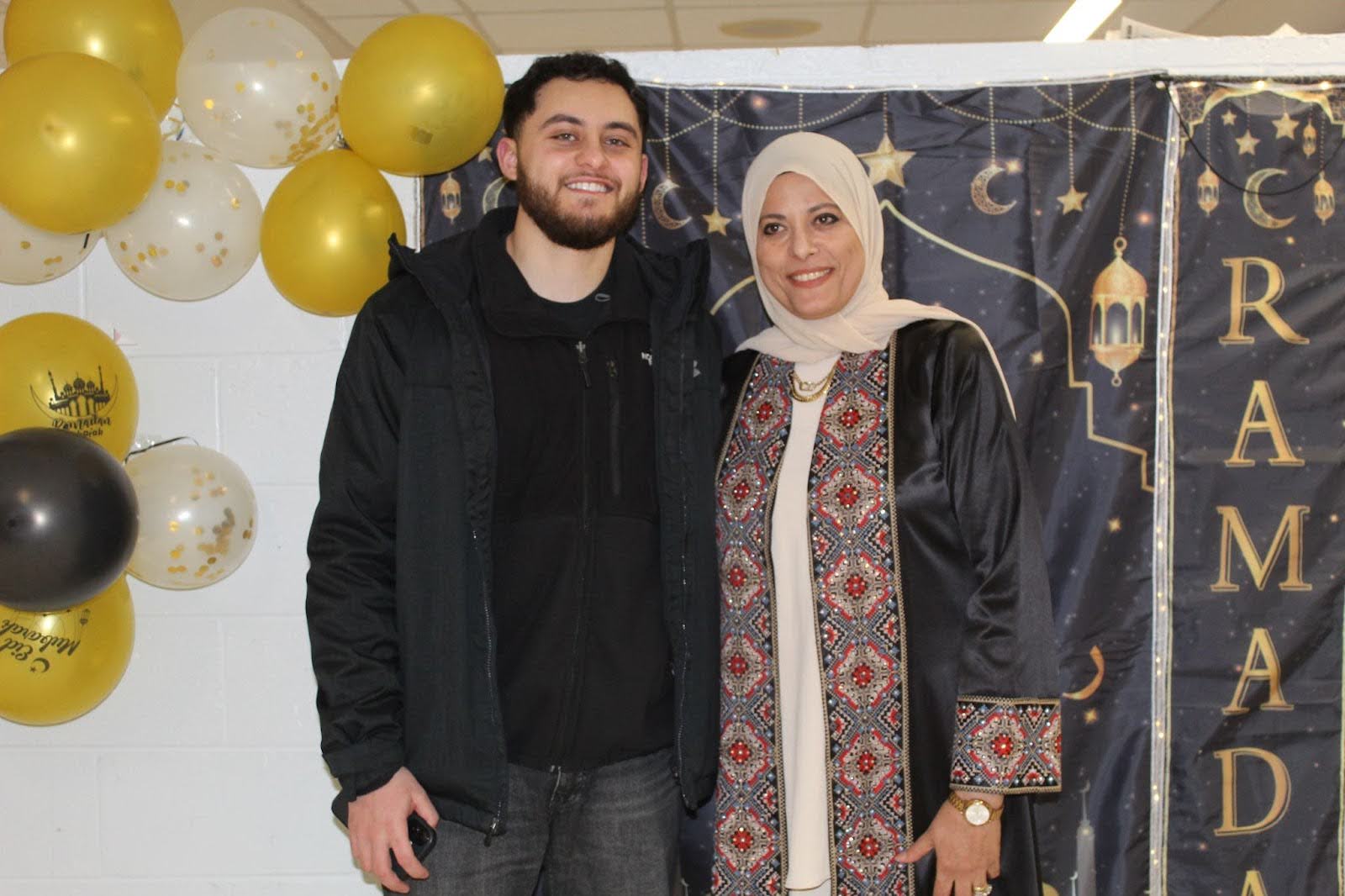
Mohamed Elsankary and his mom, Hanan Elkamah. Abiba Biao Photos.
Inside Wilbur Cross High School, class had been out for hours, but the cafeteria was buzzing with activity. Students talked over plates filled to the brim with hummus, fattoush, naan, and fried rice. As Maher Zain’s song “Ramadan” floated through the air, laughter and cheers rolled over the crowd. Friends old and new took their seats and broke bread together—learning more about their Muslim peers and colleagues in the process.
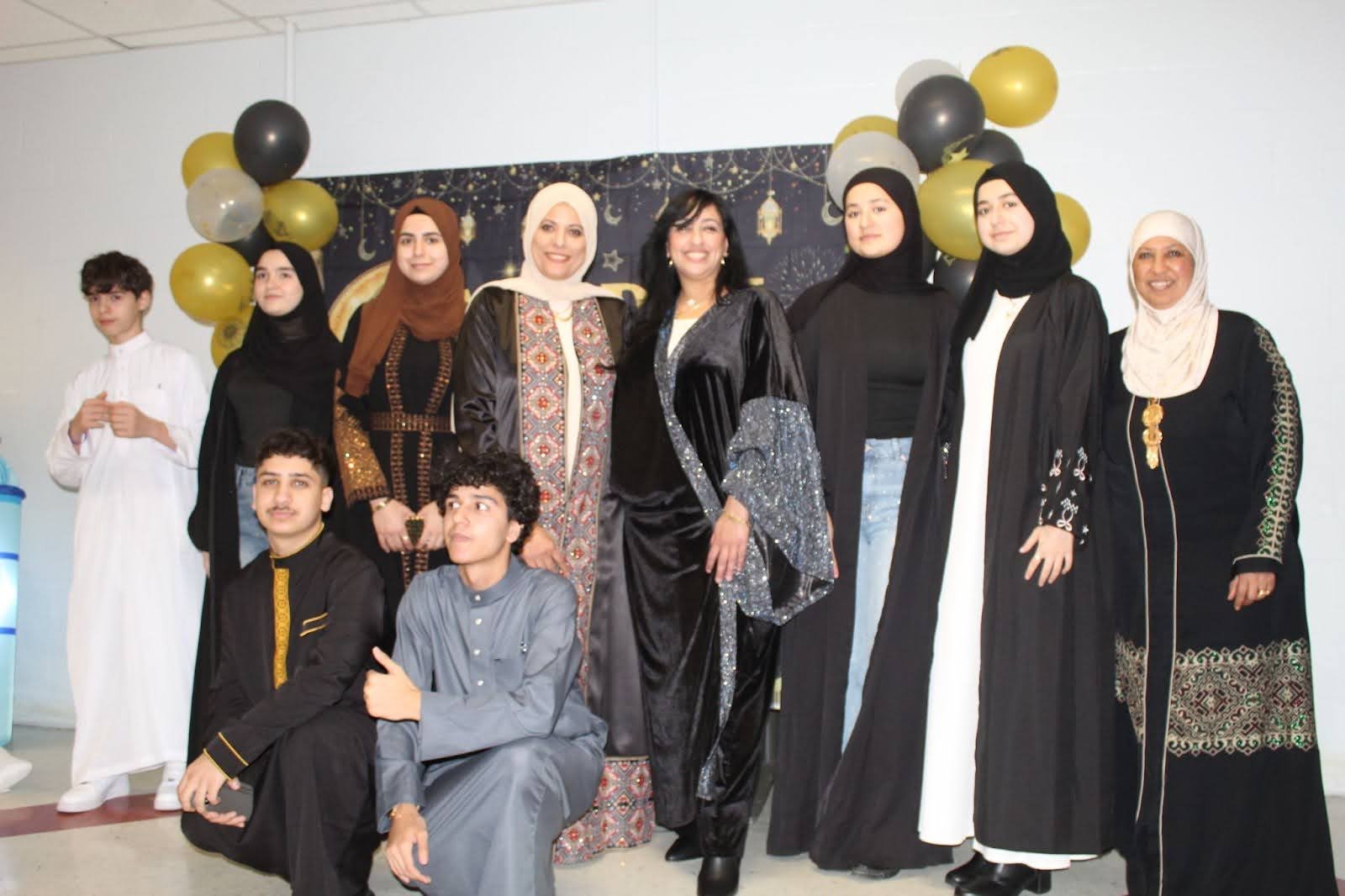
Friday night, over 100 students, staff and family members ended the day’s Ramadan fast together with Wilbur Cross’ first annual Community Iftar, held in the school’s cafeteria. Organized by Arabic teacher Hanan Elkamah, who helms the school’s World Languages Department, the evening marked an opportunity for both celebration and education, with lessons about Ramadan woven into the evening.
It doubled as a chance to recognize students from Wilbur Cross and Hill Regional Career High Schools who met weekly for over a month to discuss and document their lived experiences as Arabic-speaking newcomers to the U.S.. That work is part of the Study of Adolescent Lives after Migration to America (SALaMA), a photovoice project from Washington University in St. Louis with support from Qatar Foundation International.
“Tonight’s Iftar is not only about food. It is about bringing people together from different backgrounds to learn from one another and to share a moment of gratitude and unity,” Elkamah said.
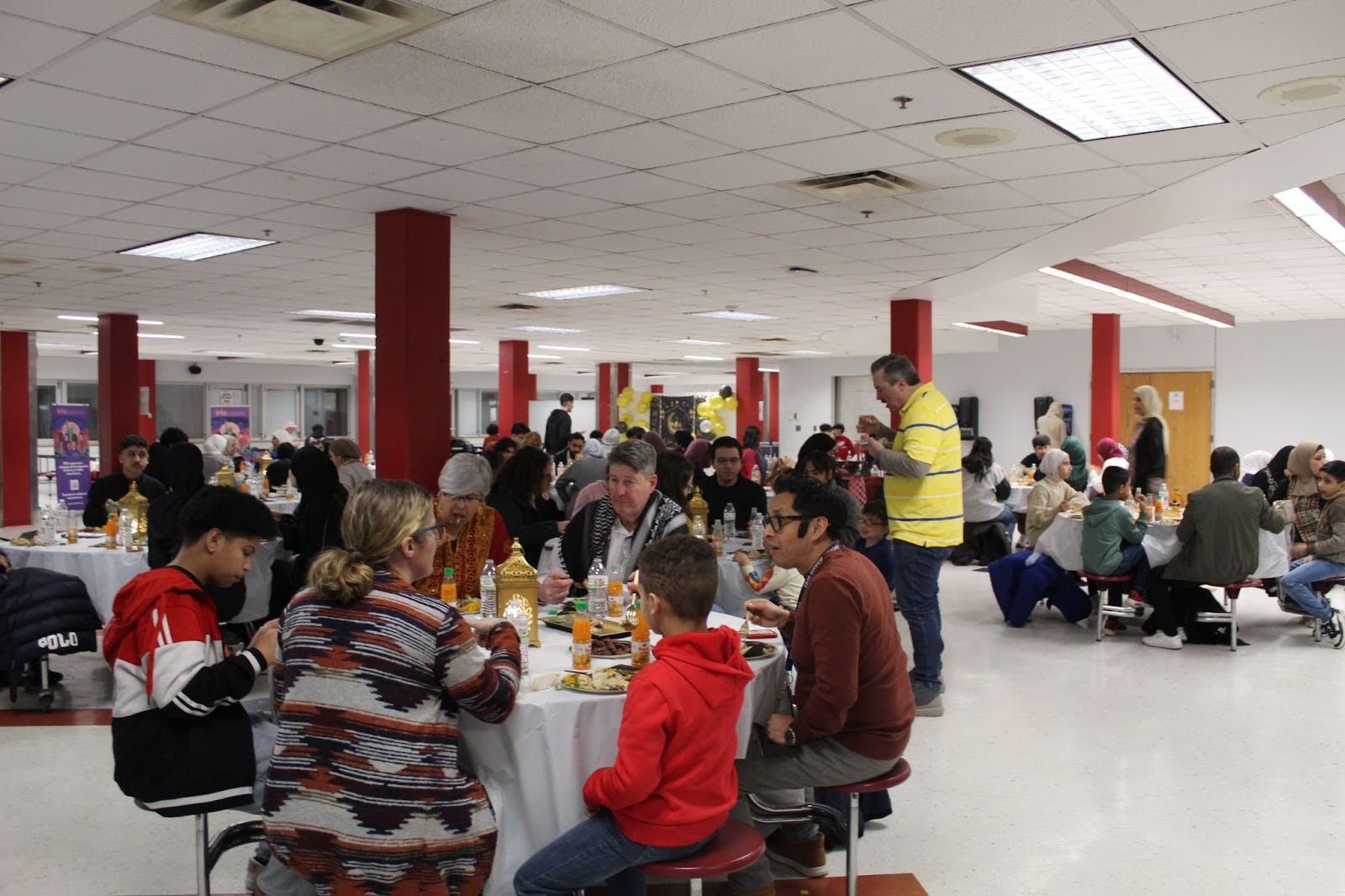
The scene in the school's cafeteria.
Iftar, which is observed nightly during the holy month of Ramadan, refers to the evening meal with which Muslims break their fast. Starting last Tuesday, some two billion Muslims across the globe began the month of Ramadan, the ninth month of the Islamic lunar calendar..While the placement of Ramadan differs annually, the period lasts for a month. During this time, Muslims fast from sunrise to sunset.
Before starting their fast, Muslims wake up before dawn to eat suhoor, the early morning meal. The meal is eaten before the start of the Fajr prayer, the first of the five daily prayers Muslims do throughout the day. At sunset, Muslims break their fast with their evening meal called Iftar. The timing coincides with Maghrib prayer, the fourth daily prayer which happens at sunset.
Before praying Maghrib, Muslims break their fast first with a date and some water, following the sunnah or advice of Muhammad, a key figure in the religion. After praying, they proceed to have their full Iftar meal.
Just like any evening during Ramadan, Elkamah prayed Maghrib, this time as a group prayer for Muslims and non-Muslims alike. As peers lined up to pray, the moment felt fitting: Elkamah has worked to share Arabic culture at the school and in the district over the past several years, including with the school’s annual Arabic Festival. The festival will enter its sixth year in May.
“They were lined up with us in the prayer. I was getting goosebumps,” she said of her colleagues. “I received emails from teachers asking like, ‘How do I dress?’ and some teachers asked for hijab to wear for the night.”
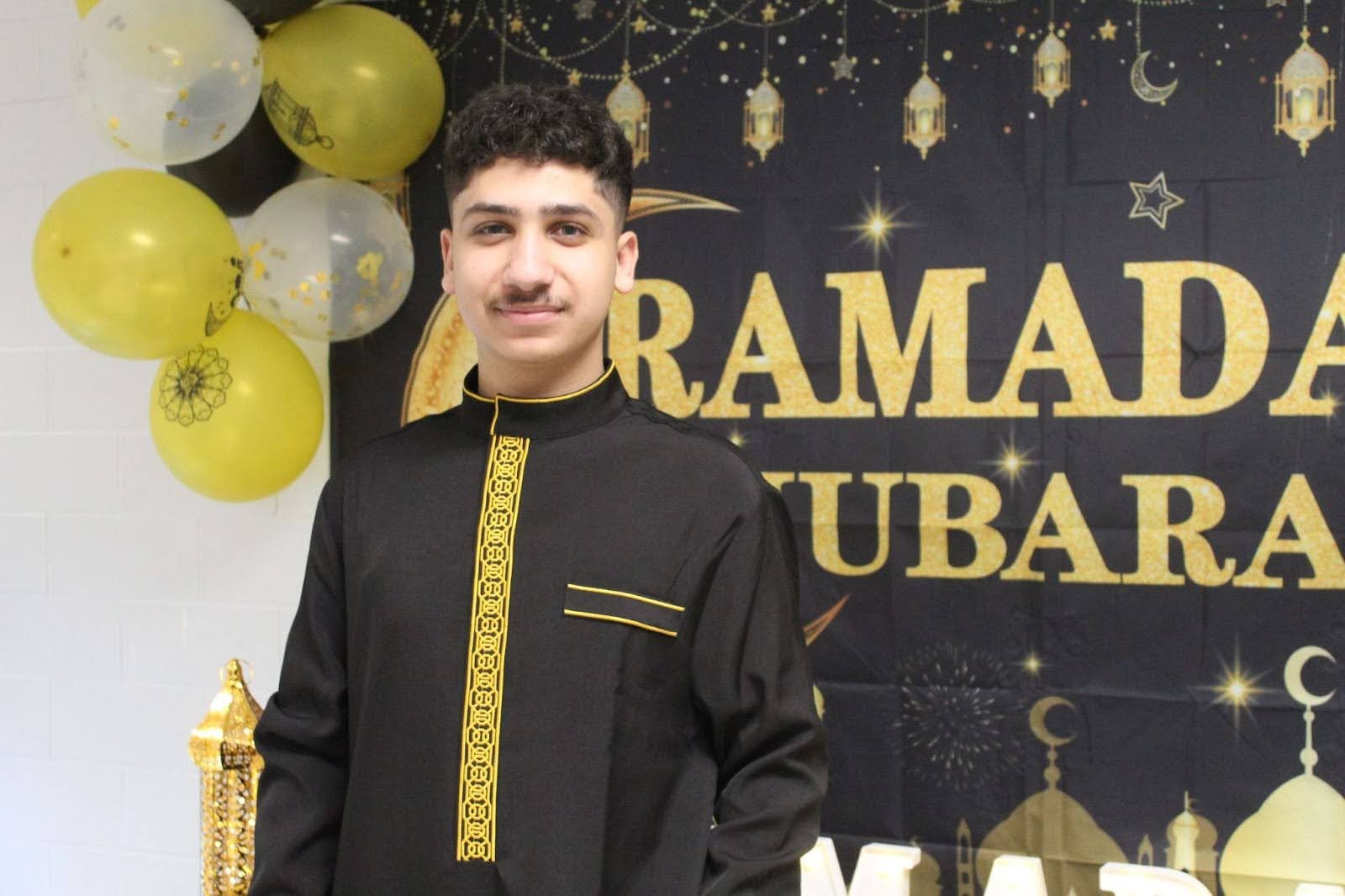
Alaa Alagami.
As laughter filled the air, principal Matthew Brown stopped by each table to hand out Ramadan goodie bags, stuffed with small infographics about the holy month and Ramadan-themed school supplies: pencil, pen, eraser, a silicone wristband, candy, and a lantern keychain. Assisting him with dispersing the bags was Elkamah’s son, Mohamed Elsankary.
“Ms. Hanan is just the epitome of a wonderful teacher in that she both gets a lot of kids to learn a lot of Arabic,” Brown said. “But more importantly, they build community around the context of what the language represents and the range of cultures that it represents.”
Brown added that many of the students are a part of Cross’ International Academy, a cohort that focuses on encouraging language learning, using multilingual skills in different contexts, and highlighting cultural diversity. Evenings like this one are deeply meaningful: while New Haven Public Schools’ students have a day off at the end of Ramadan, during the celebration of Eid al-Fitr, most non-Muslim students don’t know what the day signifies. This marked a chance for them to learn.
“It’s never been a more important time to demonstrate as a school our belief that diversity is our strength,” Brown said.
For Elsankary, the night fostered a sense of community, during which he got to know the colleagues and place his mom “speaks so highly of.” A neuroscience graduate of Trinity College who is currently in the midst of applying to dental school, Elsankary may be a world away from high school, but was excited to help with the festivities. He described the upbeat atmosphere as “contagious.”
“Ramadan just started a few days ago. We had Iftar at home with just the family, but it's nice to have something with a whole community,” he said. “My mom was really excited to host this so I’m very happy to be here.”
And indeed, these good spirits were felt by staff and students alike. Alaa Alagami, a sophomore at Cross, said that he enjoyed the vibes and felt a sense of belonging.
“I’m feeling happy because I [can] see my friends,” Alagami said, adding that it’s been a while since students have been able to come together.
When asked if he had a particular favorite food in mind, Alagami said he didn’t have a preference and appreciated the variety of options.
“I like all the food because I tried all the food,” he said.
While people continued to enjoy their meals, Elkamah was in teaching mode, making even the smallest of moments a learning opportunity. She continued the theme of blending cultural education through food, taking a moment to address the audience.
“I hope you’re enjoying the dinner and the Iftar night. I’m actually enjoying this Iftar the most than any other night,” she said. “For Ramadan, when we eat, we say Ramadan Kareem, [which] means generous Ramadan.”
Elkamah has set her sights on hosting another Iftar night next year, she said. In the meantime, she is also using other avenues to combat xenophobia and uplift Arab culture at the school. This January and February, a cohort of students from Cross and Hill Regional Career High School participated in a photovoice project around belonging, part of the larger SALaMA study.
Photovoice is a participatory, qualitative research method where individuals document their lived experiences through photography. Over six weeks, students shared photos that illustrated their sense of belonging and discussed their experiences, highlights, difficulties, and feelings migrating to the US.
The goal of SALaMA is “to assess the mental health and psychosocial wellbeing of high school students who have been – or whose parents have been – resettled to the US from the Middle East and North Africa It,” according to the study itself. “It also aims to identify the sources of daily stress in these students’ lives, as well as the corresponding support mechanisms available to them.”
While a Community Iftar is just one community initiative, the event is part of the school’s broader mission to prioritize student health, culture, and wellbeing
“It's just a joyful night,” Elkamah said. “I'm so, like, I can't express my feeling, — the happiness — seeing everybody makes me happy, showing respect and unity together.”