

Bregamos Community Theater | Culture & Community | Fair Haven | Arts & Culture | Youth Arts Journalism Initiative
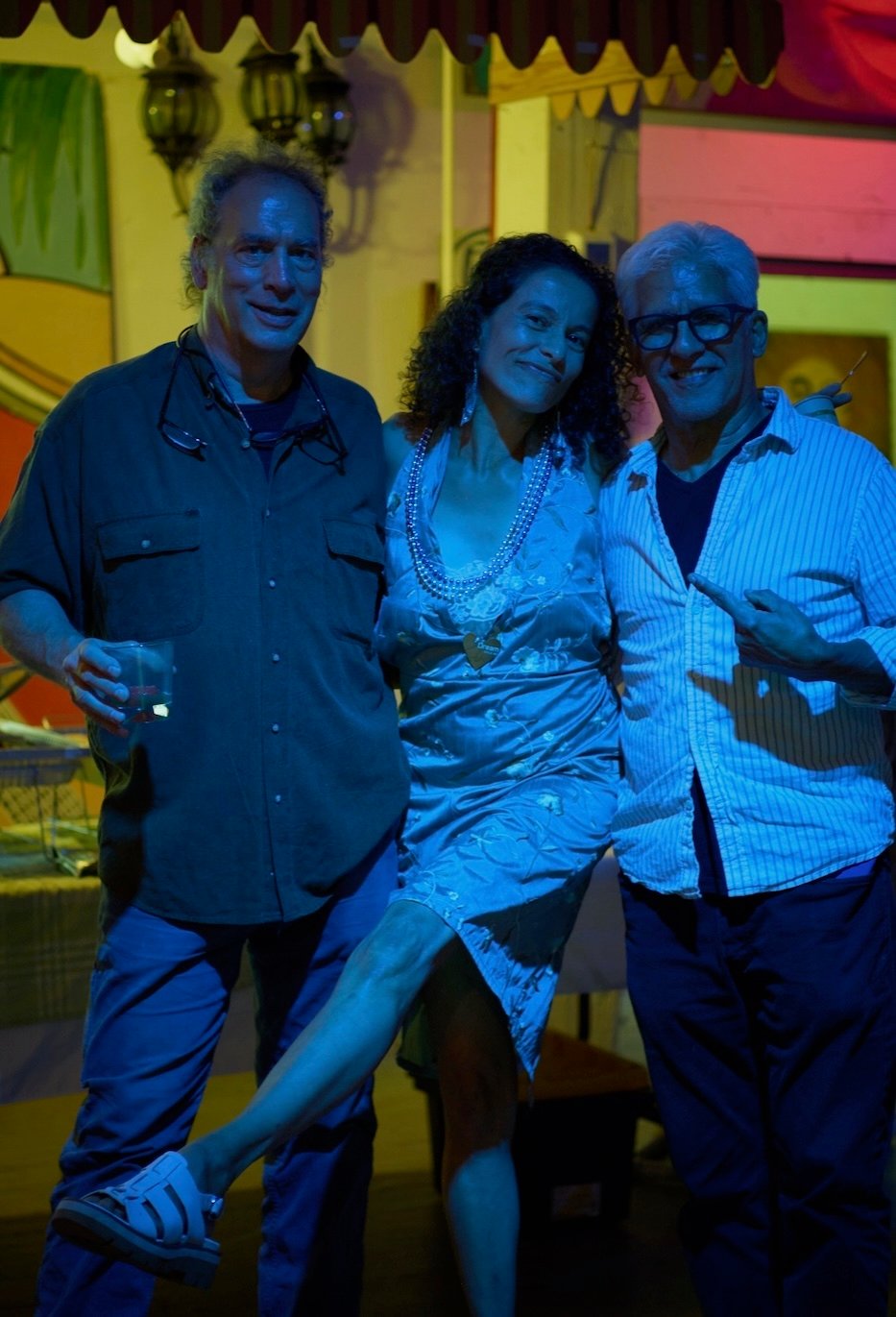
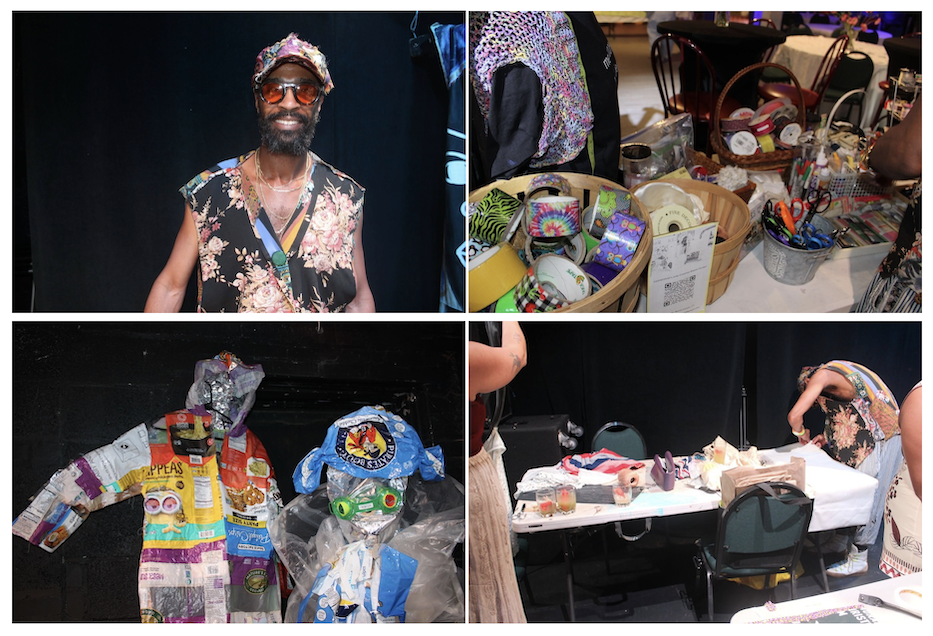
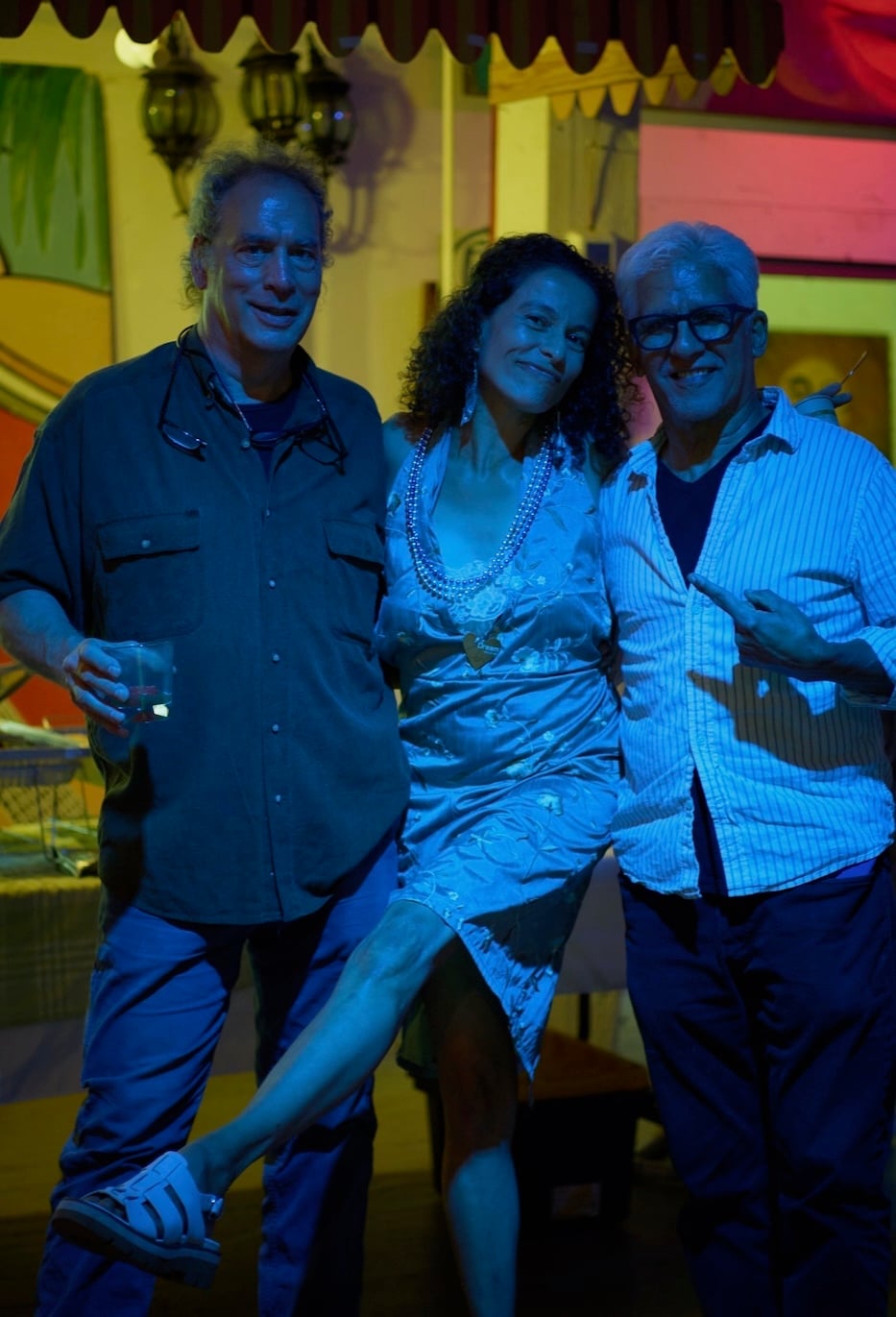
Top: Trashionista Rebekah Fraser (at center) with artists Jamie Burnett and David Sepulveda. Wren Hoffman Photo. Bottom: Some of the looks, including from Tea Montgomery. Karina Gonzalez Photo.
Local designer Tea Montgomery leaned over a piece of a peacock-patterned fabric, the tan and green print vibrant in his hands. To another pair of eyes, it may have been a scrap headed for the waste bin. But for Montgomery, it was just the accent that his bag had just been waiting for. Slowly he glued it to his bag, made with tan fabric, and decided what to add next.
Around him, Bregamos Community Theater felt like a cool, dramatically lit art gallery. Colorful paintings winked out from the walls, complemented by mason jars of red-pink dahlias from South Haven Farm that gave each table a pop of color. There were custom pieces of “trashion” already on display: a jacket made out of old food boxes and bags; a loose dress with bright yarn that bloomed into a fiber rainbow around the collar, denim jackets waiting for a little something to zhuzh them up. The crowd had a super positive energy, with everyone hanging out, talking, and laughing.
This was the scene last Saturday at "Create and Celebrate," Trash to Fashion’s second annual ball and workshop, which brought 38 people together to fête and envision a kinder and more thrifty approach to fashion and raise awareness around waste. Held at Bregamos Community Theater in the city’s Fair Haven neighborhood, the event is the sustainably-sourced, fashion-forward brainchild of artist and writer Rebekah Fraser, who launched the organization last year.
Trash To Fashion receives fiscal sponsorship from Dwight Hall at Yale. Sponsors of the event included Goodwill of Southern New England, the Greater New Haven Green Fund, Community Foundation for Greater New Haven, and the New Alliance Foundation. Community partners included EcoWorks and New Haven Solid Waste & Recycling Authority, as well as Peels & Wheels Composting, EcoWorks and the Whitney Avenue plant-based ice cream shop Via Lactea.
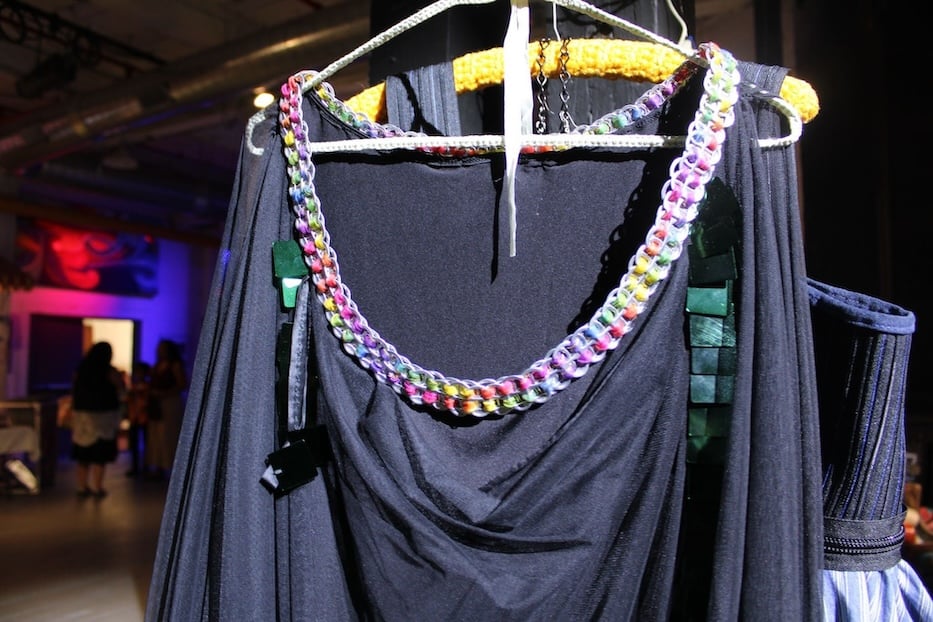
Spetrini's dress. Karina Gonzalez Photo.
“It’s not just that we’re doing fun, cool things,” Fraser said in a phone call before the event. “It’s that we are very careful about how we do them, because we recognize the impact of our choices on our community.”
“Environmental action can be joyful, and our choices are a reflection of how we take care of others and ourselves,” she added.
Trash to Fashion is a grassroots organization that Fraser launched last year to creatively address the sheer amount of trash that people produce, and the environmental harm caused by both waste (particularly plastics and synthetic materials) and fast fashion. Her concept of “trashion,” around which she has held workshops, fashion shows, and an exhibition, challenges people to take garbage and scrap fabric and turn them into wearable style pieces.
Take, for instance, a navy blue dress from EcoWorks’ Lisa Spetrini spiffed up with blue and green fabric, soda tabs, and colorful bright yarn. In the past year, Spetrini has been a collaborator and friend to Trash To Fashion, which dovetails with the eco-friendly approach she takes at EcoWorks’ North Haven home. Spetrini co-founded EcoWorks with Sherill Baldwin in 2012; the organization focuses on creative reuse.
For the second year in a row, the ball and workshop was designed as a completely zero-waste event. Fraser and collaborators set up a compost bin set up for food scraps; Goodwill of Southern New England donated glasses, plates, and silverware, which attendees got to take home with them as souvenirs. In addition, the organization used bamboo ice cream cups and disposable napkins, and sent guests home with foil-wrapped leftovers on plates and in compostable takeout containers, Fraser said.
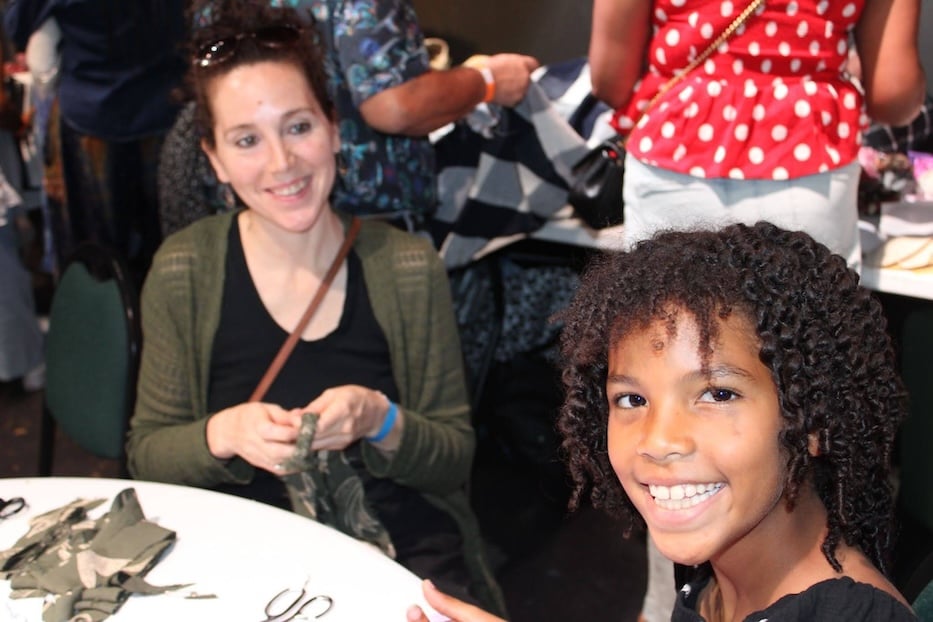
Alexine and Tasnim. Karina Gonzalez Photo.
She said that she and event organizers work hard to make sure the event does not leave a footprint. “In addition to whatever textiles were upcycled during the workshop, we recycled 140 pounds of textiles brought to us by the community and leftover by the workshop,” she said in a text following the event. She and organizers also “saved” nearly three dozen garments that received a new life thanks to the team at Pistachio Print Co., members of which were on hand to add Trash To Fashion’s logo to old clothing items.
During the event, Montgomery remembered the ball’s origins, and how the organization has continued to evolve in the time since. Last year, he and Fraser grabbed a coffee to plan their very first workshop. She told him about her vision, and he was in; it fits with his own efforts to keep his practice as sustainable as possible. It took off from there.
"She was talking to me about the idea before it ever started," Montgomery said. Before the workshops, he and Fraser made sure to collect materials like string, hooks for earrings, and otherwise-would-be refuse—lots of it (people also donated their trash, from old woven bags to window screens). He has remained a supporter of the organization at all of its events, with fellow designers like Donald Carter, Molly McGurk and Leo Smokinski and Soule Golden among others.
This year, Montgomery worked on hand-sewing a bag out of old vinyl scraps, using a hole puncher to prepare the material. He admitted that working with garbage or discarded fabric isn't easy for him (or anyone) because “the pieces come in different shapes and sizes, so you may not get a normal, evenly cut piece of fabric.” According to Montgomery, the biggest challenge is "figuring out what you want to do," but he loves how the process pushes creative limits.
"The energy is amazing," he said. "I really love the creativity, and the inspiration, and everyone’s eyes. It looks like everyone is having fun or enjoying themselves."
He added that the best part of events like the workshop is seeing people who have never met before leave the event as friends. Plus, it gives people the opportunity to do something kind for the planet.
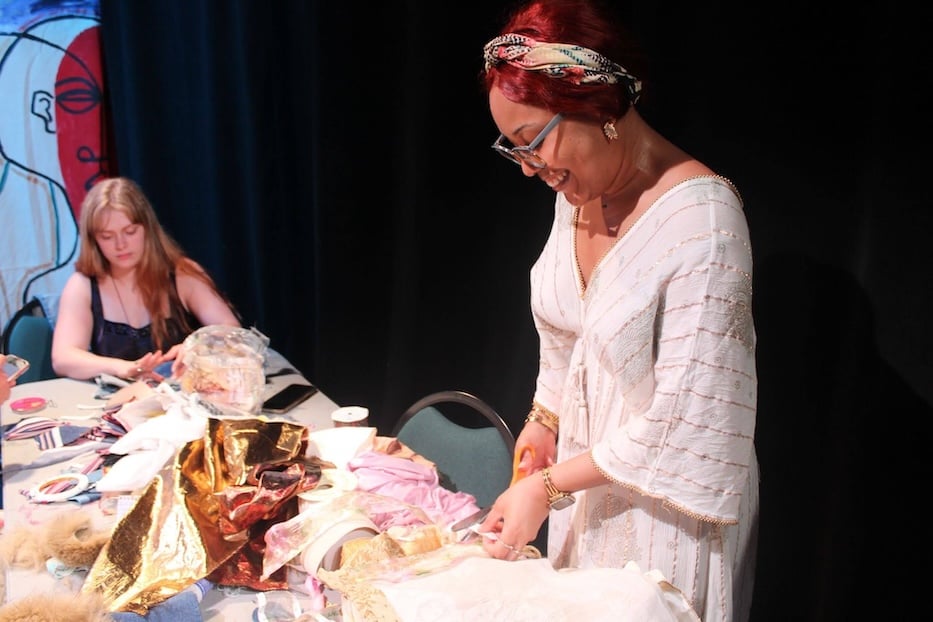
Tiffany Robinson. Karina Gonzalez Photo.
The event also brings in locals who are new to the Trash to Fashion world. Alexine Casanova, operations manager at Dwight Hall, came out with her 10-year-old daughter Tasnim, and the two jumped right into experimenting. Tasnim was drawn to a piece of bright blue fabric that she hoped to turn into a bag, while her mom searched for a floral pattern she could weave into an accessory.
Casanova, like Montgomery, noted that using scrap materials requires a totally different approach than regular sewing. Instead of buying exact materials from a pattern, a person has to look at what you have and figure out what you can make with it. For Tasnim, the hardest part was all the choices in designing her own object.
“When you know how a piece is put together, you can change it later,” Tasnim said.
Even though they had just arrived, the mother-daughter duo described the vibe of the room in three words: friendly, colorful, and creative.
Another first-timer at the event was Tiffany Robinson (photographed above), planning and development coordinator at the Community Action Agency of New Haven, who heard about the project through word of mouth. She was immediately won over by the experience, noting that she will definitely consider coming back next year because the whole setup was "pretty dope."
When she first walked in, a bright pink metallic fabric caught her eye. However, she decided to go in a different direction for her project, spending the evening crafting a custom skirt out of a tan fabric. She described the feel of the event as “eclectic, intentional, and vibrant.”
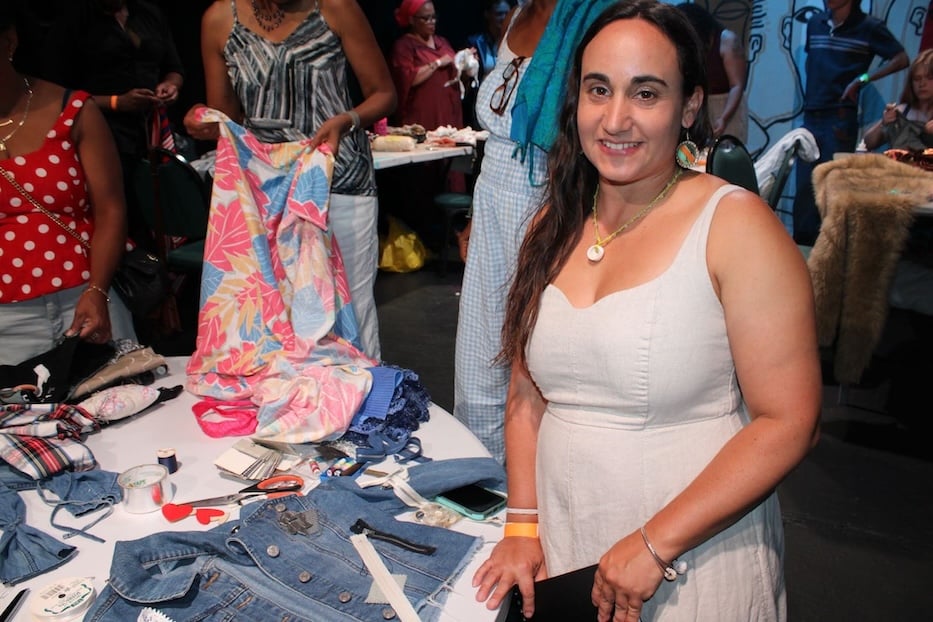
Jackie Gaudioso.
The event also helped form and fortify a bridge between local environmental work, fashion design and artmaking. Jackie Gaudioso, outdoor adventure coordinator with the New Haven Parks Department, connected with Fraser through an environmental book discussion club in June 2025.
Later that year, they decided to collaborate on a series of workshops, including two "canoe cleanup and trash" chats held in May and June at New Haven's Beaver Pond and West River Parks, and an upcoming jewelry-making workshop where participants will use materials found during the cleanups and sterilized before reuse.
A few weeks before "Create and Celebrate," Gaudioso attended a "Think Like A Trashionista" workshop at Lotta Studio with her daughter, where they drew sketches of a custom jacket to bring to the July event. While she initially planned to use crochet sleeves, looking at all of the up cycled materials made her turn in a different direction. She decided to decorate her jacket with several zippers and buttons, featuring a built-in "picture frame" to slide a different photo into every time she wears it.
A biologist and former research scientist, Gaudioso shared how important these workshops have been for her. While she isn't a professional seamstress and found it a bit challenging, the event allowed her to tap into her old art minor.
"Through going to her workshops, I've been able to kind of reignite my creativity," Gaudioso said, vibing with the creative energy.
This article comes from the ninth and current cohort of the Arts Council's Youth Arts Journalism Initiative (YAJI). From June 29 through August 21, YAJI students pitch, report, write and edit stories with Arts Paper Editor Lucy Gellman, Program Assistants Abiba Biao and Grayce Howe and Mentor Ruby Szekeres. Karina Gonzalez is a rising sophomore planning to transfer into Madison High School. She was previously at Engineering and Science University Magnet School (ESUMS) and Acellus Academy.