

Culture & Community | Public Health | The Shack
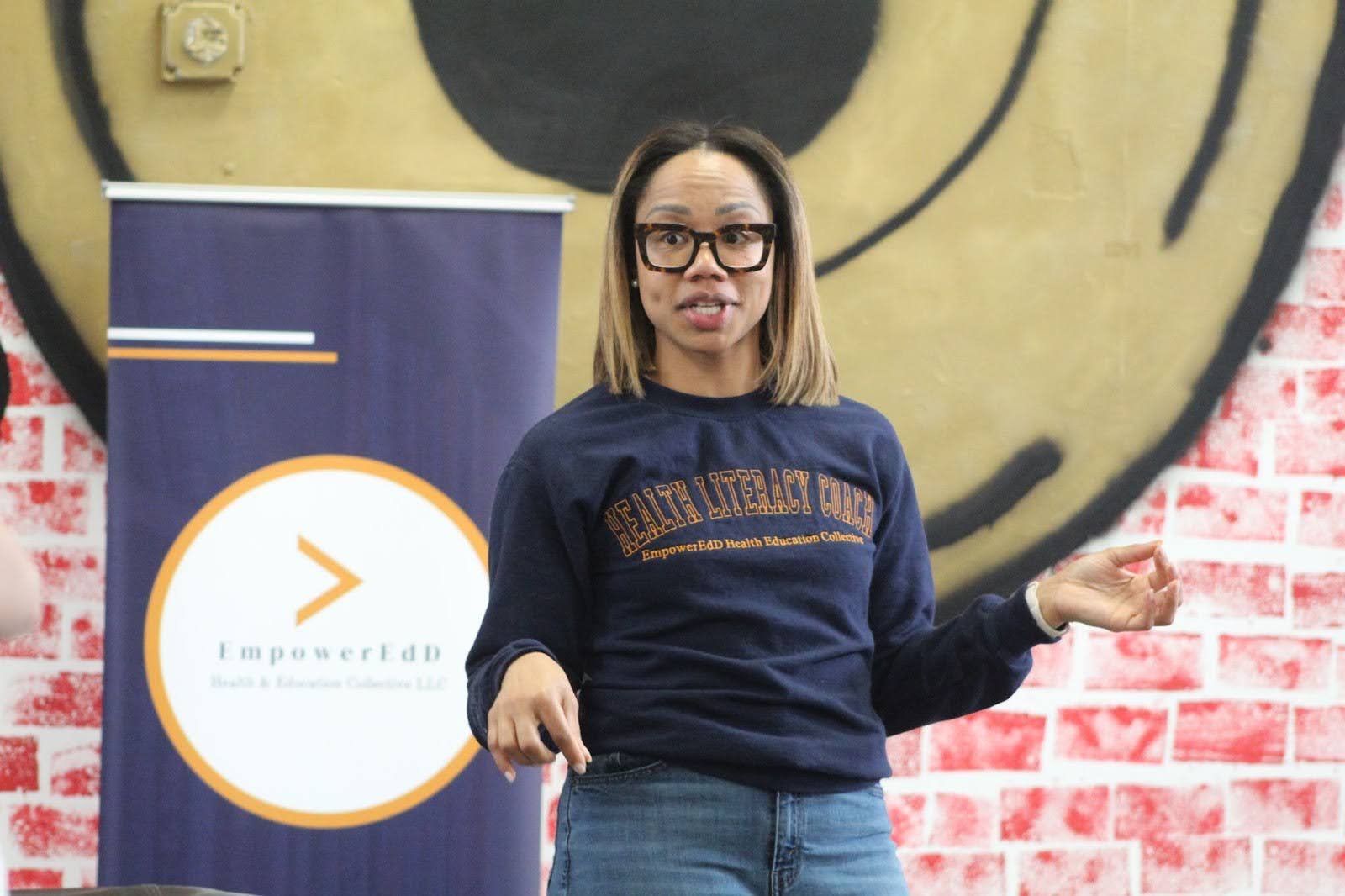

Latham: "Advocating for yourself also requires you to educate yourself."
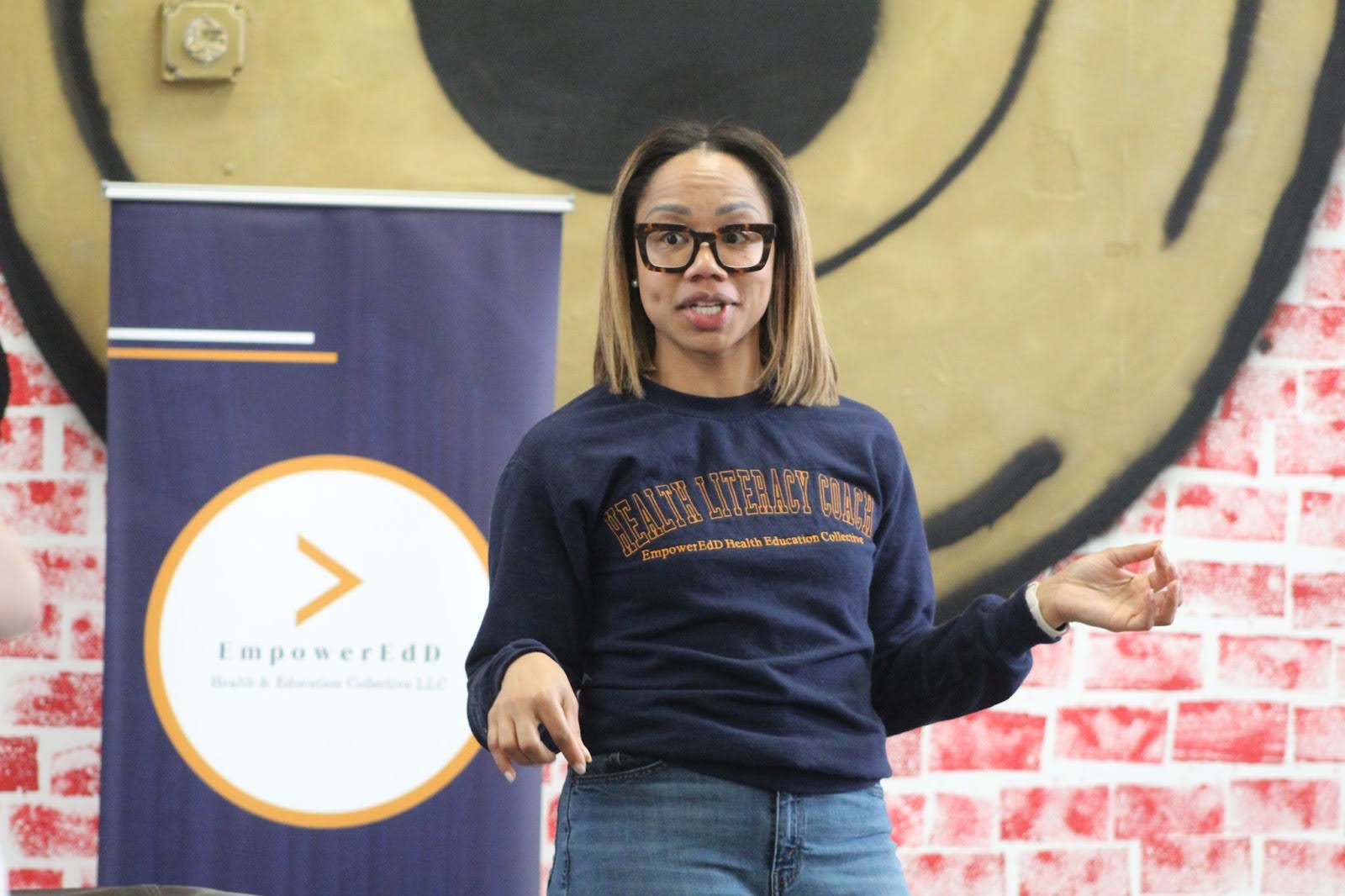
With a cup of herbal tea in hand, Tempestt Latham posed a question to an audience of five women before her: What do you wish you knew before having your first gynecological visit? It would be some time before attendees began to respond in earnest—and she was ready to get the ball rolling.
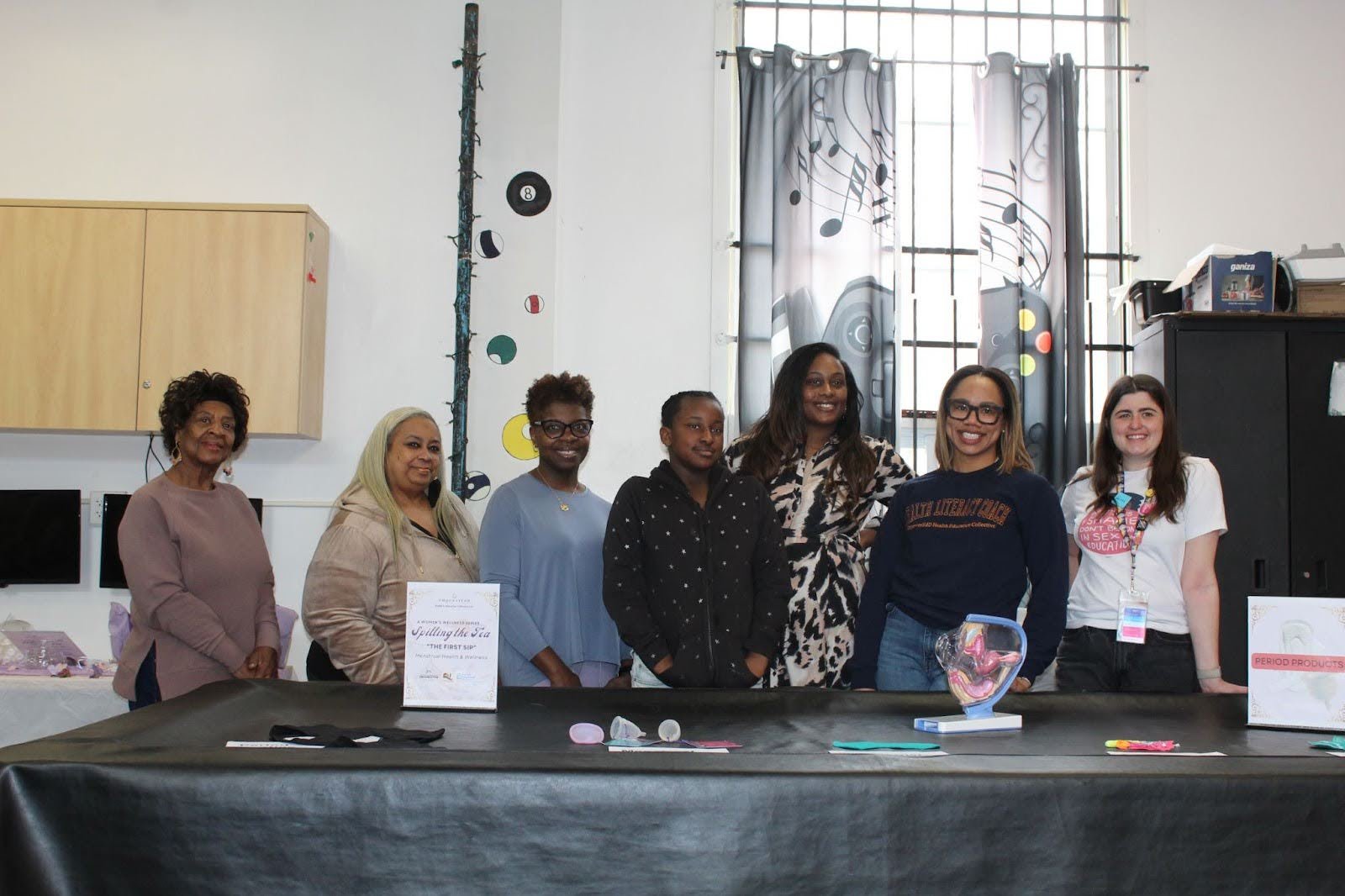
Latham posed that question—and laid a roadmap to greater reproductive health and advocacy— at “Spilling the Tea: The First Sip,” a community conversation and convening held at The Valley Street organization The Shack. Organized by Latham, the founder of EmpowerEdD Health & Education Collective and doctoral candidate in Public Health Education at the American College of Education, the event was meant to increase reproductive health literacy among Black women and girls.
Collaborators included Shamica Fraiser, owner of New Birth Journey, and Emily Ent, youth development specialist and educator at Planned Parenthood of Southern New England. “Spilling the Tea” is a three-part series focusing on women's health.
The inaugural session at the Shack focused on periods and menstrual care, with the first half of the session focused on holistic approaches to period symptoms and the second on menstrual products.
The second installment of the series will take place on Saturday, April 18 from noon to 2:30 pm at 70 Audubon St. and will go over polycystic ovary syndrome (PCOS), fibroids, and family planning. Learn more and register here.
“Our healthcare system is in place to be of support, but it is only going to support us as much as we engage, right?” Latham said. “So advocating for yourself also requires you to educate yourself. Think about those things because that speaks values to what access we have in terms of education, support, and even the confidence to even pose the question about our own bodies, our own bodies. But that barrier there, that is a lack of health literacy, not at any fault of anyone else.”
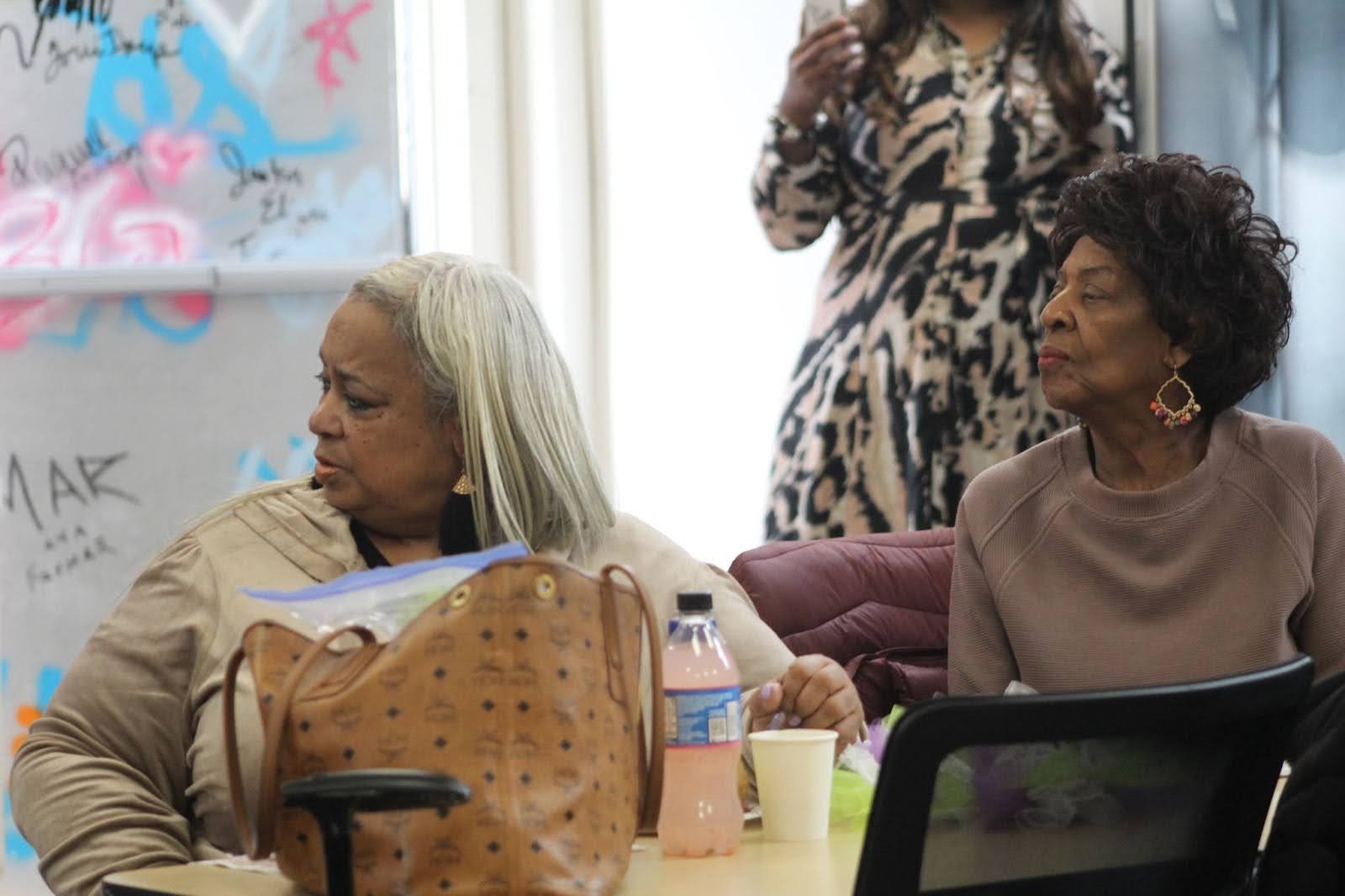
Pamela Spruill and Bernice Draughn.
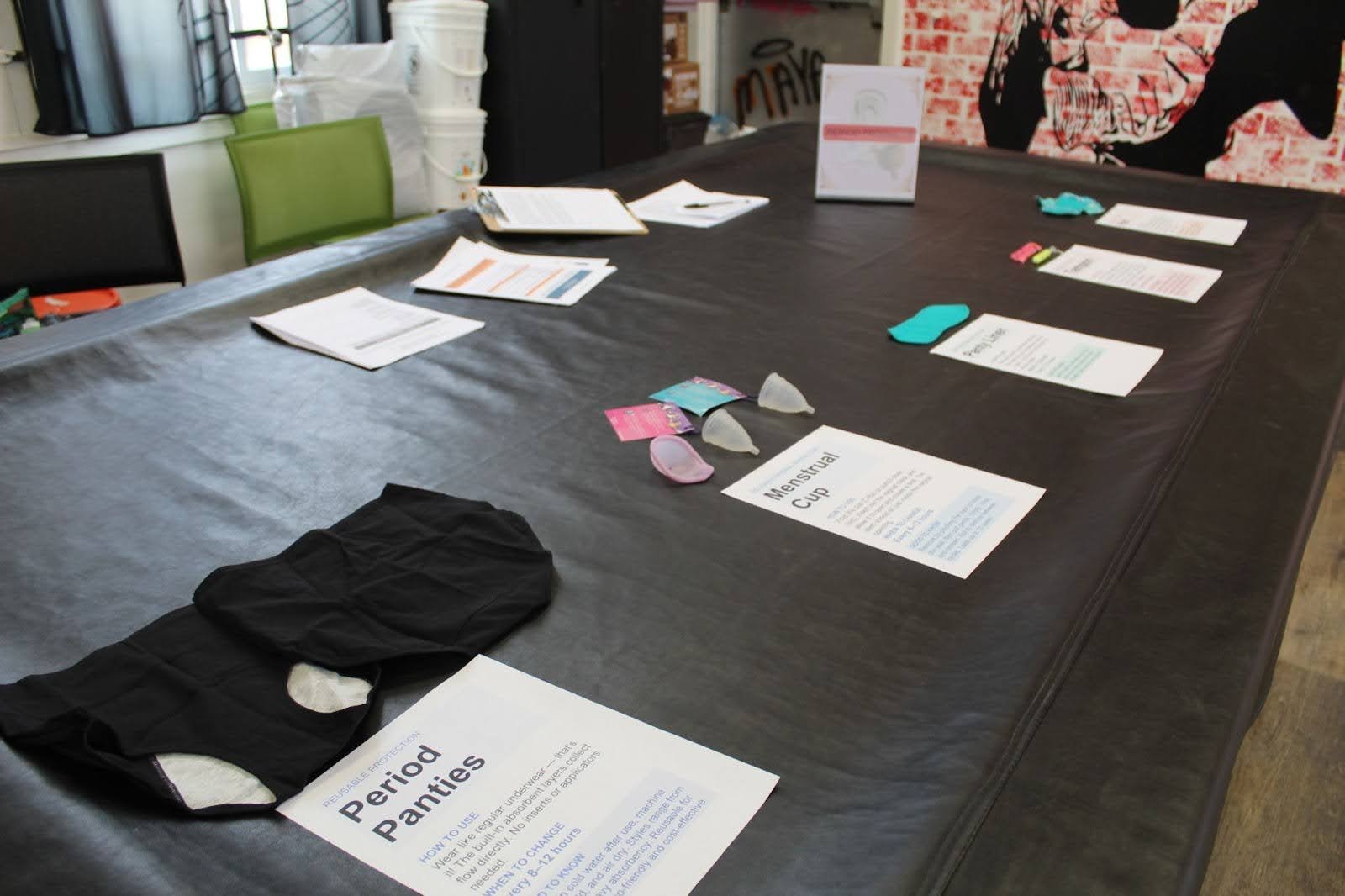
Throughout the day, organizers did just that (Alder Honda Smith, who runs The Shack, made the community space feel welcoming and homey). At the back of the room, the pool table was transformed into a menstrual product display, with period panties, menstrual cups, pantiliners, tampons, and pads lined up in a row, accompanied by a description of the purpose.
However, as Ent went down the line, it was the period panties and menstrual cups (also known as Diva cups, although there are many brands beyond the eponymous one) that got the crowd's attention and garnered the most questions. Holding the period panties in the air, Ent described their function and how to care for them. She added that some period products can be mixed and matched, like using a tampon or menstrual cup during the day and period panties at night.
“Is that something new? I never knew they sold menstrual cups,” Pamela Spruill said.
“They’re not new,” Ent said.
“How long have they been out?” Spruill asked.
“Decades,” Ent said, before Spruill let out a surprised “Whatt?” in response.
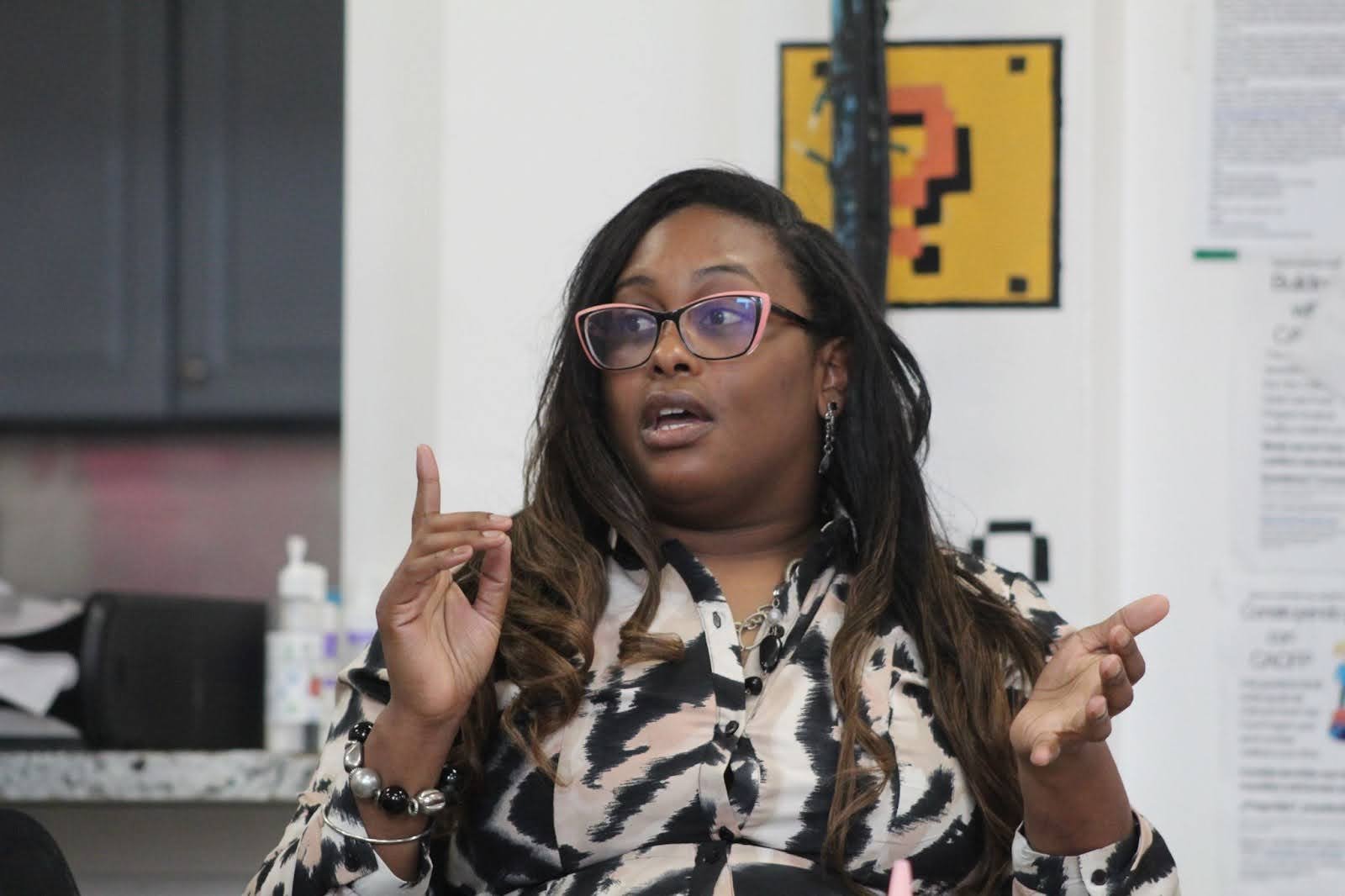
Frasier.
Using a glass vagina for demonstration, she showed how to insert the menstrual cup into the vaginal cavity. She explained that there are two sizes of menstrual cups: cups for individuals who have given birth and cups for those who have not given birth before moving on to the close cousin, period disks. She passed the menstrual cups to Spruill and Bernice Draughn, who remarked on the size and firmness of the cups.
Both described the event as “informative” and “knowledgeable.” Spruill and Draughn are frequent patrons of the Shack, and come to the community center daily for senior programming. After hearing that the “Spill the Tea” session was happening, they decided to stick around. For Spruill, it was her first time hearing about period panties and menstrual cups—information she plans to share with her daughters who are both in their 40s.
Not all of the conversation was technical: organizers and attendees both created space to discuss medical racism, bias and discrimination, which in this country can be extremely harmful and even deadly for Black women, particularly those of reproductive age. Spruill herself said that she felt and didn’t feel like she was able to ask questions and take time to learn as intended.
“I'm thinking about switching my gynecologist because I don't like when they rush. They should take time with you, especially when you're up in the age,” she said, in an interview after the session.
”And I don't like the fact that they have to have somebody else in the room. I heard that's the law now, that's something new to me. I didn't know because I didn't want her in there.”
Beginning July 2021, Yale New Haven Health implemented a system-wide policy that requires medical chaperones to attend any “sensitive exam, treatment or procedure,” that a patient may have to undergo.
“Sensitive exams” includes a physical exam of the genitalia, rectum, or breasts. “Medical chaperones will also be available during any other exam or procedure at the patient’s request. Providers should inform patients that they are entitled to have a chaperone present for any physical exam,” according to YNHH’s website.
The idea behind a medical chaperone is to be “a witness for a patient and a health professional during a medical examination or procedure,” as described on the YNHH website. The American Medical Association also outlines guidelines for chaperone implementation and states that it can “help prevent misunderstandings between patient and physician,” and increase patient comfort.
The workshop then moved into patient advocacy, patient rights, and how medical racism has impacted care and health outcomes for Black women. Despite a documented history of medical negligence against Black, Latina and Indigenous women, Latham encouraged people to be their own advocate.
“You know you. You have a Ph.D. in you. You have an MD in you,” Latham said. “They're there to take that research and evidence based practice to support you to provide you with what's best for you.”
“If you go in to your gynecologist, they don’t want to hear nothing about the other parts of your body like it doesn’t exist,” one woman said, adding to Latham’s point about the difficulty of self-advocacy. “They just want to know about that one organ that they’re serving you for that time. You can have a headache, you can have high blood pressure, you could have anything, but if it does not relate, they don’t address it.”
In response, Latham instead suggested paying attention to how patients present information to providers to strengthen self-advocacy. Instead of vaguely describing a symptom in another area or bodily concerns, patients should create a narrative and show how symptoms connect to their current visit, by taking detailed notes of the things they’re experiencing. Latham argued that health literacy is understanding your personal body.
She gave the scenario of herself going to the gynecological office experiencing consistent headaches. In the first example, the patient simply tells the provider that she is experiencing headaches.
“Those are two separate locations, right?” she asked the crowd. “So she goes ‘Oh, you should follow up with your PCP [primary care provider].’ That’s because of how I presented the information.”
In the second scenario, the patient explains how the headaches continue to happen during the luteal phase of her menstrual cycle, and that it is a monthly occurrence, and lists beverages that they have tried omitting or adding to her diet in hopes of alleviating the symptom.
“I gave more detail on what I’m experiencing, when it is occurring, how it is affecting me, and how often it is occurring,” she said.
“That is true,” the women agreed, “but I honestly believe that being truthful won’t matter to them… You related that to your condition, but if you don’t relate, you’re gonna be going to another doctor and another pill.”
Listening into the conversation, Fraiser chimed in and encouraged people to also refer to endocrinologists for menstrual and reproductive issues. While many are taught to refer to OBGYN for reproductive issues.
While patients are referred to endocrinologists when they’re preparing for childbirth or have hormonal conditions such as fibroids and PCOS, Fraiser argued that patients can talk to endocrinologists earlier in their health consultation process, and the resources and roles, midwives, obstetricians, and endocrinologists play in reproductive health.
“When you are talking to your midwife, they can refer you to an endocrinologist, because as well as, they’re all uniquely educated about hormonal health and the reproductive system,” she said.