

CitySeed | Ely Center of Contemporary Art | Fair Haven | Arts & Culture | Visual Arts | Youth Arts Journalism Initiative
Jarelis Calderon Photos.
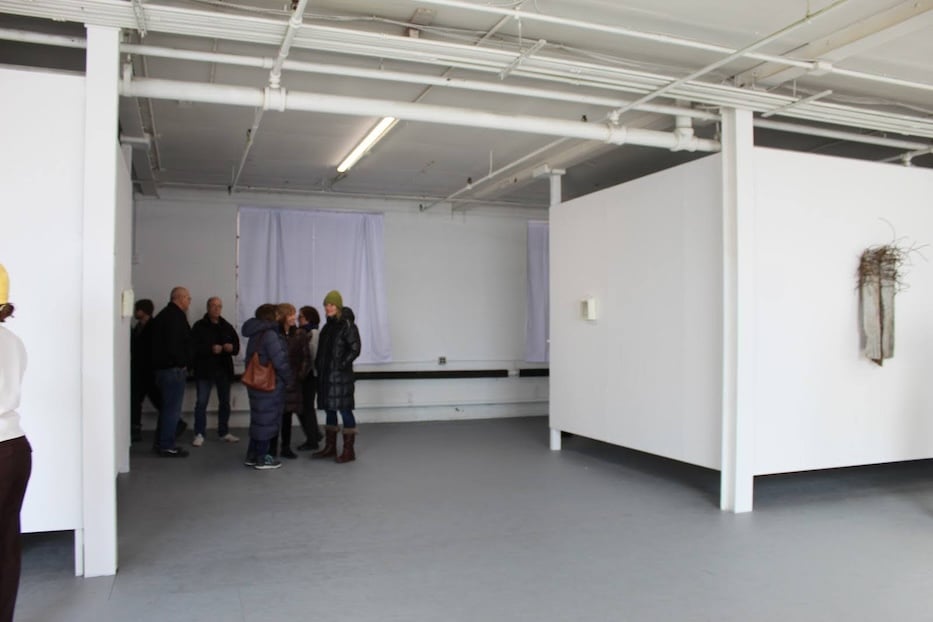
As visitors stepped into the Ely center of Contemporary Art’s new James Street location, the space felt open, designed with care, and newly alive.
Freshly built walls divided the gallery into distinct rooms. Light poured through the windows. Artwork, much of it large scale and immersive, stretched outward, finally given the room to breathe. At the center of it all, Gallery Director Aimée Burg moved through the building, finally at the end of months of planning, moving, and problem solving during a move from East Rock to Fair Haven.
The opening marked the Ely Center’s (ECoCA) first public event in its new, temporary gallery space, located within CitySeed’s 162 James St. building. Sunday, it welcomed visitors with three solo exhibitions by Keyhole Residency artists Diana Abouchacra, Lauren Flaaen, and Dario Mohr (read more about their work and residency here) as well as Intervals, a group exhibition from members of ECoCA's Curatorial and Program Advisory Committee and guest artists they invited to join in.
All four exhibitions run at 162 James St. through April 12. It marks the first large-scale event since the organization left its longtime Trumbull Street home at the end of last year. Events continue with a “Weird Music Night” and Valentine’s Day party on Saturday from 7 to 10 p.m.
“I was just so excited to really showcase them and let their work breathe here,” said Burg, who currently serves as ECoCA’s gallery director, of the artists with work on display.
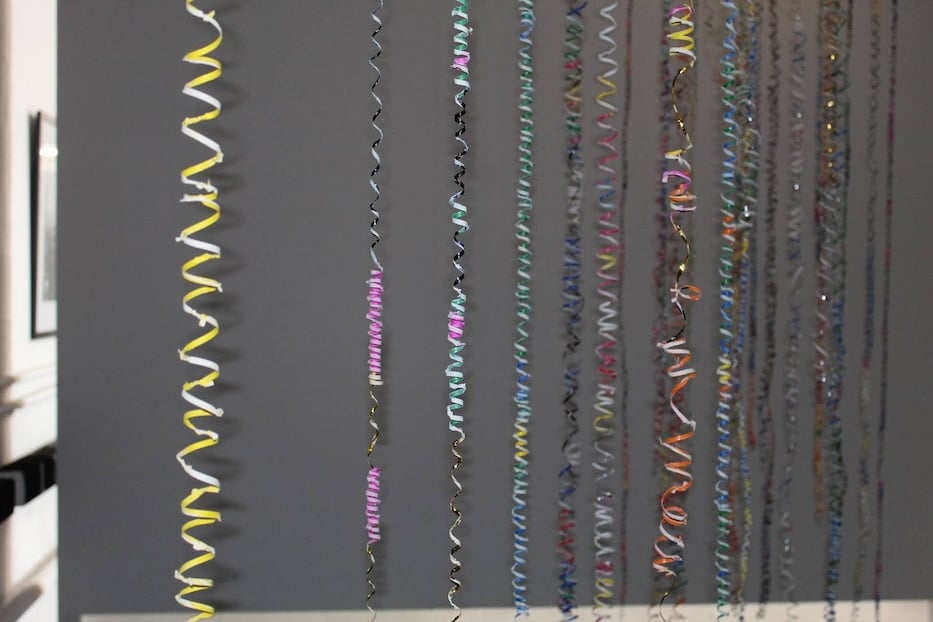
Diana Abouchara's "Memory Ties."
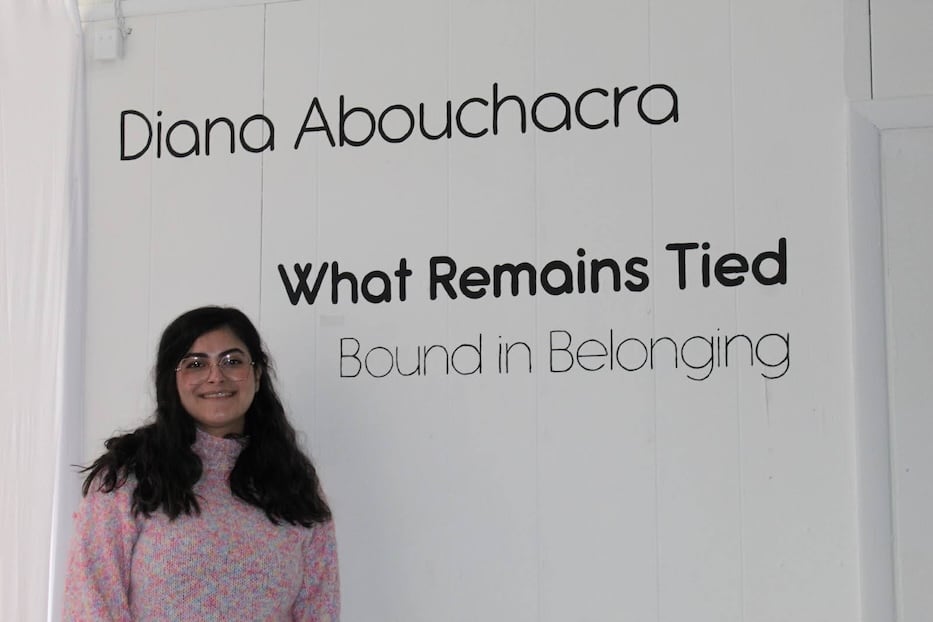
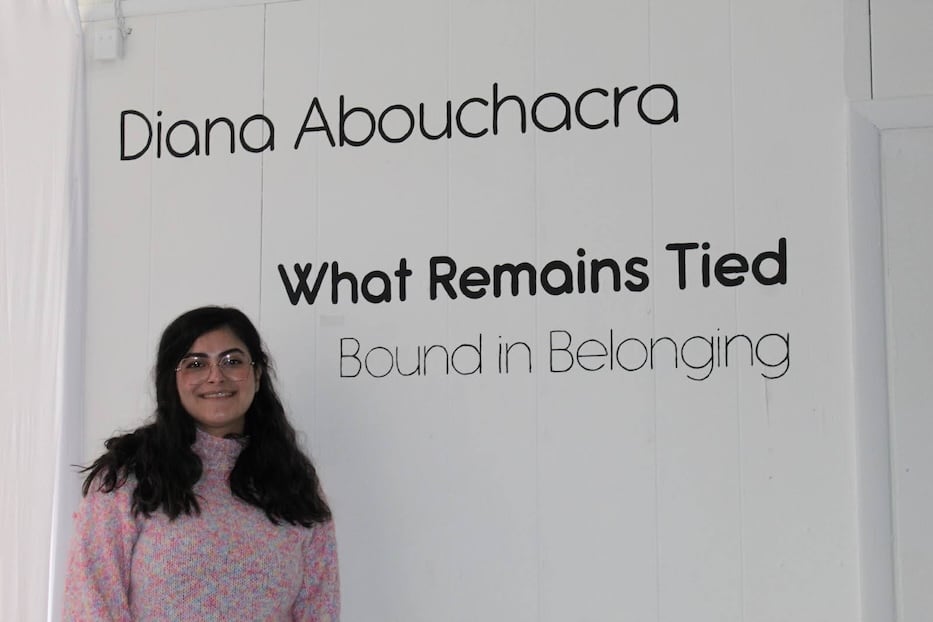
As the reception got underway Sunday, Abouchacra stood beside strands of what she calls her “memory ties,” brightly colored twists that she constructs herself, largely in an homage to her late mother. As she stood beside the ties, their bright surfaces looking out onto the room, she watched visitors move carefully through her installation. Abouchacra described the piece as a “labor of love,” something that had been a long time coming.
The ties hold personal meaning, she explained. They were inspired by the bread ties her mother kept in a kitchen drawer, and many were made in conversation with her sister and close friends. For Abouchacra, the act of physically tying them together became symbolic—a way of building connection in real time.
“The act of tying them together felt fitting for the idea of belonging,” Abouchacra said.
As some viewers walked among the ties, others took in a “video poem” with layered, dreamlike footage drawn from home movies. The result was immersive but soft, filled with color and light. Abouchacra said she hopes visitors feel free to take from it whatever they need, whether that’s reflection, nostalgia, or joy.
“Maybe they think about their own memories,” she said. “Maybe they think about their own belonging.”
4.jpeg?width=933&height=622&name=ECoCAFairHaven)4.jpeg)
Nearby, artist Dario Mohr stood beside a series of illuminated glass blocks, each one glowing softly against the gallery wall. Inside them were painted images of nude Black male figures—anonymous, vulnerable, and partly hidden behind undulating glass.
Mohr explained scaling down for this show was a shift for him. Known for larger installations, he described these smaller, light-based works as a way of refining his visual language. The pieces function like wall lights, but instead of simply illuminating a space, they create a sense of vulnerability. The paintings themselves were created years ago, but Mohr decided to preserve them inside the glass blocks because he sees the figures as “precious.”
As the show opened on Super Bowl Sunday, Mohr noted how the work intentionally contrasts the spectacle of football—a sport that often celebrates physical impact and performance—with still bodies that do not have to perform at all.
“They’re worthy in and of themselves,” he said. By keeping the figures faceless and partially obscured, Mohr also created a sense of protection while still honoring their presence, he said.
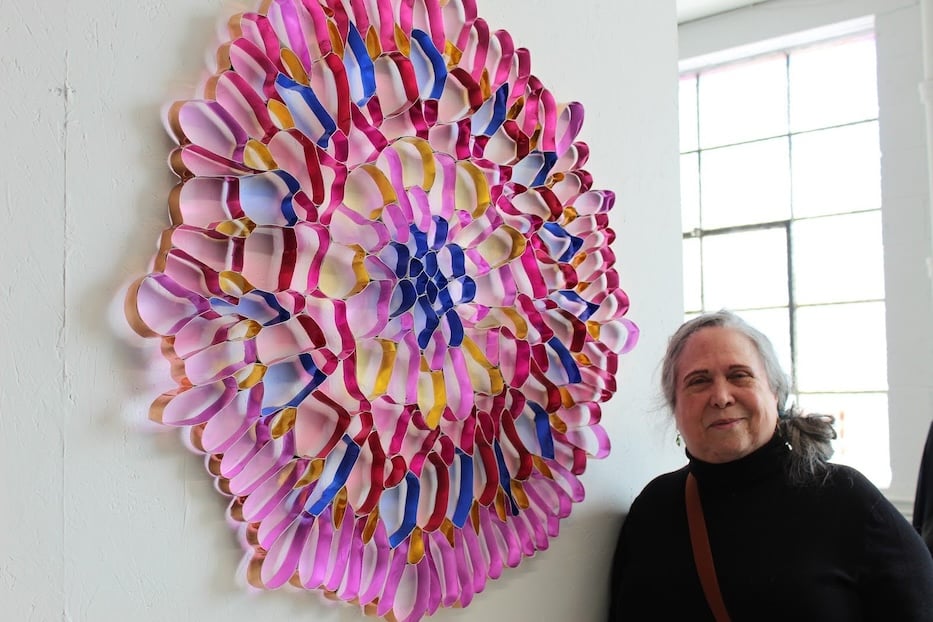
As attendees made their way through Intervals, Suzan Shutan’s work caught the light almost immediately, drawing viewers in before they even realized why. Inspired by rose stained-glass windows that she’s encountered while traveling—and even locally in New Haven—the work reimagines the traditional symbol of enlightenment and hope in a contemporary way.
“The idea of the rose window is really about enlightenment—a sense of hope and inspiration in a time of darkness,” she said.
For her, part of that hope has come out of chances for collaboration like those folded into Intervals. When she was envisioning her own work, Shutan invited Westville-based artist Molly Gambardella to exhibit with her. The two circular works sit near each other, quietly speaking across the space.
Shutan, who has worked in paper for years— often on large-scale installations reaching up to 20 feet—created this smaller 36-by-36 inch piece using reflective paper. Though more intimate in size, the work still carries her signature focus on material and light.
Shutan explained that rose windows were originally created to symbolize hope during dark periods in history. She added that she wanted this piece to feel lighter, something that allows people to pause for a moment and just feel a sense of joy. In a time that can feel heavy, Shutan hopes the work reminds viewers that difficult periods eventually pass.
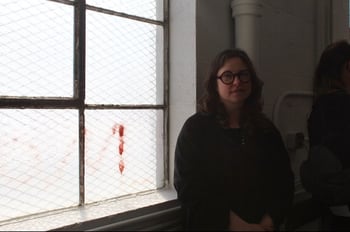
As visitors moved through the Ely Center's new James Street location, Burg stood nearby, greeting guests and taking in the moment. After months of planning, packing, building, and reorganizing, the opening marked the center's first public event in its new home.
Burg described the move as “chaos,” laughing as she reflected on the challenges of relocating to and reworking the space to accommodate art. The result, she added, was “worth it.”
Burg emphasized that the Ely Center's mission is still rooted in dialogue, inclusivity, and community (despite a series of previous missteps and harm done to artists that the board has not yet publicly addressed). The new location already feels welcoming, she said, with neighbors stopping by and offering support during the move.
“I hope they find a place they feel comfortable and welcome,” she said of first-time visitors.
A junior at Wilbur Cross High School, Jarelis Calderon is an alumna of the 2025 summer cohort of the Youth Arts Journalism Initiative (YAJI). YAJI is a program in which New Haven, Hamden and West Haven Public Schools high school students pitch, write, edit and publish articles through the Arts Paper. This year, YAJI advisors included Arts Paper Editor Lucy Gellman and reporter and YAJI alum Abiba Biao.