

Black-owned businesses | Culture & Community | Downtown | Dr. Martin Luther King Jr. | Music | Arts & Culture
King Kenney. Abiba Biao Photos.
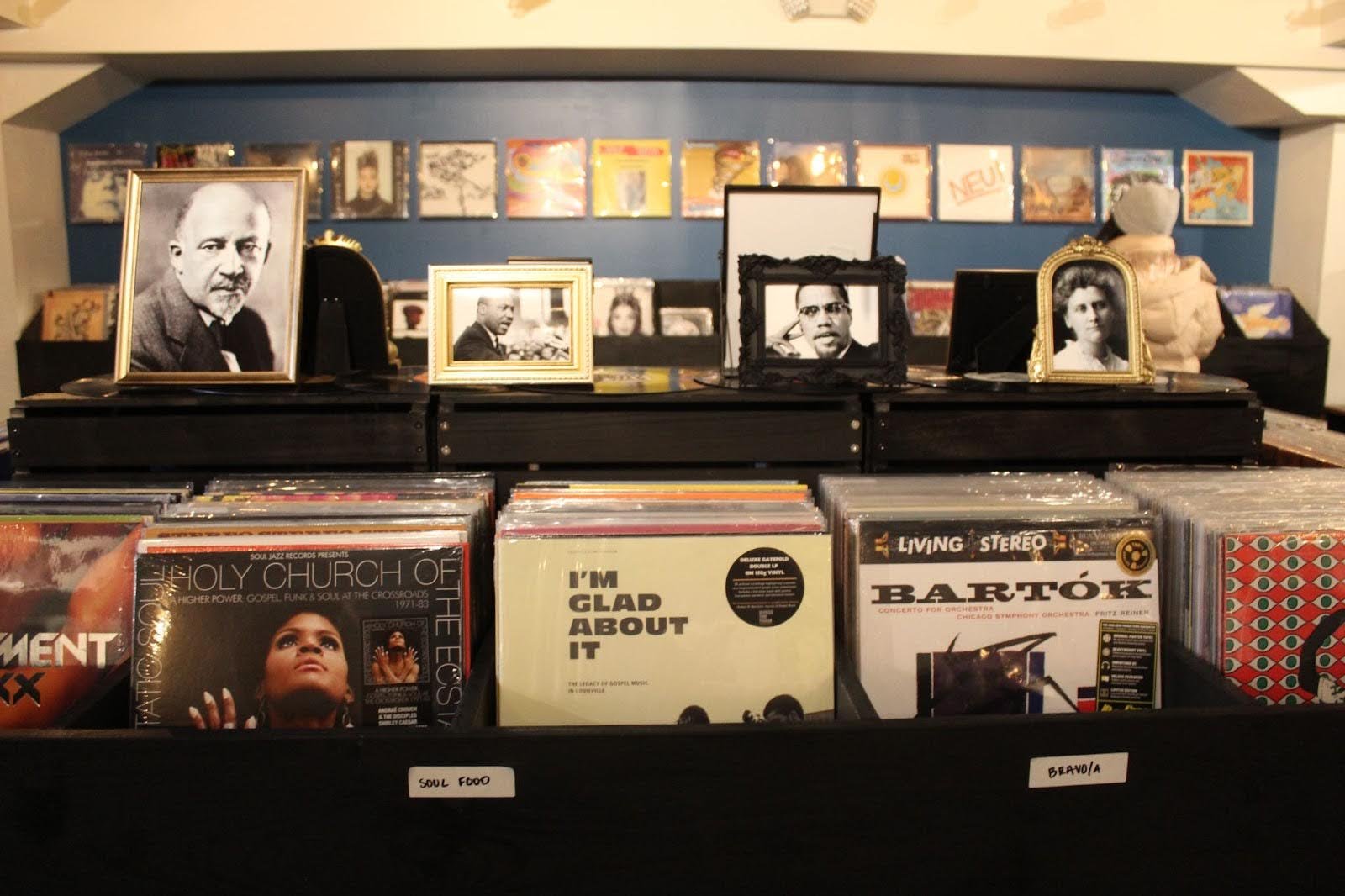
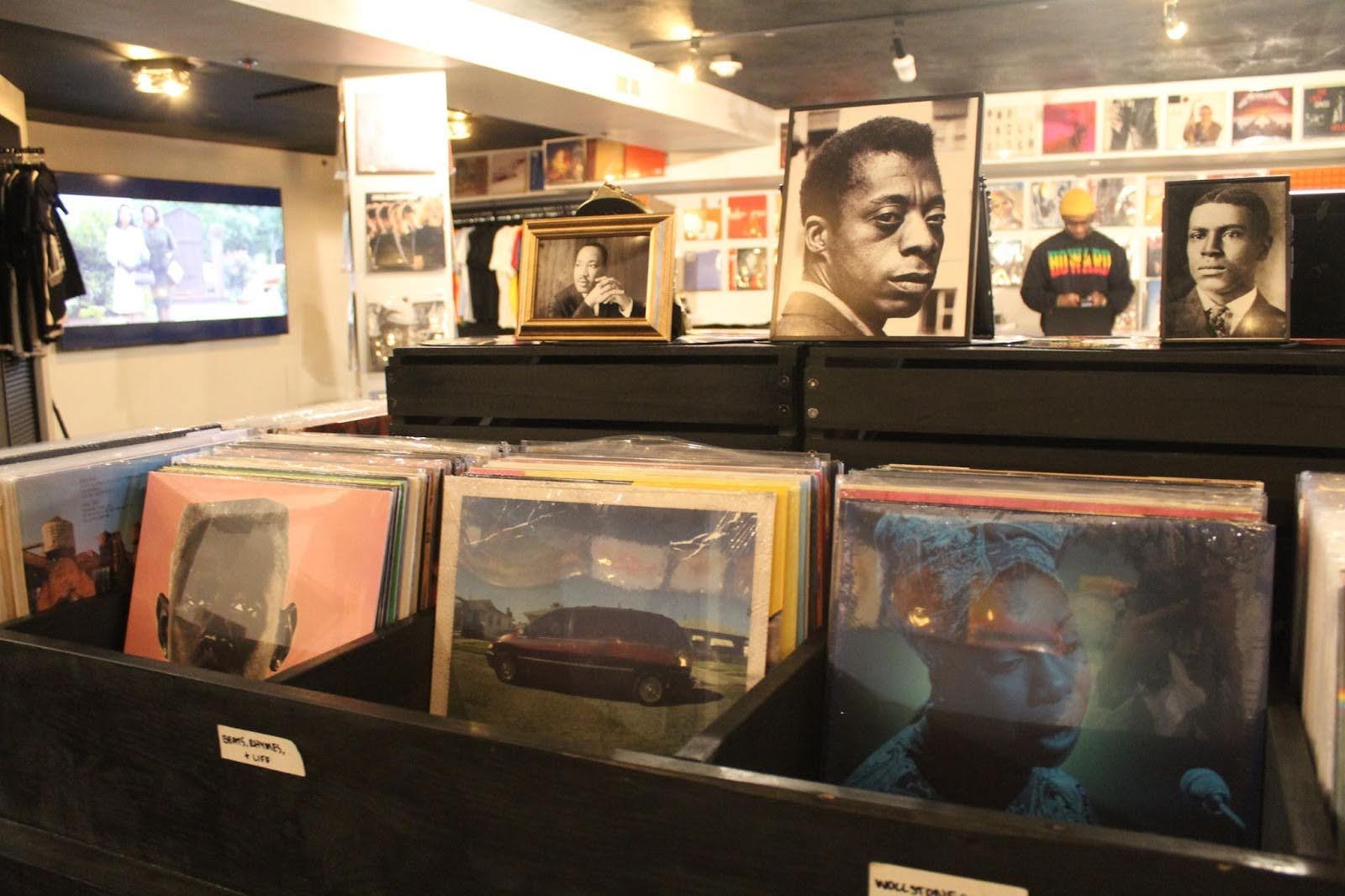
Music floated through the lower level of 1020 Chapel St, winding its way around low tables and handmade, wooden bins that housed sleeves and sleeves of vinyl. From a record player, a quartet of steady voices rose through the space, tired but clear. Oh Pritchett! Oh, Kelly! Oh Pritchett, open them cells, they called, unearthing a whole history in under a minute. Atop the collections, photographs of Martin Luther King Jr., James Baldwin, Oscar Micheaux, W.E.B. Du Bois, Malcolm X, and Mary White-Ovington looked back.
That sound came to the Chapel Street record store GRAILS last Monday, during the shop’s first ever “Freedom Songs,” a day-long listening session dedicated to the music of the Civil Rights movement. Designed to celebrate the life and legacy of Dr. Martin Luther King, Jr., the day invited people to explore social justice and Black revolution through songs, speeches, and poetry of freedom, bringing to the present an urgent and bright roadmap from the past.
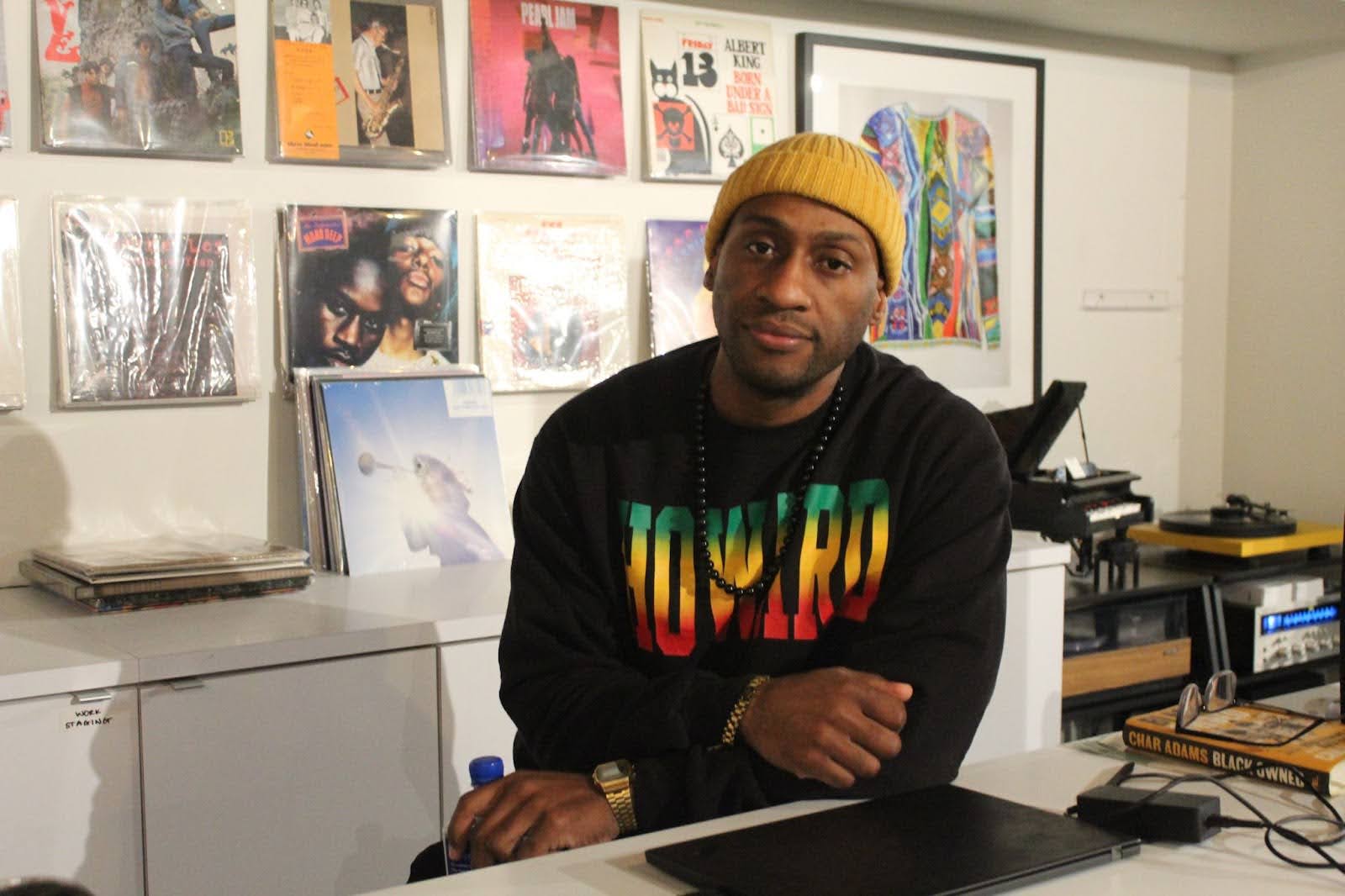
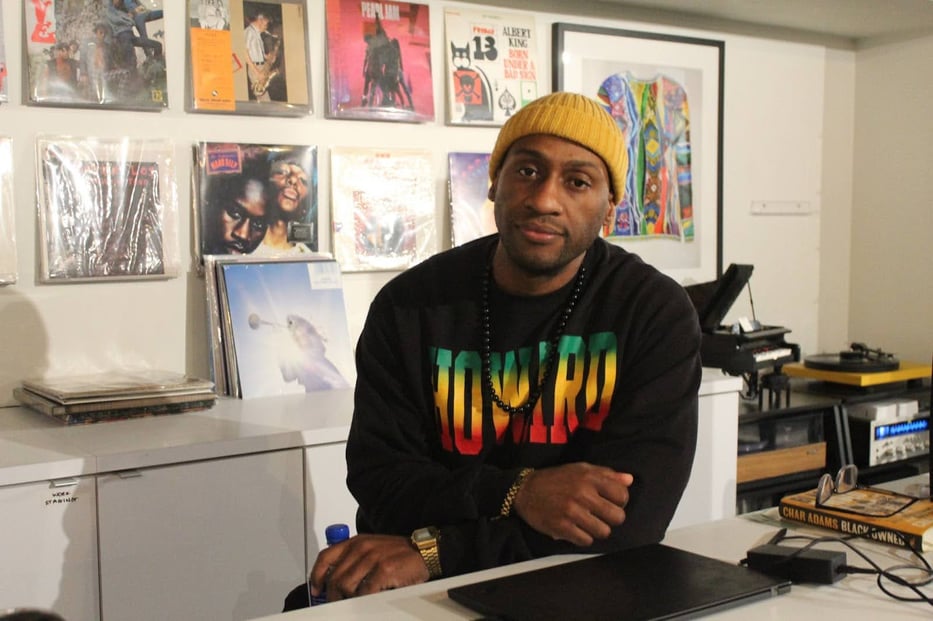
“I wanted the day to speak to what it means to mark Dr. King’s legacy in a listening room, rather than in a speech or formal ceremony,” said GRAILS owner King Kenney, who opened the shop in October of last year, in an email afterwards. “Given the wealth of MLK-related commemorations across Yale and the city, I wanted to embrace my role in that celebratory process as both a new member of the community, a record store, and a Black man in America.”
For Kenney, a deep listener and champion of the arts who has worn many creative hats in and beyond New Haven, that process began and ended with the music itself. Originally, he said, he found himself pulled toward “Voices of the Civil Rights Movement,” a recording from the Smithsonian Folkways Collection that came out in 1997, three and a half decades after Dr. King’s March on Washington.
The album, which includes music from the first six years of the 1960s, features recordings by artist-activists such as The Freedom Singers, Fannie Lou Hamer, Betty Fikes, Willie Peacock, Bertha Gober and dozens of others, creating a window into the music that helped build and sustain a movement. While some of the tracks are instantly recognizable—“Wade In The Water,” “This Little Light of Mine,” or “Walk With Me, O’ Lord,” for instance—others contain whole histories that might have otherwise been lost to time, an instant reminder of the weight and importance of history.
“Oh Pritchett! Oh, Kelley!,” sung by the Freedom Singers, for instance, is one of these. In November 1961, Laurie Pritchett—then the chief of police in Albany, Georgia—oversaw the arrest of five Black students from Albany State College, for the ostensible crime of taking up space in segregated waiting and dining areas at the town’s bus terminal. With Asa Kelley, then the mayor of Albany, Pritchett had already been waging a kind of legislative war on Black people, in an attempt to preserve the violent racial and economic subjugation of Black people in the American South.
But the thing was, the students' presence wasn’t a crime (and not just because segregation is objectively wrong): the Interstate Commerce Commission (ICC) had formally banned segregation in its facilities on November 1 of that year, following the Supreme Court’s 1960 ruling in Boynton v. Virginia. Students had every right to be there. From prison, Albany State College students Bertha Gober and Janie Culbreth, both also members of the Student Nonviolent Coordinating Committee (SNCC) wrote the words to what became “Oh Pritchett, Oh Kelley.”
Decades later, the Freedom Singers—who at the time were students at Albany College, and included voices like Bernice Johnson Reagon, an activist who later founded Sweet Honey In The Rock—are still the voices of a movement, or many movements—and a reminder that much of this history is still fairly recent. Gober and Johnson Reagon, for instance, were still alive and making good trouble until 2023 and 2024 respectively. The Rev. Charles Sherrod, a founding member of SNCC who helped the Freedom Singers grow their activist footprint, departed this world just a year before, in 2022.
Selecting the music is a “never ending process,” Kenney said as the record moved on to another track, and he had a moment to reflect on the weight of presenting this music now, in an era of state-sanctioned violence that can feel like a throbbing echo of the 1960s. That’s what drew him to recordings like Nikki Giovanni’s 1971 Truth Is on the Way, Bobby Hutcherson’s Now, and Lionel Hampton’s Off Into a Black Thing. The anchoring work of the day featured King’s rolling, resonant voice on The Great March To Freedom, which concludes with the oft-quoted “I Have A Dream Speech.”
“In that final passage it arrives at the place the speech holds for all Americans, but for Black Americans in particular: a recorded work of art that functions as an irrefutably unifying national anthem,” Kenney said in an email afterwards. “His booming voice carried a reverential quality, heavy with history, its prescient words still open to personal and emotional translation amid the tumult of modern times.”
He added that there is a specific power to listening in a collective setting, particularly when it’s a curated selection on vinyl. Unlike streaming platforms, vinyl has a tactility and intimacy that includes the conditions under which a piece of sound was recorded: it’s a historical document, rather than a track so obsessively worked in a studio that it's flattened out.
“A lot of folks would think, like, ‘Oh, I can go online and go to Tidal or Spotify or whatever, and become an expert in this genre,’” he said during the listening session. “The problem is that you have to know that that exists and you have to know what that rabbit hole is. So like a place like this, you could find something around go there differently than what's being recommended to you based on your listening experience.”
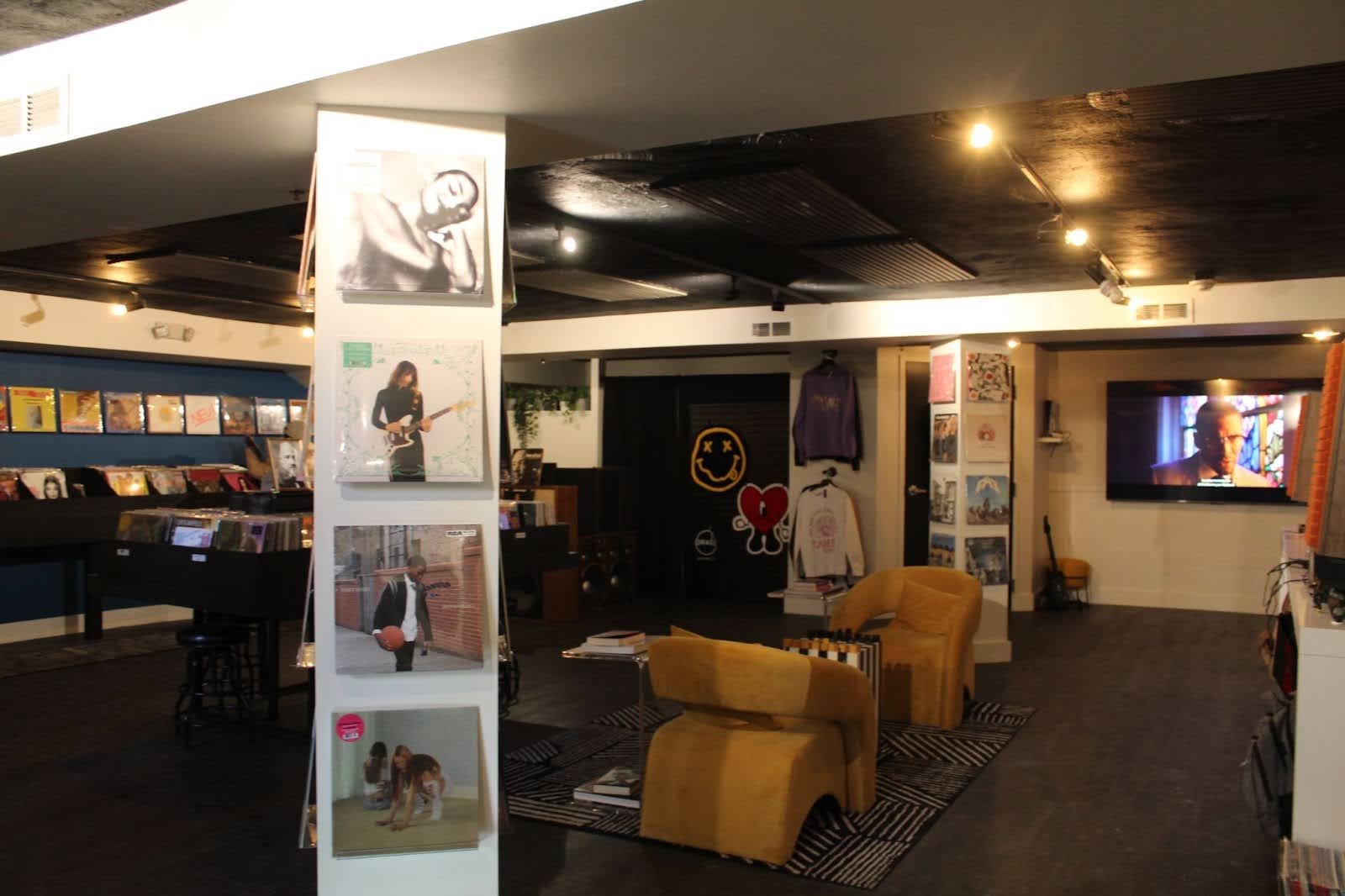
While GRAILS has only been open for a few months, Kenney has already noticed the impact of his shop. Sometimes, students from ACES Educational Center for the Arts (ECA) stop by to play chess and ask questions about Kenney’s music selection and listening suggestions. Each day, more proceeds go to the GRAILS Scholars Program, which benefits students at Neighborhood Music School. Often, he meets new people through community events that the store puts on.
It’s becoming—quite by design—a “third space” to find music and history across the Black diaspora and beyond.
“The whole store is a diaspora view of how music kind of proliferated across Africa, and Brazil, and Argentina,” Kenney said. “All of that is here in a very real, present way.”
Lucy Gellman contributed reporting.