

Arts & Culture | Autobiography | Holocaust | Artist Profile | Judy Birke
Judy Birke reckons with identity and belonging in her autobiography, Catching Up With Myself
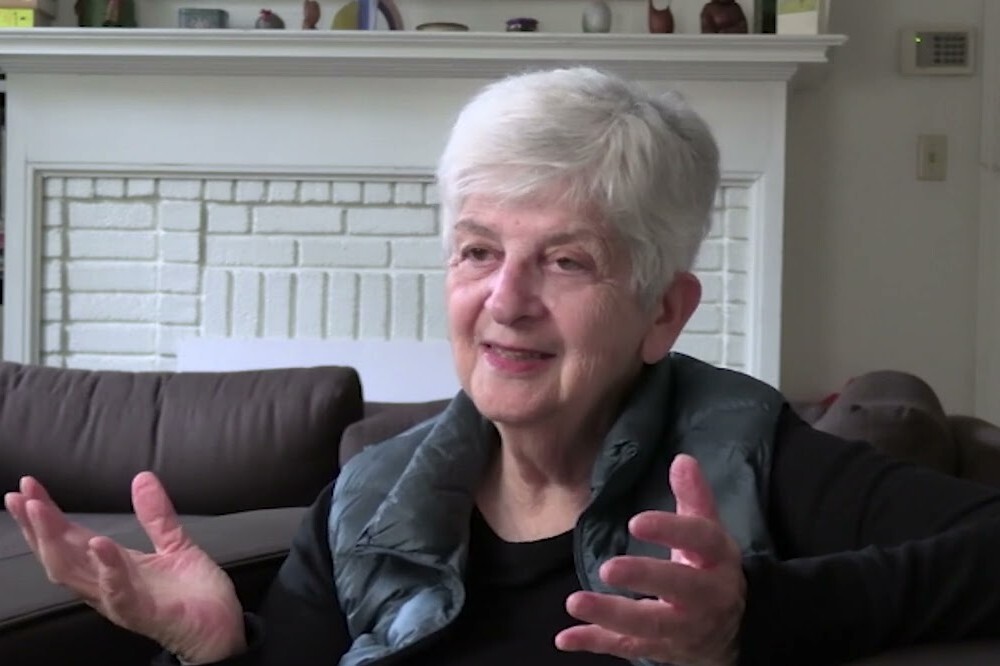 “I serve good cookies.”
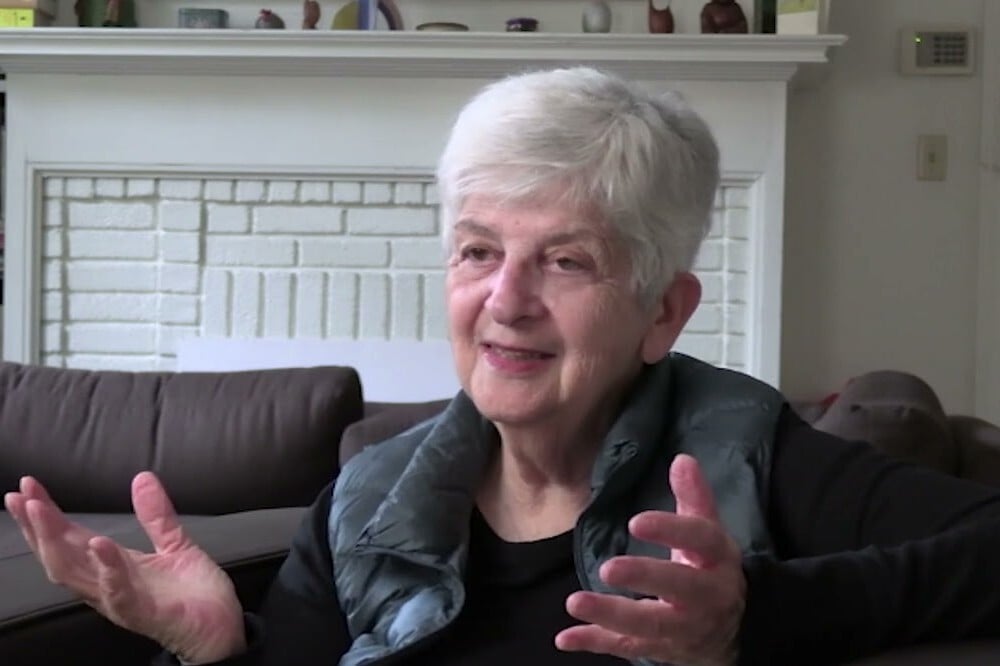
That’s the promise that lures me to Judy Birke’s house on a bitterly cold Tuesday afternoon. I had recently learned about her autobiography, Catching Up With Myself: Memories and Musings, which she published last year. It sounded right up my alley, so I called Birke to see if she’d like to speak to me about it…but she told me she did not think it would make for a good piece for the Arts Paper.
Despite a long career in the New Haven arts scene—which include being director of the Munson Gallery in New Haven and an art critic for the New Haven Register, among other publications—Birke insisted that Catching Up With Myself “has nothing to do with that.” The book covers Birke’s escape from Nazi Germany as a baby and her upbringing in New York—a story she tells through prose, poetry, photographs, and documents.
Our initial phone conversation made me curious to know more, so I told her I wanted to interview her anyway. She asked if I would want to come to her house. The cookie offer cinched it—and true to her word, she put out quite the spread: chocolate chip, fudge, butter, and lemon bars. I was afraid for my fitness regime as I sat down and started recording.
Very quickly into our conversation, I realized why I had wanted to talk to Birke: her story tackles the evergreen topic of belonging—one that, as a double immigrant, I am endlessly interested in. Birke was 10 months old when her mother (Birke asked that I not use the names of any of her family members) finally secured exit papers to leave Nazi Germany in 1941. Their country had decided they didn’t belong. Maybe the U.S. would decide differently?
Their life in America was not easy. Birke’s mother was a cleaning lady; Birke told me they “were very poor,” living in a basement they shared with two other families. But she didn’t mind: “I thought that was a good part: They came into our bathroom, we went out to the refrigerator in the hall, and I thought they were family.”
In fact, she has nothing but good things to say about her life in the United States, of which she became a citizen in 1949 at nine years old. She recalls a ceremony her mother took her to in Central Park around that time, celebrating “I Am an American Day”:
There were celebrities, presidents, news people. My mother took me, and it was amazing. That was the first time that I felt really American; [it was] something dedicated to people like me, and everybody appreciated it. I will never forget the last thing that was said, in unison, by these accents that were not native to Central Park: the Pledge of Allegiance. And we were all so grateful—as were the Americans who were there, so pleased to have us.
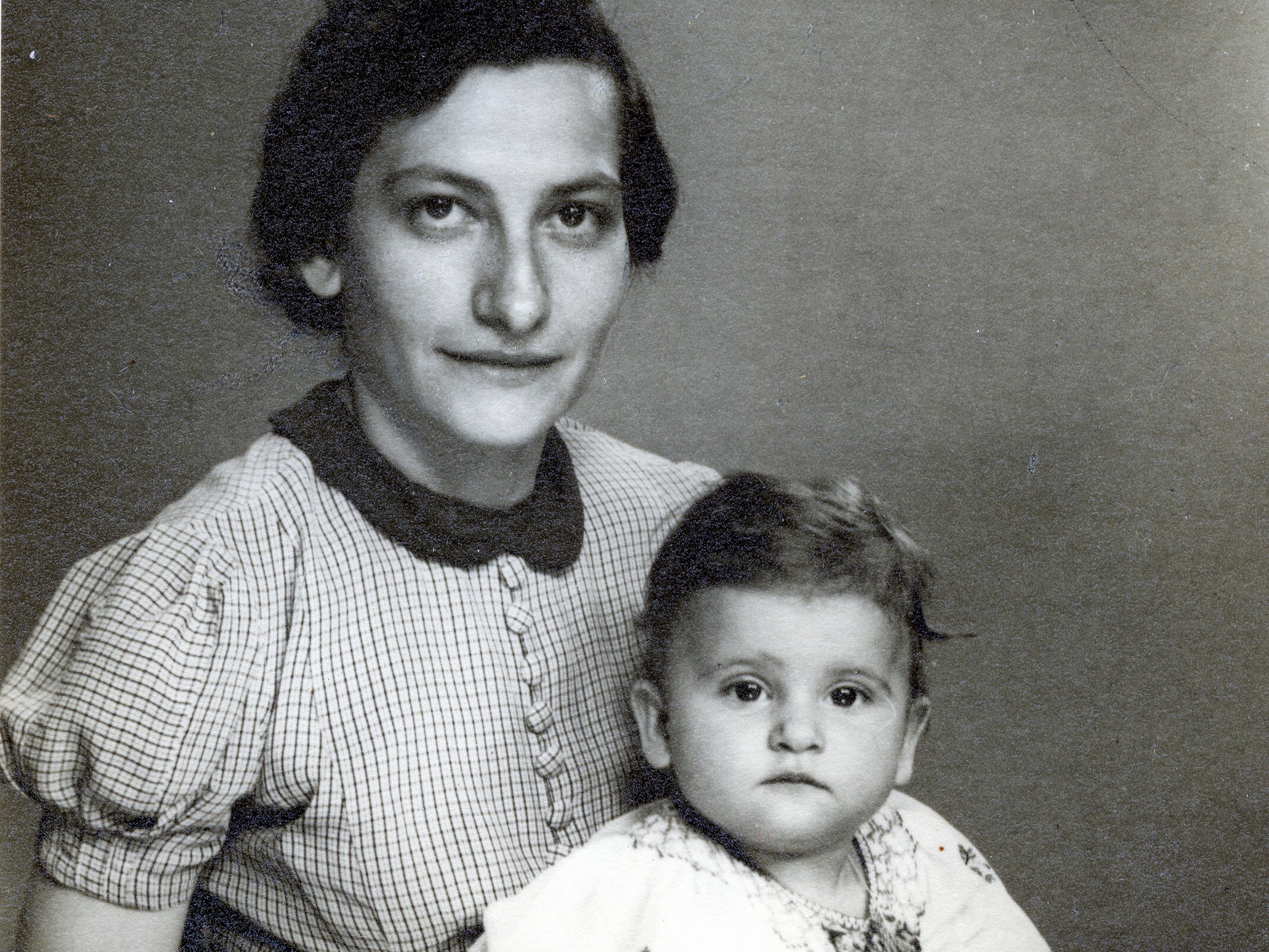 Still, much of Birke’s childhood was spent playing down whatever made her different from her classmates, including the fact that she was not born in the U.S: “I certainly didn't want my mother to speak German in front of anybody, because that reinforced the difference.”
She also didn’t want people to know she only had one parent; Birke’s father had been conscripted to a forced labor crew, and died from a workplace injury before his wife and daughter left Germany. Her mother never talked about their past, and Birke didn’t press her: “I think I intentionally wanted to know nothing about it.”
Eventually, the German government started approaching “former citizens” to go back and learn about their past. After turning them down multiple times, Birke decided to make the trip in 1997; by then, her mother had passed away (she died in 1973) and couldn’t tell the story herself.
During that trip, Birke met an archivist and shared some of her story with him. He invited her to come to his office—and though she accepted, she was not enthused: “I'm sitting there thinking, ‘Get me out of here. I really don't want to be here.’” But he turned out to have crucial information on Birke’s past.
Amongst the artifacts in the archivist’s possession were letters that Birke’s mother had written to the German government to get her exit papers. The family had tried to leave Germany three times; in one of the letters, Birke's mother listed all the things she would carry in the two suitcases they were allowed:
And at the very bottom, she wrote, ‘und Spielen für das Baby’: ‘and toys for the baby.’ I can't help but think that some bureaucrat sitting at some desk saw that, and that was one of the things that helped us get out.
Birke told me that, despite finding it all “interesting,” she “wasn't committed to finding more out.”
Then one day in the early 2000s, when Birke’s granddaughter was in the fourth grade, she asked Birke if she had any keepsakes she could bring to class for a lesson on immigration. Birke offered her German passport, which had both the swastika and a red “J” identifying her as Jewish.
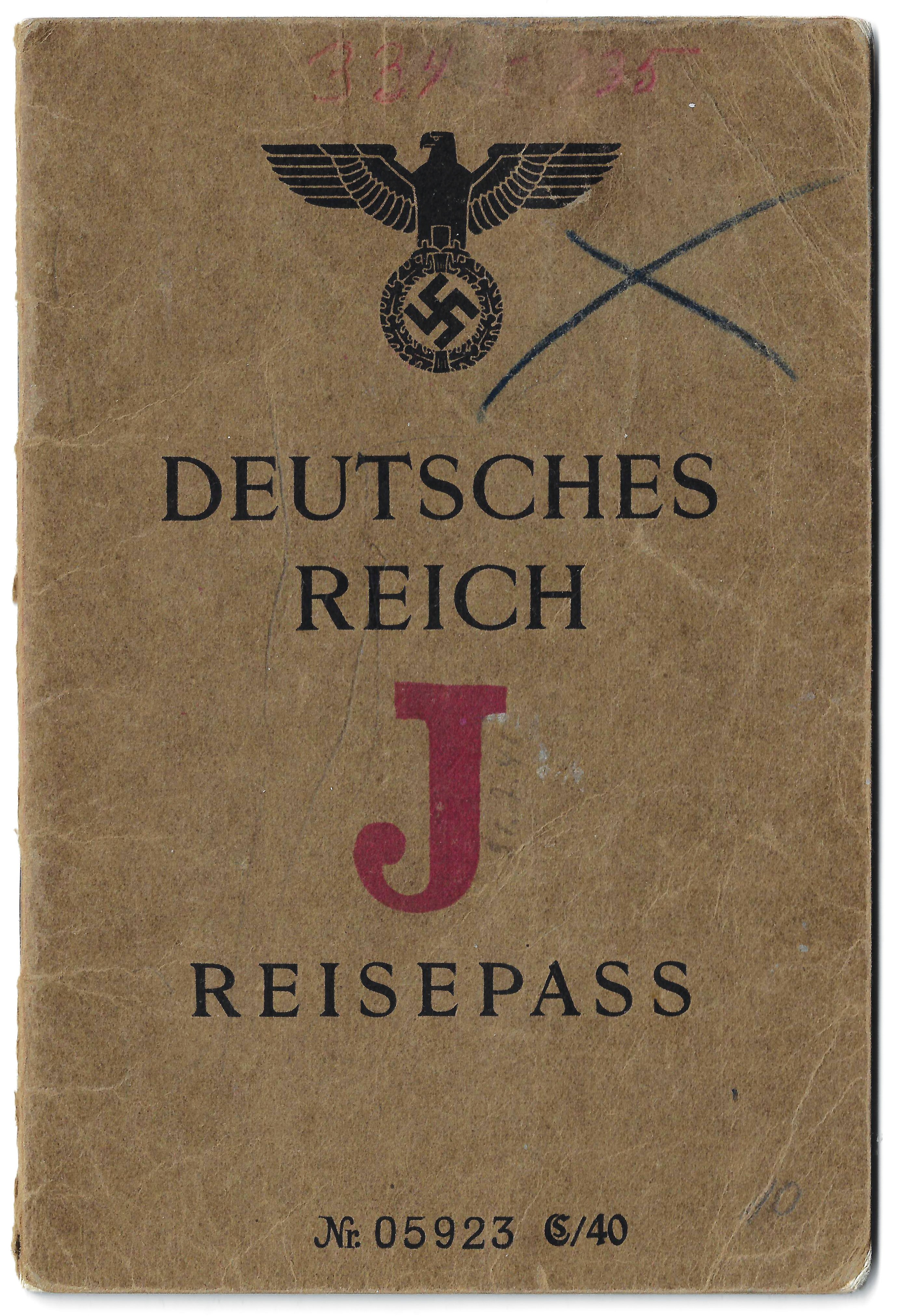 According to Birke, the other students (and the teacher) were very interested: “It's such an ironic thing: Here she is, bringing my German passport, and everybody's interested in it—and I had such shame about it.”
When her granddaughter then asked if they could take a trip back to Hamburg and learn more about their origins, Birke demurred for years—until her daughter made it happen in 2013.
The trip was revelatory. Exploring Hamburg with her family, seeing how interested they were in their own history, Birke didn’t think she could postpone telling her story any longer. Part of it, she told me, was reckoning with her understanding of her mother:
I didn't really know my mother. I mean, I knew my mother, but I didn't know about her: how brave she was, how strong she was, how determined she was in this really difficult, sad period, when she had just lost her husband (…) I didn't really know her until I started doing research and finding all these things and just realizing what kind of a person she was.
Birke says some readers of the book, which took her twenty years to write, approached her to say that it’s “a gift” to her mother. If it was, that was not Birke’s intention—she says her biggest feeling was that of it taking a “huge weight off [her] shoulders.”
I asked her why. She insists her mother never guilted her, never even acknowledged all she had done for Birke. Instead, the weight was “all the stuff that I had kept inside, that I finally was able to open up about and declare and say and be pleased.” In 2017, the German government restored Bike’s citizenship—yet another step in bringing her some sense of belonging, of closure, of coming together.
During our conversation, I found her magnetic: the ease with which she spoke, her excitement to put things out in the open. I realize that’s why I wanted to interview her. I’ve been in this country for a little over ten years, and I don’t yet feel like I belong. I’m not even sure I want to try to feel it, considering what immigrant life looks like these days. But she seems to be onto something.
I ask her about her career, about moving from New York to New Haven and making a home here. She tells me she started as a visual artist, her major in college. But arriving in New Haven, she pivoted to a career as an arts dealer—she met someone who did it, and thought it would be something she’d like to try her hand at:
And little by little, it worked out, and I had a really good business. I did banks, I did insurance companies, I did hospitals in Connecticut. I showed slides—that was then, it was a long time ago—and they picked out things, and we hung things up. They bought them, you know, it wasn't just like a show.
Eventually Birke got offered a job as director of the Munson Gallery (which started in New Haven but no longer operates here). She told me she was there for “many, many years,” but eventually, she realized she missed consulting, which gave her the chance to be out and about, “meeting all sorts of different people,” so she went back to it.
Those experiences alone could describe someone’s entire life, but Birke was not done:
Somebody said to me, ‘Have you ever thought about doing reviews or things like that?’ And I said, ‘Sure, why not?’ And I became the art critic for the New Haven Register, and I did criticism for other publications also, and I liked that. And then somebody said to me, ‘Could you appraise a picture for me?’ And I said, ‘Sure.’ So I learned how to be an appraiser.
She did all of that before retiring…and then writing and publishing a book. She says it all very naturally, but I am astounded by how adventurous the little girl who didn’t even want her mother to speak German in front of others, lest she stick out too much, turned out to be.
I ask her what her secret is:
I say yes to everything. I was never ambitious, if you can believe that. I never really went after anything, but I was always interested in art...and then things just kind of happened. I did a little bit of teaching at Southern Connecticut, a course called ‘Business Management for the Artist.’ And the one thing that I always say to these young people who ask me, ‘What should I do?’ is, ‘Say yes.’
I wonder if the true secret, perhaps, is that she found belonging not by feeling it, but by doing it. As I get up to leave, she points out I’ve barely touched my cookies. It’s true—I was so engrossed in the conversation, I forgot all about them. She tells me to at least grab one for the road.
I say yes.