

Arts & Culture | New Haven Museum | Youth Arts Journalism Initiative | Arts & Anti-racism | AAPI
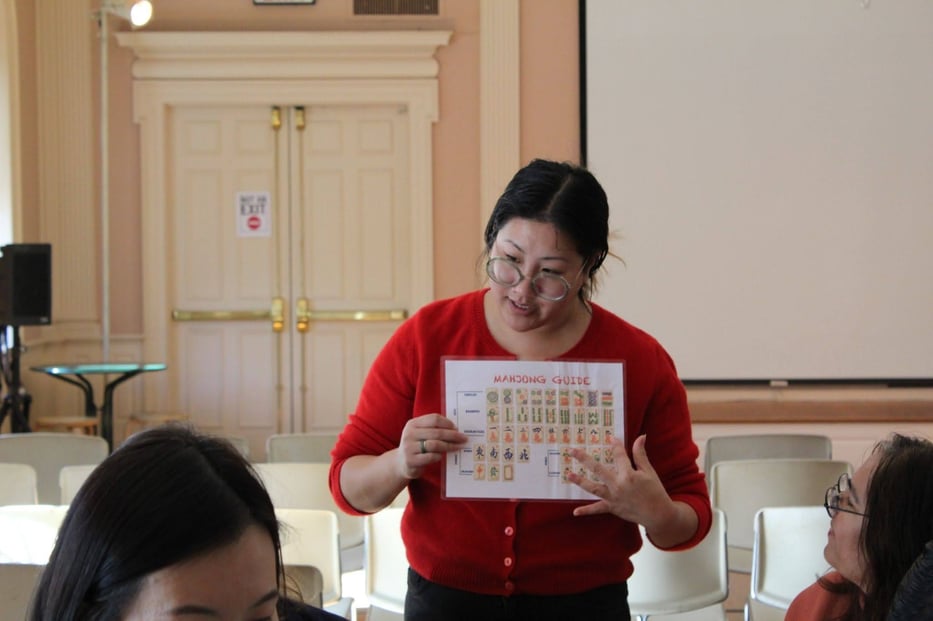
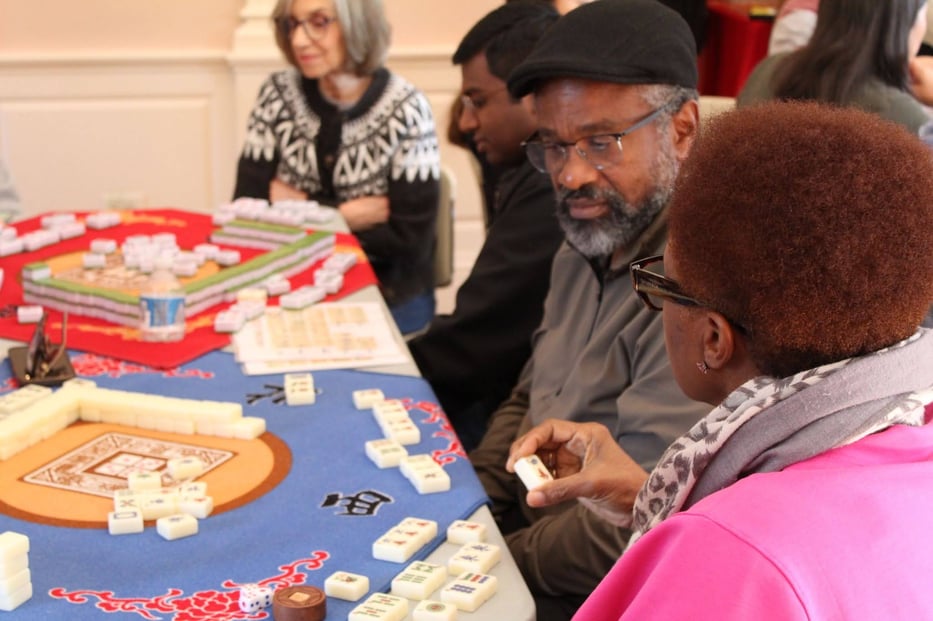
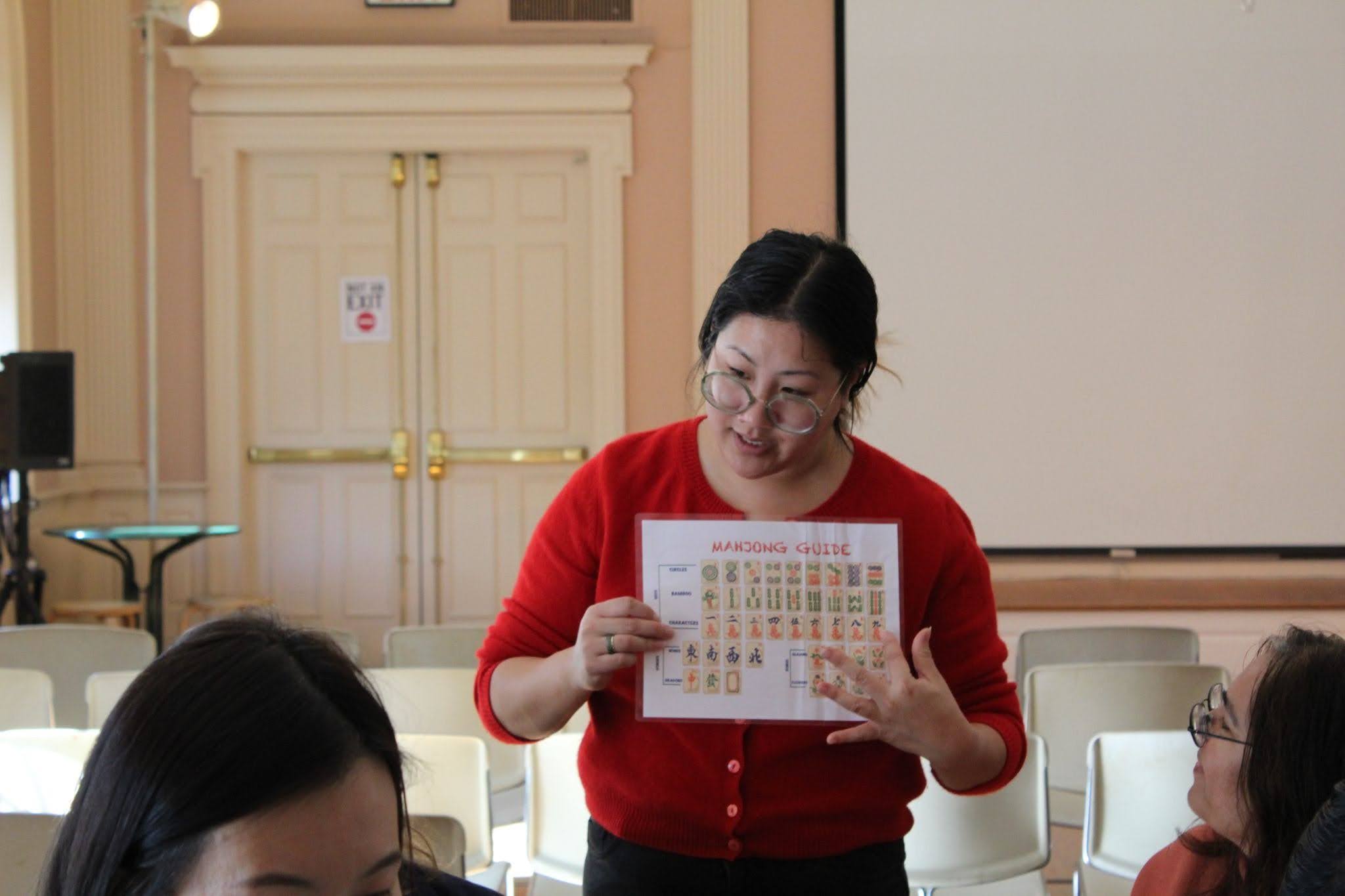
Top. Esther Chiang teaching Mahjong to attendees. Bottom: Attendees playing Mahjong. Karina Gonzalez photos.
A distinct, rhythmic clatter filled the community room at the New Haven Museum as attendees lifted tiles one by one and then slid them carefully into place. Nearby, tables stacked with neatly packaged mooncakes and a grand display of books felt like old friends. Esther Chiang drifted among attendees, checking in on the progress of their Mahjong games.
Sunday afternoon, people from all walks of life attended the museum’s second annual Mid-Autumn Festival and Diwali mash up. Hosted by the Asian Pacific American Coalition of Connecticut (APAC-CT) the event involved community mahjong lessons with Mahjong Haven and concluded with a fusion dance performance and workshop by Yale Rangeela.
Roughly 100 people registered to attend the event, according to APAC-CT Co-Chair Jennifer Heikkila Díaz. A statewide nonprofit representing over 100 Asian and Pacific Islander (AAPI) organizations, Heikkila Díaz emphasized that events like this are designed to broaden public understanding and cultural literacy around Asian cultures.
“Our goal is to create a space for people to learn about … [and] just expand people's understandings of what does Asian mean? Because I think in Connecticut, often Asian is equated with Chinese. We’re always trying to expand people’s thinking about how vast Asia is,”Heikkila Díaz said.
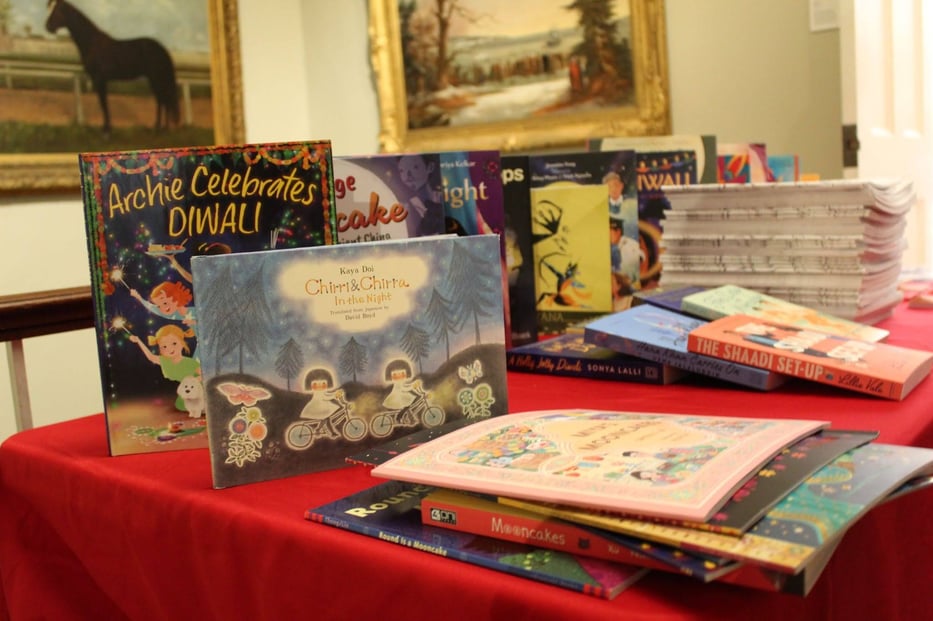
Top: Jennifer Heikkila Díaz (JHD) co-chair of Asian Pacific American Coalition of Connecticut. Bottom: Free children’s literature and coloring books about Diwali and Mid-Autumn Festival celebrations.
The event, which centered on the Mid-Autumn Festival and Diwali, aimed to bridge community cultures by highlighting shared autumn holiday traditions among the AAPI diaspora.
The Mid-Autumn Festival, also known as the Mooncake festival, takes place in mid-autumn during the full moon. Families celebrate by gathering outside, lighting colorful lanterns, and sharing sweet mooncakes. The holiday represents family unity, completeness, and giving thanks for the harvest.
Diwali, also known as the Festival of Lights, is a major religious festival in South Asia. Lasting for five days, typically between mid-October and mid-November, Diwali is celebrated with activities such as lighting clay lamps (diyas), spring cleaning, performing prayers and rituals (pujas), and lighting fireworks.
Heikkila Díaz noted that interactive elements like tile games and dance workshops help local residents meet new people, learn about different heritage traditions, and strengthen the community. She added that playing games is a natural way to build community while weaving in the cultural significance of the tiles.
“I hope that people build some community… people meet some new people, learn some new things about culture, whether it’s their own or a different culture,” she said. “This is how we build the kind of fabric that we need to have, people actually working together.”
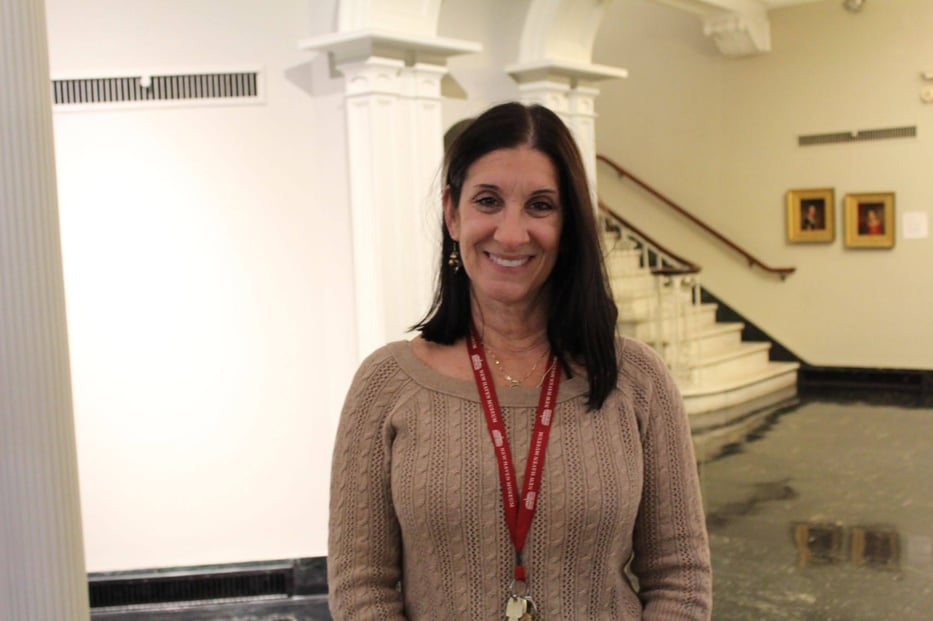
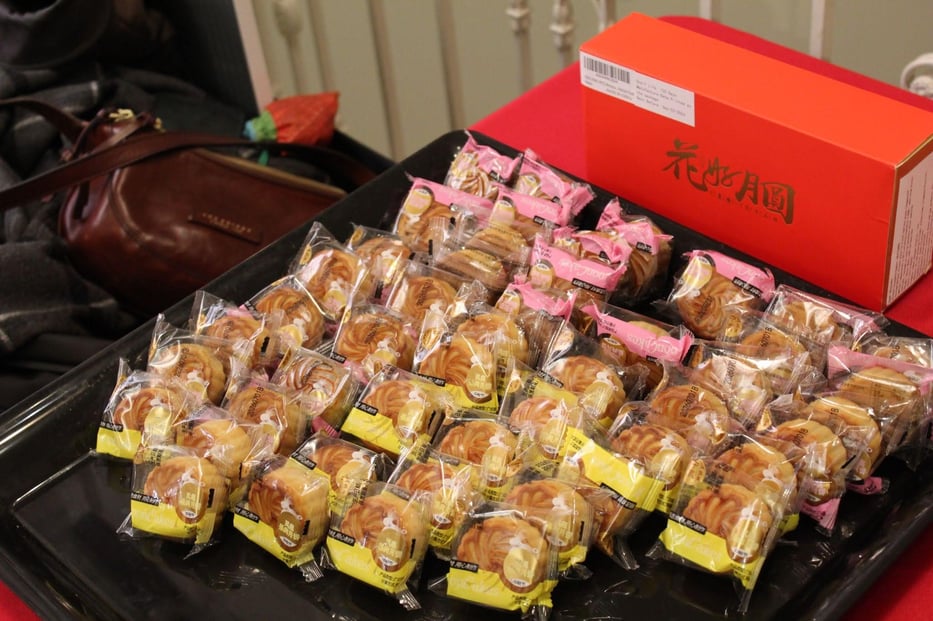
Top: Cynthia Riccio, Director of Programs and Planning. Bottom: Mooncakes.
Building on a four-year relationship with the New Haven Museum that grew out of local education and anti-racist teaching initiatives, the coalition partnered with museum educator Joanna Steinberg and programs and planning director Cynthia J. Riccio to host the event..
Bringing the Mid-Autumn Festival to the New Haven Museum aligns directly with the Museum's core mission to showcase and celebrate the city’s living history, said Riccio.
To Riccio, watching attendees gather in the upstairs hall and wait for an open seat at the tables reflected the museum's ongoing efforts to engage local residents through inclusive programming. As she sees it, the museum serves as a welcoming venue where diverse community partners can connect, test out new experiences, and celebrate shared heritage together.
“We are right in the heart of New Haven, which is such a wonderful and diverse community, so being able to open our doors to all of those communities is really important to us,” she said.
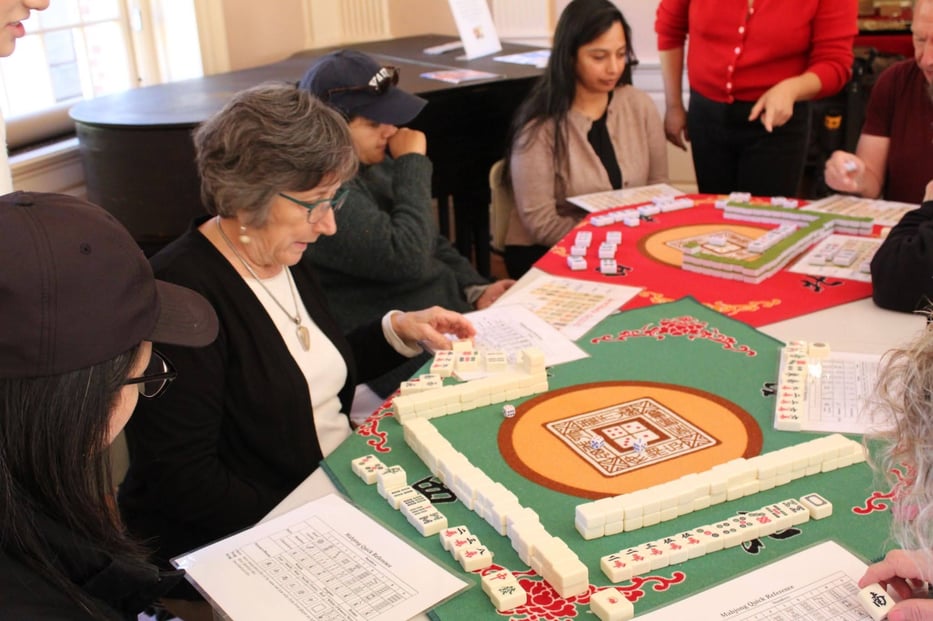
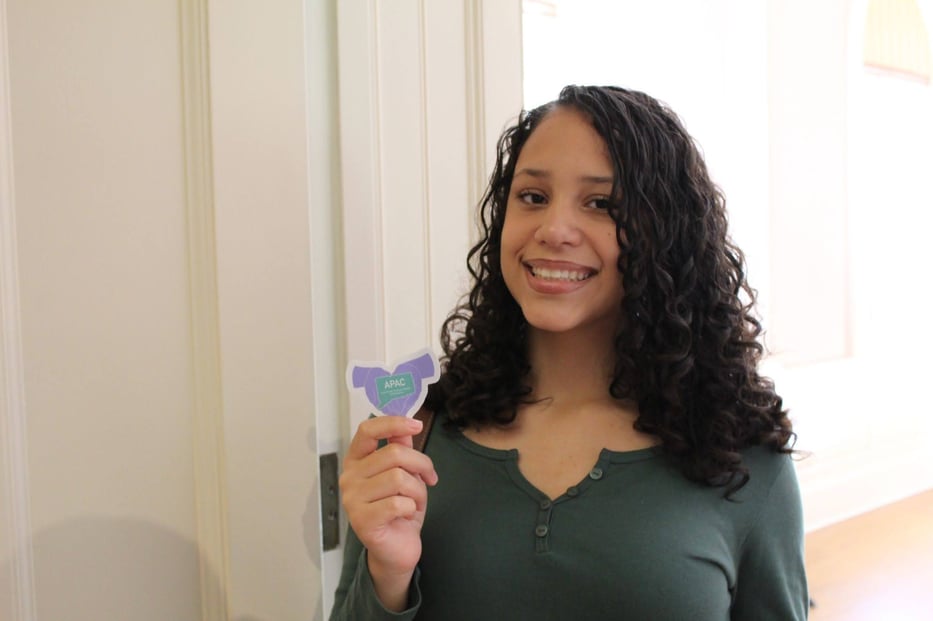
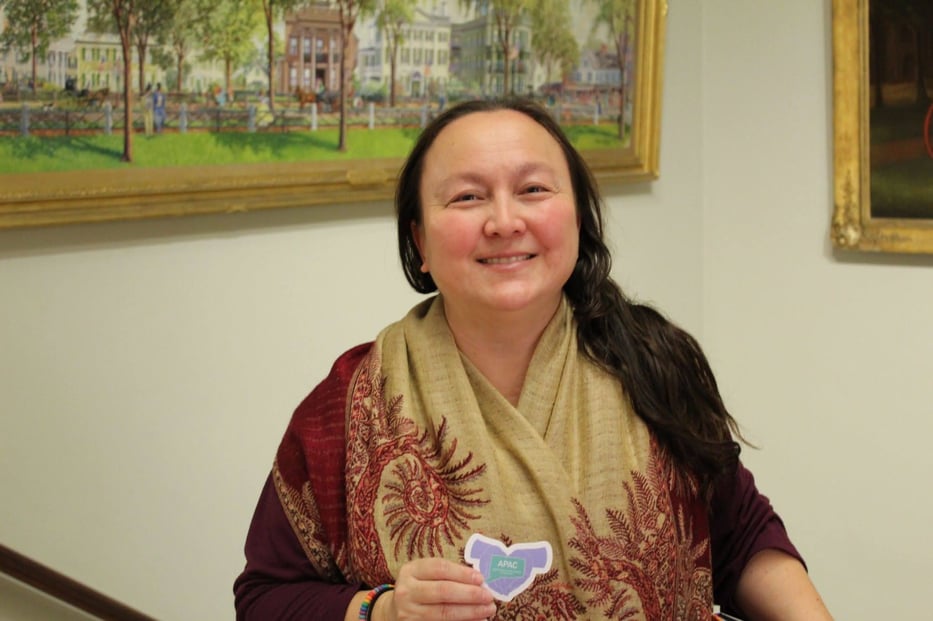
Top: Ellen Cordes (left) playing Mahjong. Bottom: Ava Gonzalez holding an APAC sticker.
As the afternoon unfolded, visitors spent the first two hours learning about mahjong, fueling their winning streak with mooncakes. Mahjong is a 19th-century tile-based game of strategy and matching sets. As players shuffle the tiles decorated with traditional symbols, the back and forth doubles as a social tradition.
For Ellen Cordes, a local volunteer at the New Haven Museum who came out of a lifelong curiosity for games, the gathering offered a chance to sit down at the tile table alongside a young player.
“It’s just a reminder of just how nice people are, you know?” she said. “How nice it is to just connect with other strangers in various age groups. Here I’m playing a game with a young person that I never would have met otherwise… it reminds you how wonderful humanity can be.”
Whether drawn by curiosity, a love of strategy, or a simple desire to experience someone else’s heritage, participants described the event as diverse, exciting, and unifying–demonstrating how a simple game can bring a cross-section of New Haven together under one roof.
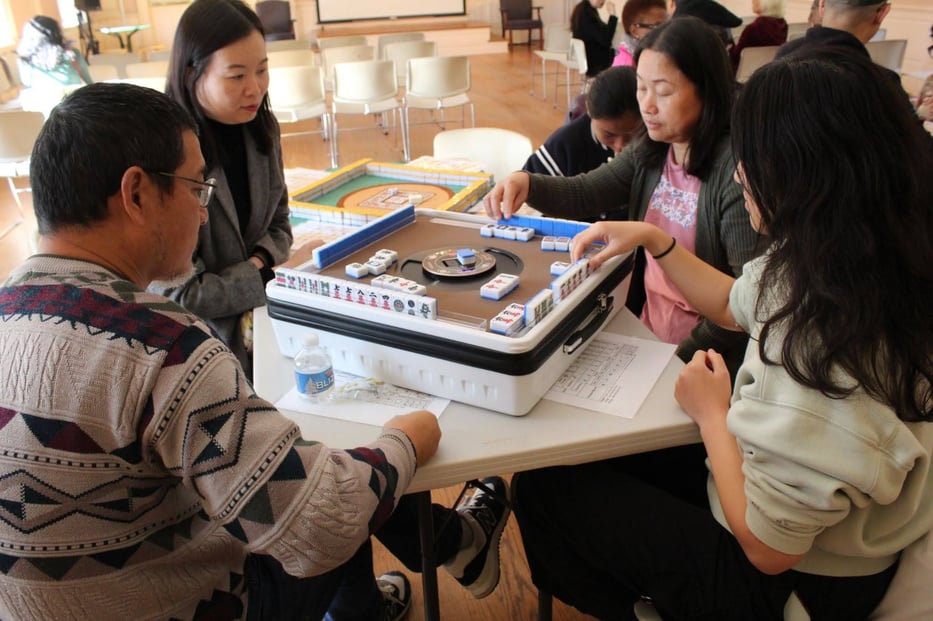
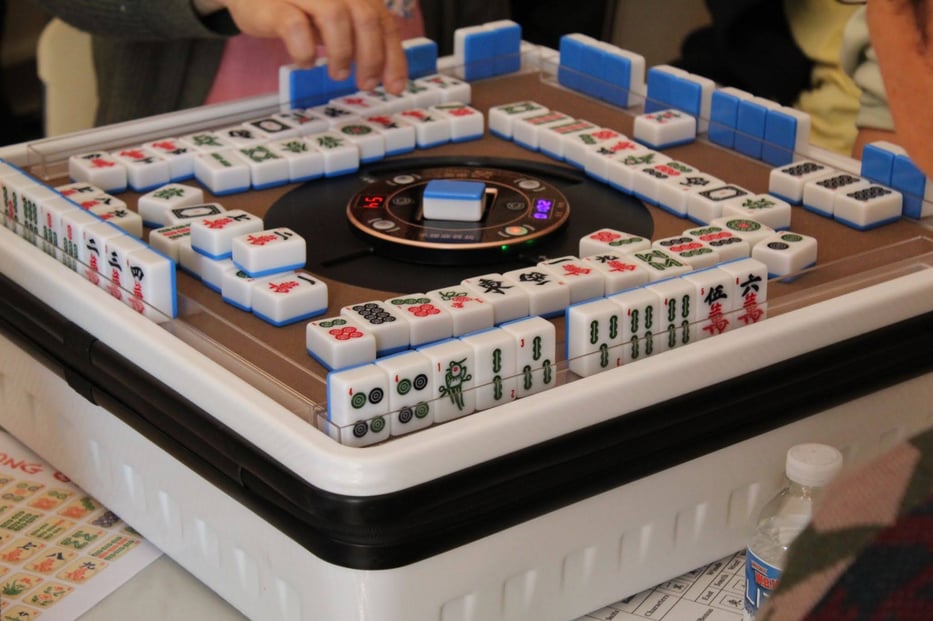
Attendees playing with an electric mahjong table. Instead of manually shuffling, the decks of tiles are shuffled automatically.
Founded by Chiang, Mahjong Haven specializes in teaching Hong Kong- style mahjong. The sole entrepreneur behind a growing network of 10 coaches, she said that events like this are all about what she calls “table chemistry” where “an unlikely group of people” sit down together and leave as friends.
Chiang is no stranger to APAC-CT, having collaborated with the organization on a Lunar New Year celebration at Music Haven earlier this year. When she was invited to join the Mid-Autumn Festival lineup in September, she was eager to bring the tile game to the New Haven Museum.
As a first-generation business owner balancing financial sustainability with community accessibility, she offers “pay what you want tickets” and hosts at least one free public gathering each month to ensure anyone can participate.
Chiang highlighted the Mid-Autumn Festival and Diwali mash up as particularly special because of its daytime schedule, spacious museum venue, and free admission, which made the centuries-old game accessible to local families and children. Seeing a room full of strangers learn the strategy together brings a unique reward to her work, leaving her energized by the quiet power of games to turn neighbors into lifelong friends.
“I love putting tables together,” she said. “We’re just gonna gamble based on their energy, and they’re a motley group of people who become friends, or they had a really good time. And I love that.”
This article comes from the ninth cohort of the Arts Council's Youth Arts Journalism Initiative (YAJI). Karina Gonzalez is a sophomore at Acellus Academy. She was previously at Engineering and Science University Magnet School (ESUMS).