

Culture & Community | Guilford | Youth Arts Journalism Initiative | Culinary Arts
Ruby Szekeres Photos.
Bob Burger’s favorite technique to go clamming is with a clam rake, rather than relying on his feet to tell him where the bivalve mollusks are hidden. But he’s largely outnumbered in that opinion—and perfectly okay with that.
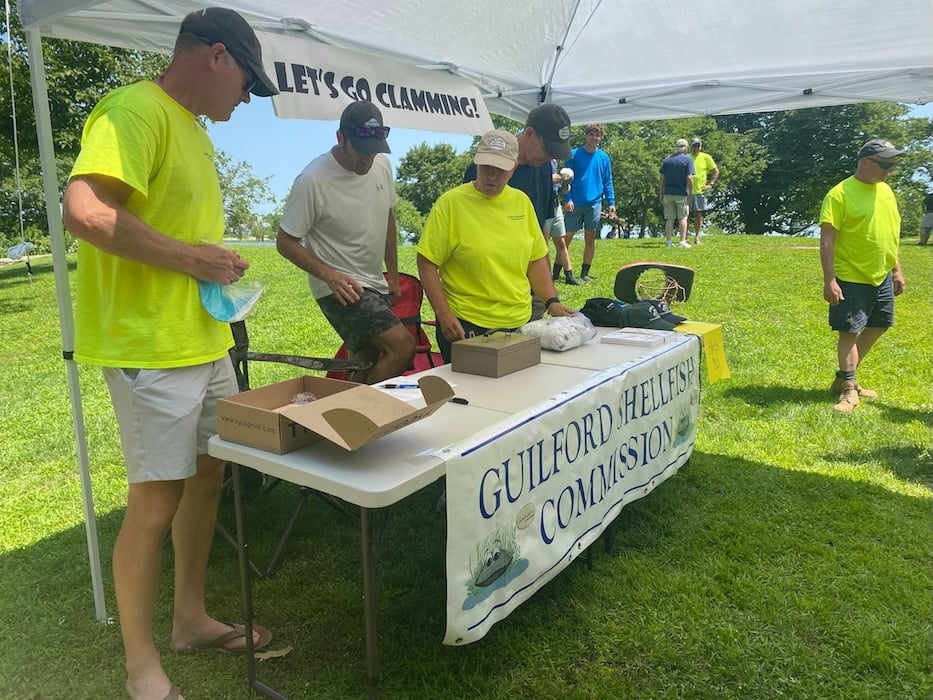
Burger, who is the chair of the Guilford Shellfish Commission, was one of over 50 people at the town’s second annual “Clam Jam,” a celebration of clamming held Saturday afternoon at Chaffinch Island Park in Guilford. Throughout the event, attendees of all ages tried their hand (and their feet) at digging for and finding clams, which they were invited to take home and cook with at the end of the session.
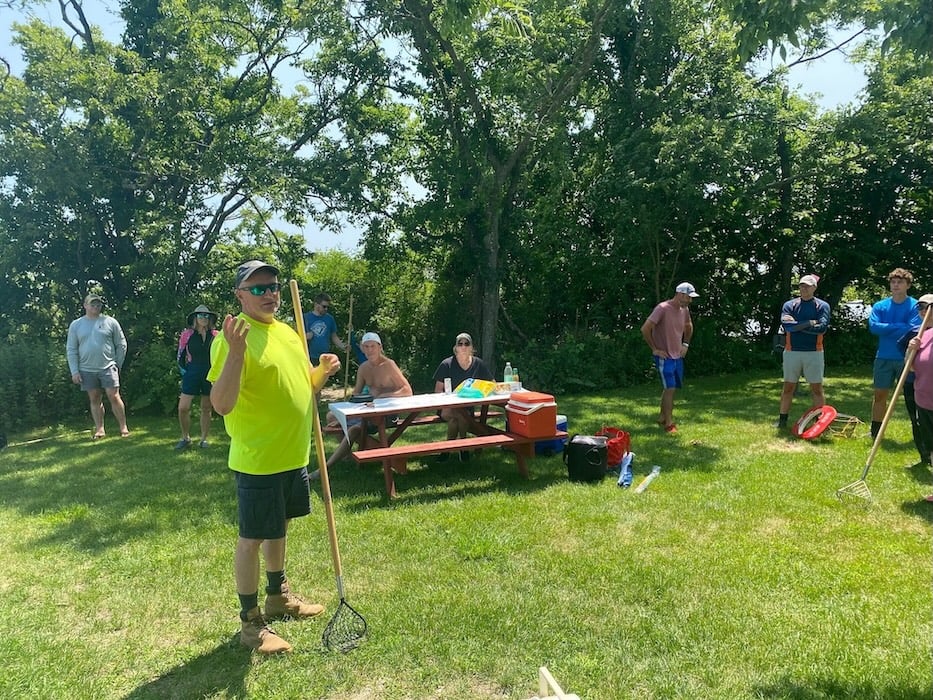
“Clamming is like gardening underwater,” Burger said to the crowd as attendees gathered. He himself has been clamming for the past 20 years. That day, to find the clams, participants would be scouring the shellfishing area at the park, dragging their feet and the provided clam rakes through the silt. With cold winters, he explained, clams could be six to 12 inches deep.
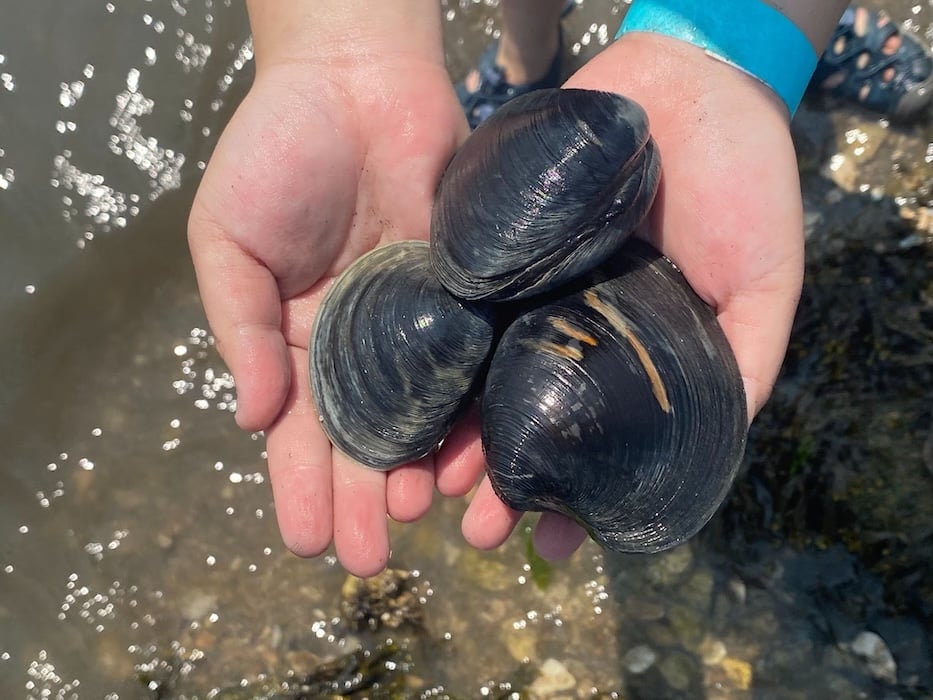
A couple days beforehand, members of the Shellfish Commission stocked 10,000, ready-to-eat market size quahog clams specifically for this event. Though all the same species, quahog clams are classified by size: the smallest ones, known as “little necks” at one and a half to two inches across, are sought after for their tender meat and are ideal for eating raw.
These along with middle necks were, however, too small to be harvested during this event.
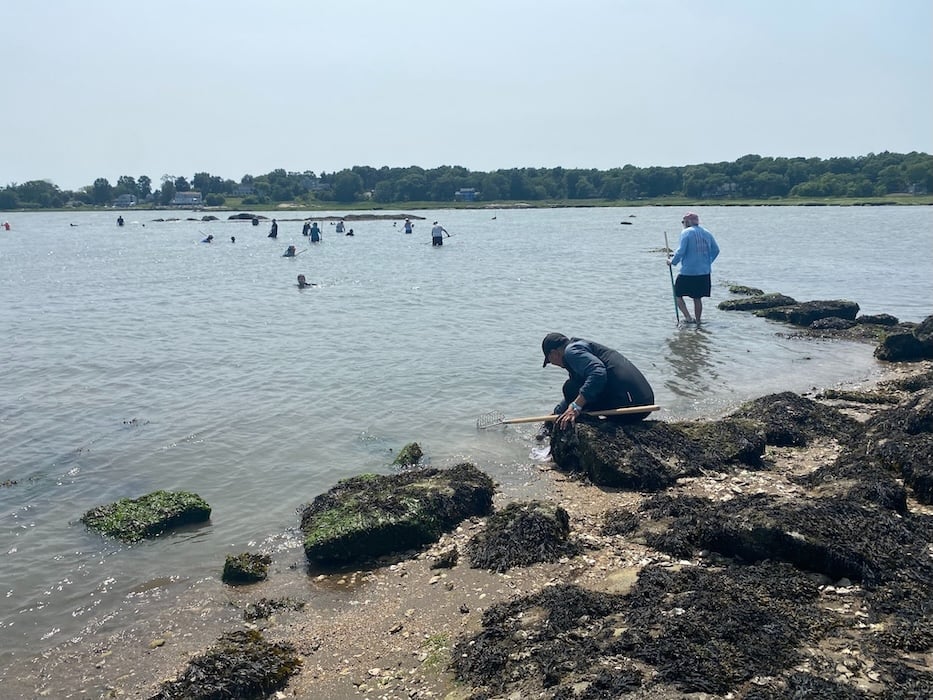
The majority found were cherrystone and chowder clams, measuring three to four inches and bigger. Burger recommended freezing these to save for a cold winter day in December, when a hot bowl of clam chowder might be in order.
Clams were not the only things people found Saturday. “Crab!” someone screamed, flinging a shell housing a hermit crab far off into the distance. Others found whelks, blue crabs, scallops and conches lurking around as well.
“I really thought we’d be coming home with a ton of clams for the grill,” Al Berera said. His son, 5-year-old Leo Berera, was digging in the sand with other kids of the same age, creating a mini lake for the clams. During their play, they found little necks that they threw out into the water, hoping they would grow to the size of giant clams.
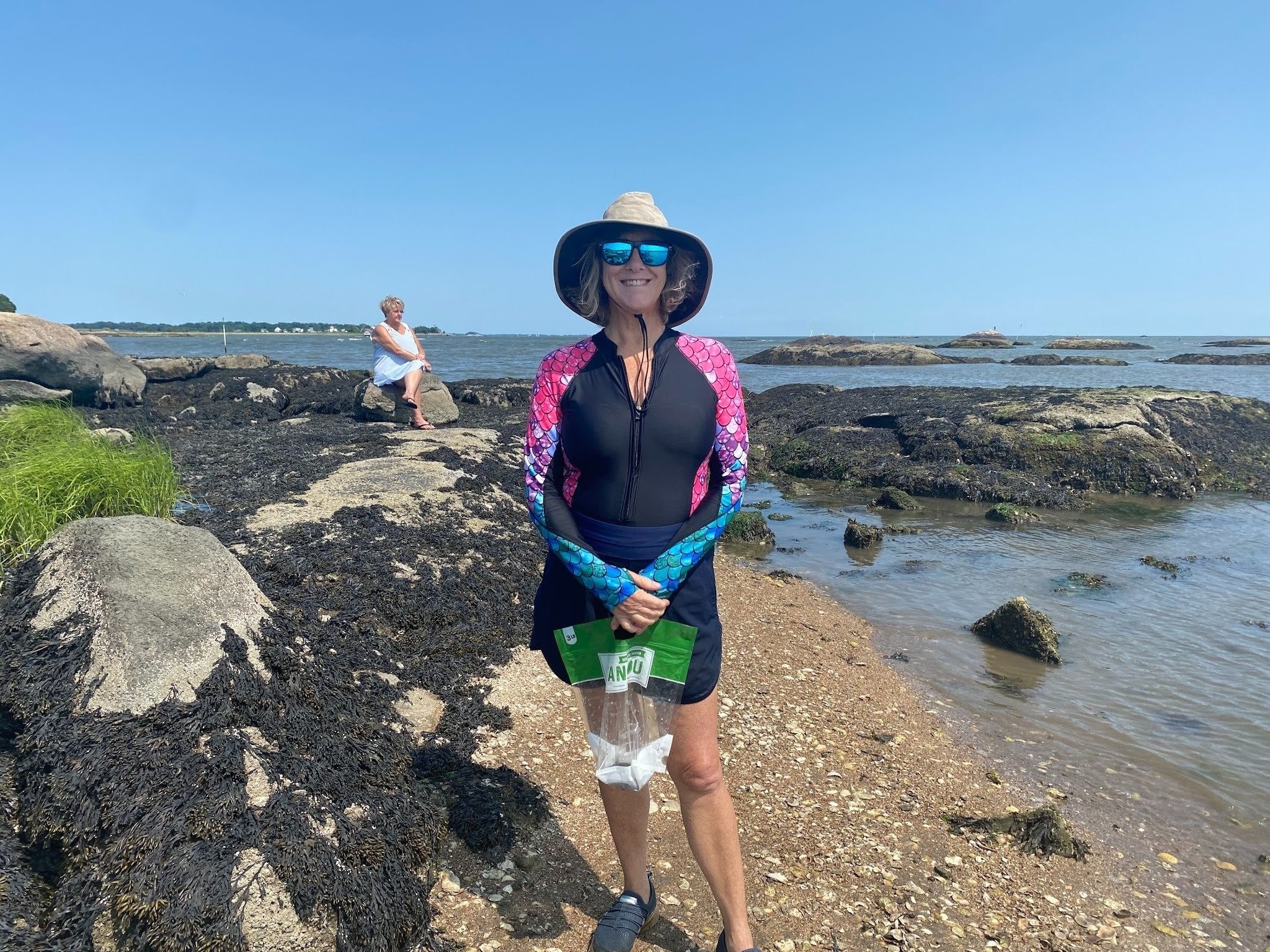
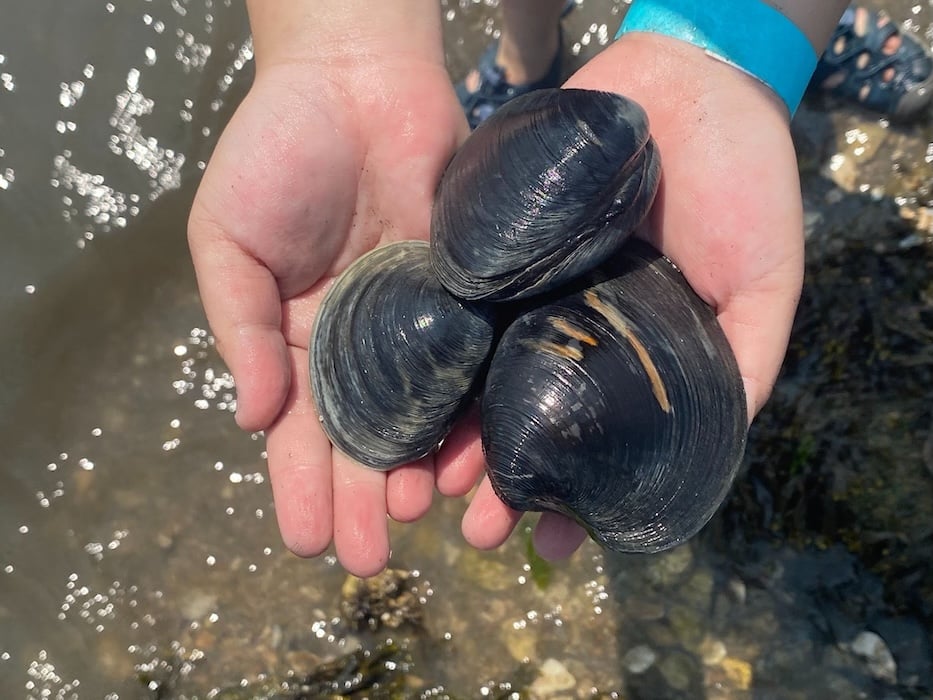
Top: Diana Hansen. Bottom: Glorious clams!
Diana Hansen had not gotten a great haul either—she had a total of two clams in her repurposed plastic bag. As a kid growing up in Fairfield, Hansen would walk along the sand, looking for clam holes.
“I did not expect to get so wet today,” she said, as she attempted to shake off excess water from her mermaid scale swim top. GSC members blamed a particularly strong west wind for the unusually high water level for a typical low tide. Though each participant was allowed to bring home 12 clams each, Hansen was ready to call it a day. Her husband Dan MacRae, on the other hand, was still out there searching for anything.
Lynn DeMarco watched safely from the shore as clammers lost their balance in the quicksand like mud and hit by salty waves. She was there with her husband and daughter, Dan and Lauren DeMarco, who were excited to be out in the water. Once they got home with what she hoped would be a full cooler of clams, she planned on making a chowder.
“I absolutely love clams,” she said, with her favorites being the little necks raw on the half shell. As she watched everyone else, she imagined all types of seafood delights.
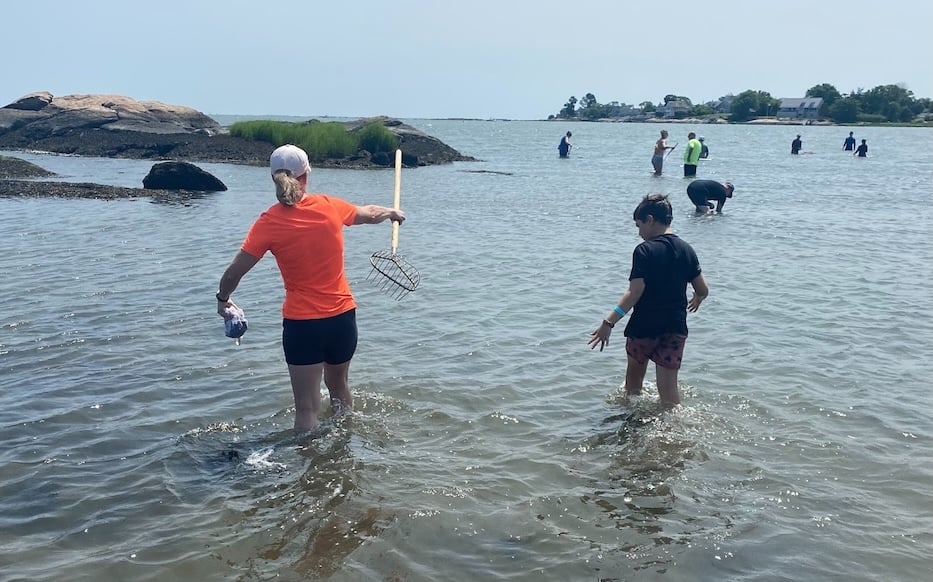
Shellfishing in Guilford has been a source of food for thousands of years, including and especially before the arrival of European colonists. By 1766, Guilford had established open shellfishing seasons.
By four in the afternoon, Burger reeled the Clam Jammers in, bringing a close to the successful day. Covered in mud and leaving the “garden beds” looking something like swiss cheese, people came with their bags, filled to the brim with their catches.
“Don’t lose your shoe!” a dad called out to his son. “I won't," he replied as he brought his clam rake to shore.
Unfortunately, as payment for the clams, the mud had taken multiple different shoes.
This article comes from a graduate of the 2024 Cohort of the Youth Arts Journalism Initiative. Ruby Szekeres is a junior at Oak Meadow School.