

Halloween | Arts & Culture | Musical Theater | Theater | Rosetint
The company blends shadow cast and musical theater, attempting to launch a new annual tradition
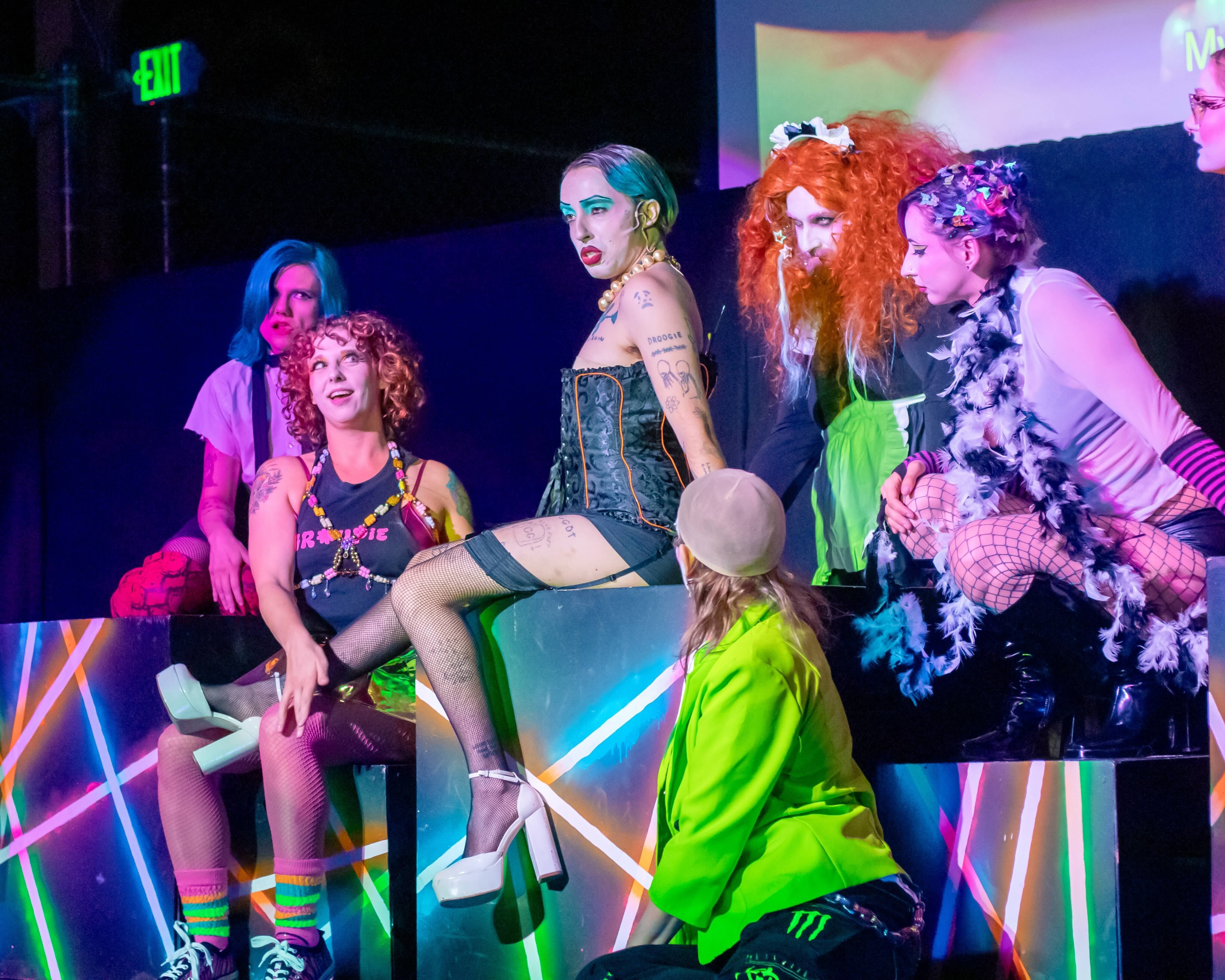
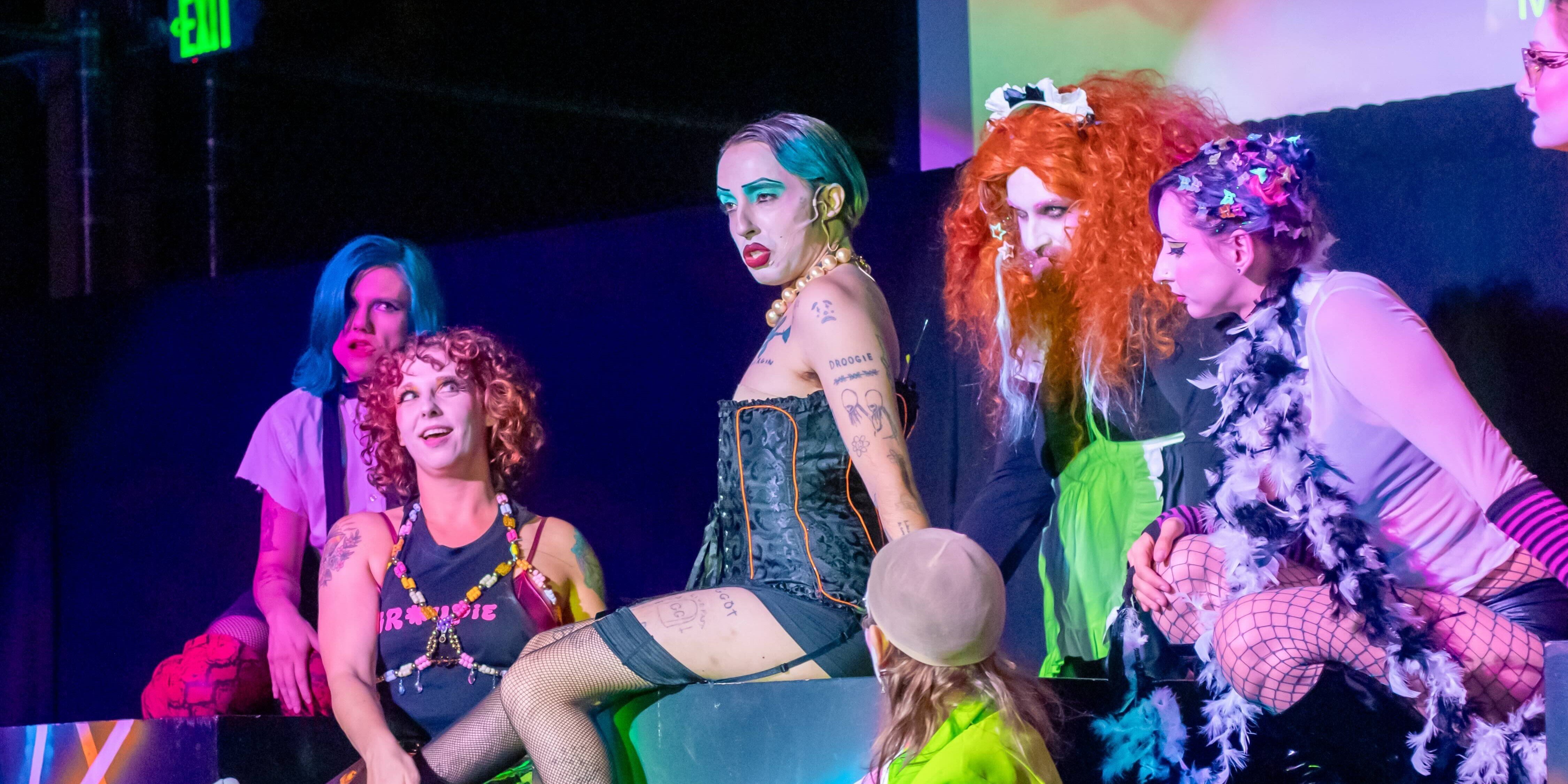
If you found yourself lost in New Haven at any point over the last two months—maybe you were driving through and your car got a flat and you didn’t have a phone and you needed to call for help—it’s unlikely you’d accidentally stumble into a castle full of intuitive, intergalactic, proudly peacocking party animals doing the Time Warp. New Haven, after all, isn’t known for its castles.
What you would be likely to find within seconds is a rose-tinted poster or two announcing Rosetint Community Theatre’s production of The Rocky Horror Picture Show Shadowcast. Rosetint is a theater company new to New Haven’s thriving ecosystem of grassroots and community-based arts initiatives; the theater’s leadership chose to produce the cult-classic of participatory theater as an homage to the company’s origin story.
In a pre-show welcome from Rosetint Artistic Director Tyler Harding and Managing Director Charlotta Lebedenko (who, at last Friday’s 7pm performance, had triumphantly scrawled “SOLD OUT” across her chest in lipstick), Harding traced the company’s origins to a night of Rocky Horror at Café Nine one year earlier. The theater’s name references the Rocky Horror number “Rose Tint My World.” There’s hope from Rosetint leadership that Rocky Horror will become an annual tradition that cements the company as a long-term fixture of the local theatre scene. In fact, this year’s Rocky Horror is being staged in the Lost in New Haven museum, a local treasure showcasing artifacts from the city’s storied past. The company seems eager to assert their belonging and legitimacy, ensuring that, as a newcomer, Rosetint does not get “lost in New Haven.”
When 7pm hit, on the night I attended, the house had filled with excited spectators clutching prop bags, and the traditional Rocky Horror pre-show began. As Usherette, the emcee in charge of facilitating audience participation, Miranda Rector (a Yale alum and Rosetint’s outreach director), called all virgins—i.e. audience members at their first Rocky Horror shadow cast—to the stage. After a quick culling process, six virgins were chosen to participate in a game: “with a partner, show us a sex-position inspired by these keywords.” After a very short rehearsal period, the pairs gestured at the sex versions, which ranged from the literal to the highly abstract, of “Toad’s Place,” “clam pizza,” and “Nutmeggers.” “We’ve got a theme going tonight!” Rector explained.
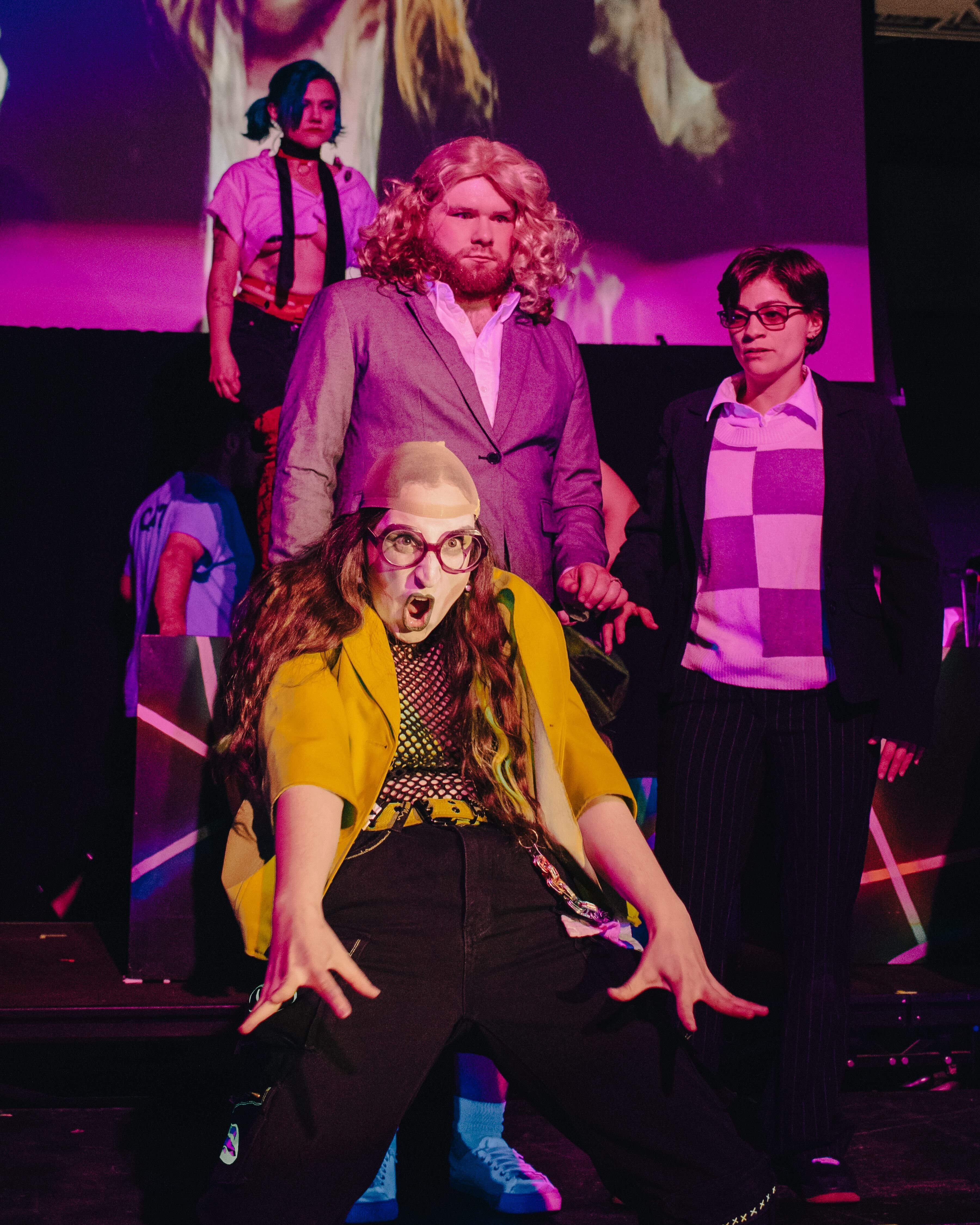 Following the release (and initial box-office failure) of the 1975 B-movie horror musical The Rocky Horror Picture Show, midnight screenings of the film in Greenwich Village sparked a cult-following, forming a now half-century-old tradition of participatory movie-going and queer community-formation around the concept of the “shadow cast”: while the movie plays, a cast of performers dressed as the characters lip-sync and act out the action on screen, while the audience talks back and throws toast. At Lost in New Haven, Rosetint provides the audience with a digital script for what to yell when, and—for a fee—a bag of themed props for throwing, wearing, and noise-making. Though few appeared to use the QR code provided on the night I went, a single voice at the back of the house joyfully interjecting dirty quips helped the rest of us quickly learn the ropes: When Brad was mentioned, we yelled “Asshole!” when Janet was mentioned, we yelled “Slut!”
Alongside the shadow cast tradition is another, marginally older Rocky Horror legacy: Two years before the film adaptation was released, the stage musical The Rocky Horror Show—with music, lyrics and book by Richard O'Brien—premiered in the West End, sparking countless revivals, from small-town community theaters to Broadway. The two camps (shadow cast and musical theater) don’t always mix well. The producing theater of the current Broadway revival, Studio 54, has gotten push-back for asking audiences to refrain from the call-and-response-style yelling that is expected at shadow cast renditions. But Rosetint’s Rocky Horror, directed by Colin Anderson, bravely attempts to have it both ways: For the film’s book scenes, actors onstage lip-synced to the onscreen actors’ lines, dressed evocatively and provocatively as the film’s protagonists; during the songs, the film was muted, and Rosetint’s live band took over the audio.
Whereas shadow cast directors traditionally limit themselves to an exact gesture-for-gesture reproduction of the film, Anderson puts their own directorial take on the film’s iconic scenes, often to great comic and creative effect. In the banger of a 50’s-inflected rock and roll number “Hot Patootie—Bless My Soul,” instead of shredding on a saxophone as Meatloaf does on screen, Anderson had Toni Castillo as the destructive motorcyclist Eddie blowing passionately into a recorder. Stand-outs in the cast for stage presence and unwavering commitment to the bit included Lee Briggs as the bewilderedly macho Rocky, and Erin Carney, who, grinning ear-to-ear, executed gymnastic flips as the romantic Columbia. And tucked in an upstage corner of the playing space between the shadow casters and the semi-obscured band, five powerhouse vocalists (at the performance I saw, the incredible Sophie Jackson, Sid Hirschman, Christmas Lamoreux, Mik Johnson, and Sebastián Colón Peréz) made me wonder if the film was needed at all, considering the many layers of talent on the stage. With up to four types of performance happening at any one time—the actors on the screen, the shadow cast lip-syncers, the live vocalists, and the band—the effect was (wonderfully) chaotic.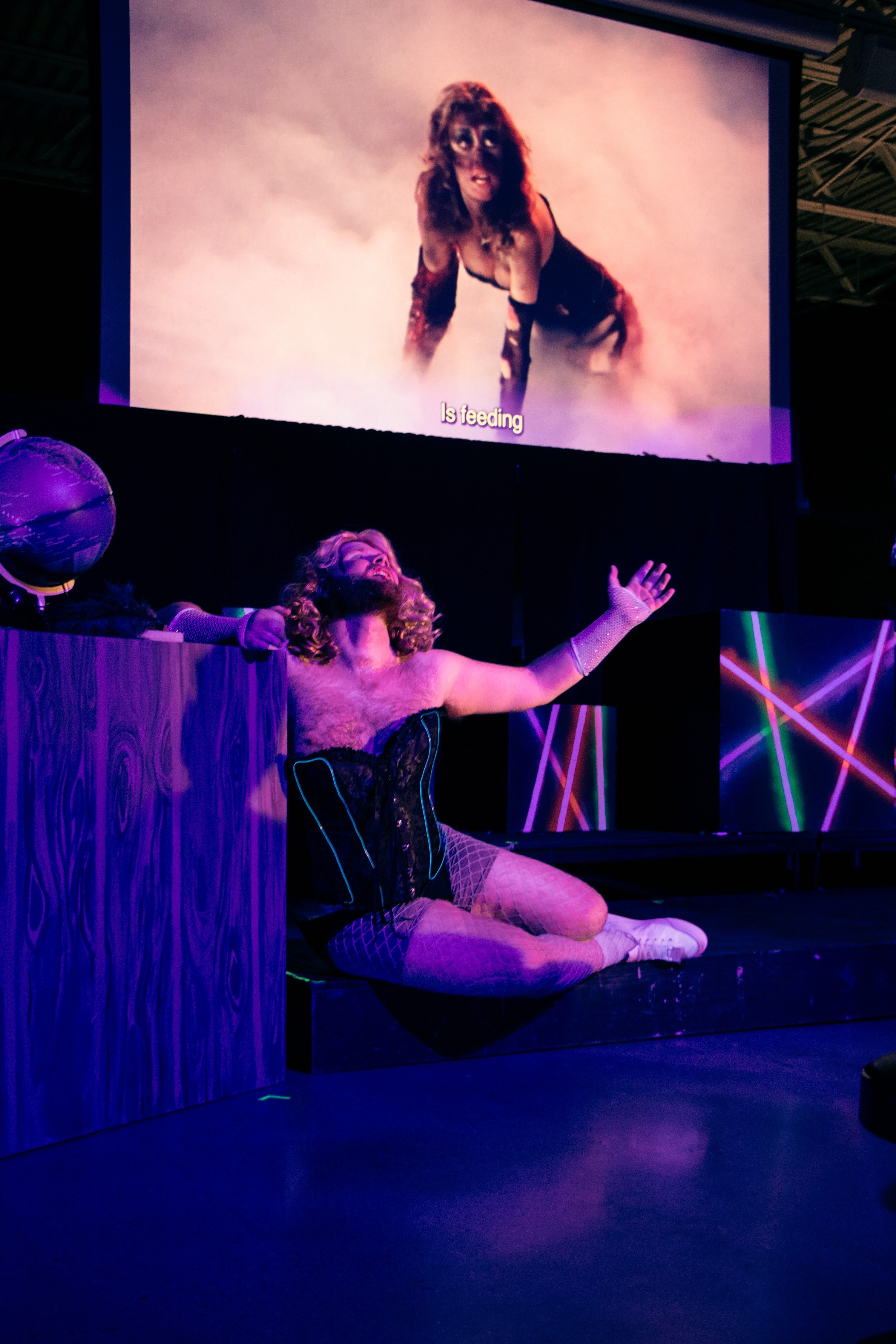
Even as Anderson and the team have opted to lean into joyful chaos, they also know when to distill the show to its essentials. One of the unique pressures and honors attendant on doing Rocky Horror in October of 2026 is the desire to pay homage to the late Tim Curry—the deliciously excessive, obsessive diva Dr. Frank-N-Further in the 1975 film. As one of Rosetint’s two (on alternating performances) Frank-N-Furters, Seven Phillips draws every eye to himself. Phillips has the attitude, the strut, and the lazy pout of the beloved “sweet transvestite” down pat. And the voice! Phillips sang Frank-N-Furter’s numbers with a rich, sultry drawl, occasioning a “Wait a minute! That’s not Tim Curry?” from at least two audience members—and causing this reviewer to forget there was a movie playing at all.
The Rocky Horror tradition is, at its core, about fostering belonging, a sense of home both in a community and a geographical place. Rosetint’s role as a newcomer in the New Haven arts scene seems to be a preoccupation for the company’s leadership: From the moment I walked through the doors, the whole thing screamed “NEW HAVENTM.” After checking in at the makeshift box office and being politely asked if I was a virgin, I wended my way through halls of artifacts from New Haven’s history. As I passed model ships showcasing the city’s maritime past and rusting metal tins of “Yale Lolly Pops” from New Haven’s own Bradley Smith Candy Company, the scent of popcorn and hot dogs enveloped me. These doubly on-theme concessions were, of course, frankfurters from the local Hummel Bros. Though a non-profit, Rosetint seems to understand itself as a small business among other small businesses (for one mid-October week, you could go to Olmo on Whitney Ave for a “Rosetint My World” bagel sandwich.)
But when it really counted, the true counter-cultural, anti-establishment spirit of Rocky Horror shone through. Even in the moments of pure chaos, Rocky Horror felt delightfully liberating. It was impossible to catch every gesture or respond to every call; the most important thing was to remember Dr. Frank-N-Furker’s words: “There’s no crime in giving yourself over to pleasure.” Though, as an audience member at the back of the house retorted, “There is in Connecticut!”