

Restaurants | Artificial Intelligence
New Haven’s food industry reckons with AI-generated art
Five years ago, most people would not look twice at a flyer advertising Taco Tuesdays, or what poster sits above diner booths. But artificial intelligence is turning the way we show what’s for dinner into a moral dilemma: Is using AI in menus, food photos, or in-store art a reflection of whether a restaurant is “authentic” or not?
What is “real” food?
For people invested in getting more local produce on plates, artificial intelligence usage is a reflection of the ever-widening dissonance between who’s growing our food and what we’re eating.
“There already is such a detachment of where our food comes from,” said CitySeed agricultural programs manager Blaise Berglund. “People come to the farmers market in February asking, ‘Where are the tomatoes?’ So when you see an AI photo of something that’s supposed to look like a tomato... people are visual, so it just lends to a further detachment.”
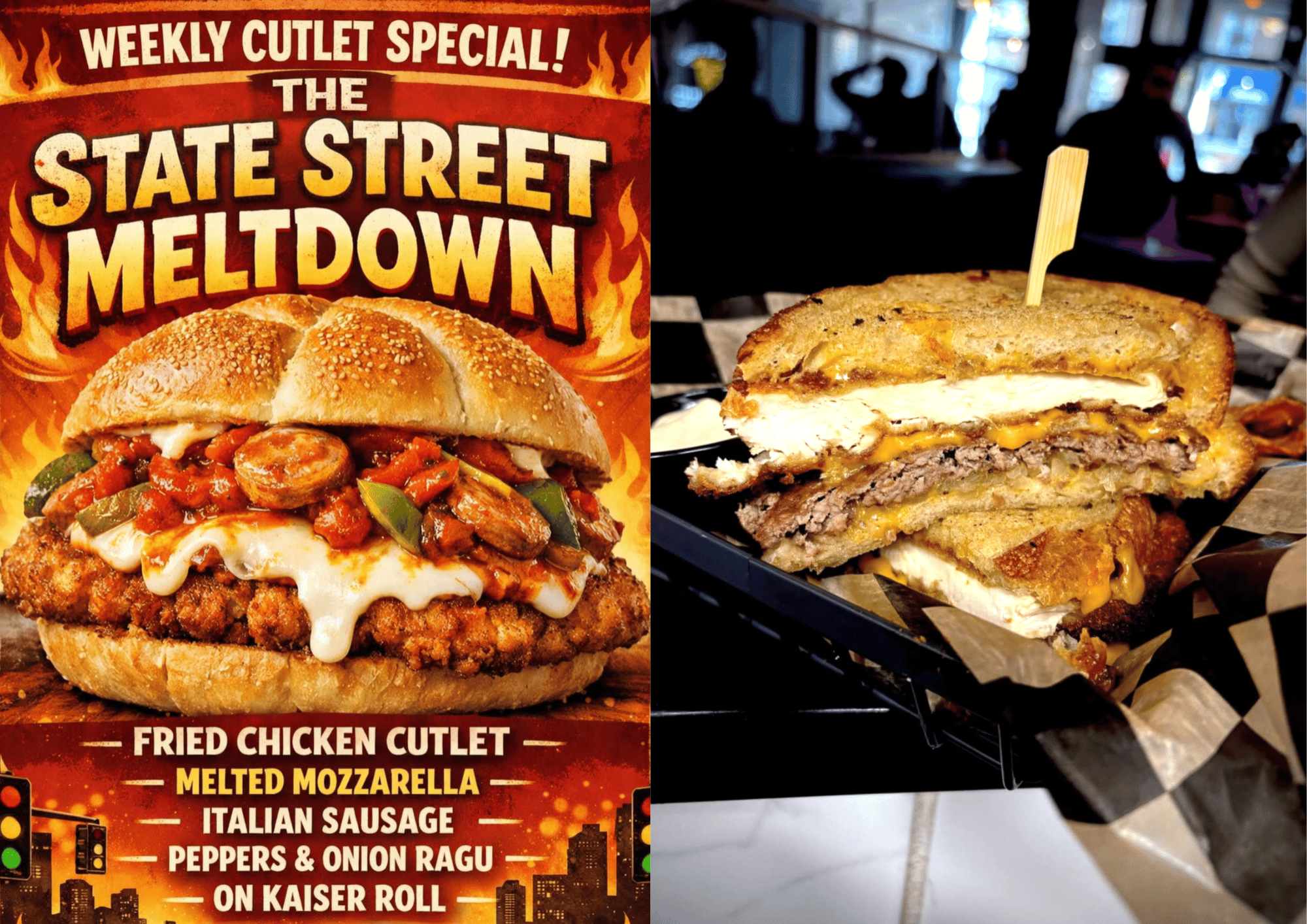
The Southern-inspired restaurant The Crooked Goat used to showcase the majority of its food online, from cutlet sandwiches to wings, using AI-generated art, but the restaurant is now moving away from that practice.
That decision came after co-owner John “JT” Torello heard feedback from his kids, who are in their 20s, about how the AI flyers are “cringey” and the restaurant should move away from a look they deemed “inauthentic.”
The Crooked Goat now takes pictures of their food for social media posts, but notes that its music promoter still uses AI for his posters. Torello hopes to move away from AI posters altogether in the restaurant’s marketing.
Sometimes, however, AI-generated images don’t stand for the actual food. The walls of the donut shop Glaze and Grind are plastered with AI art—from Albert Einstein holding two donuts in front of his eyes to a scientific-looking diagram of a Glaze and Grind coffee cup.
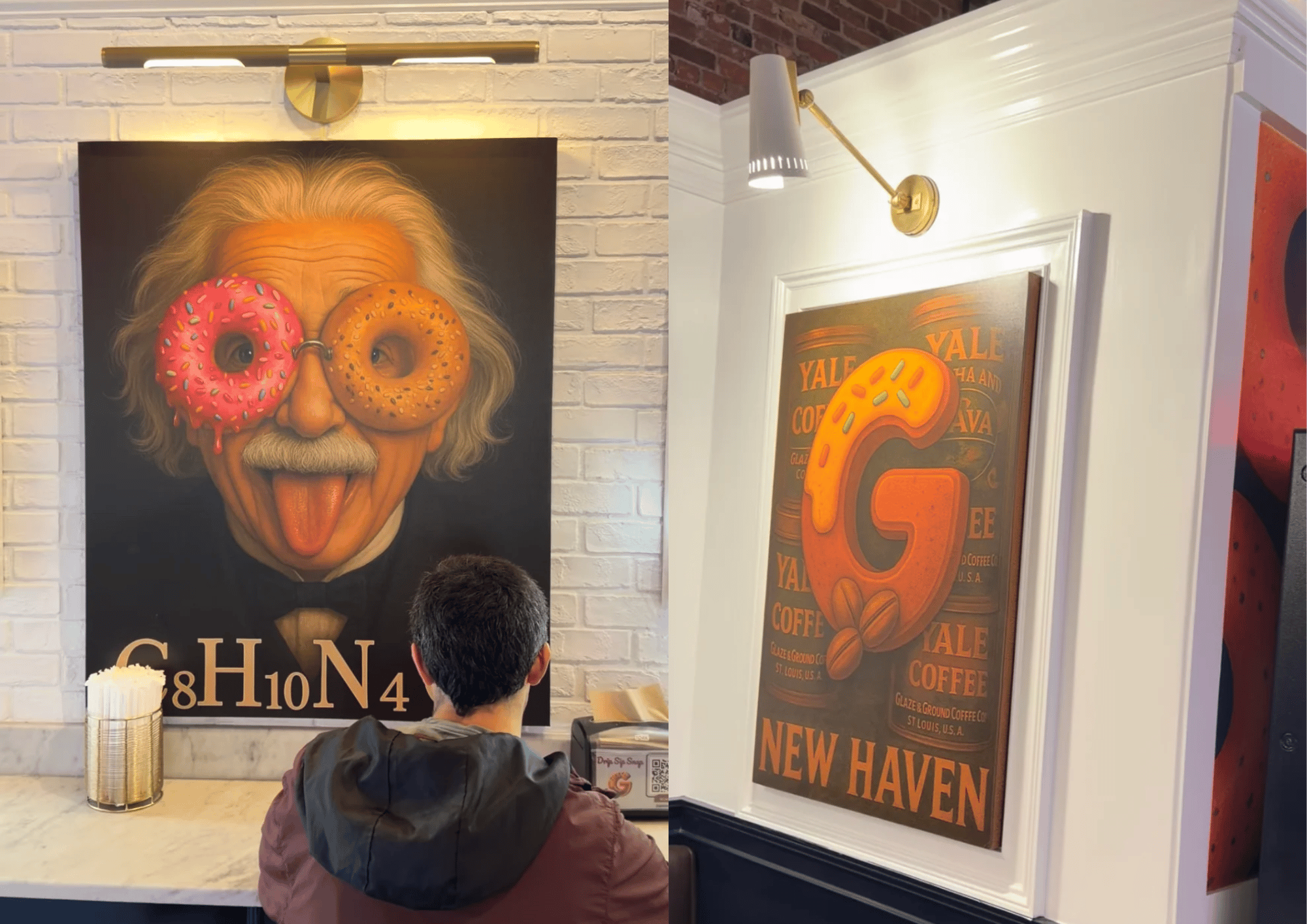
A donut shop patron, Scott Bernard, says that, while he’s not a fan of it, he doesn’t mind the art in the shop because he can “easily tell it [is] AI.” He gets more frustrated at AI art that tries to look realistic, so he appreciates that these pieces are supposed to look fake—but ultimately, he thinks it makes the restaurant look inauthentic. (Glaze and Grind did not respond to requests for comment.)
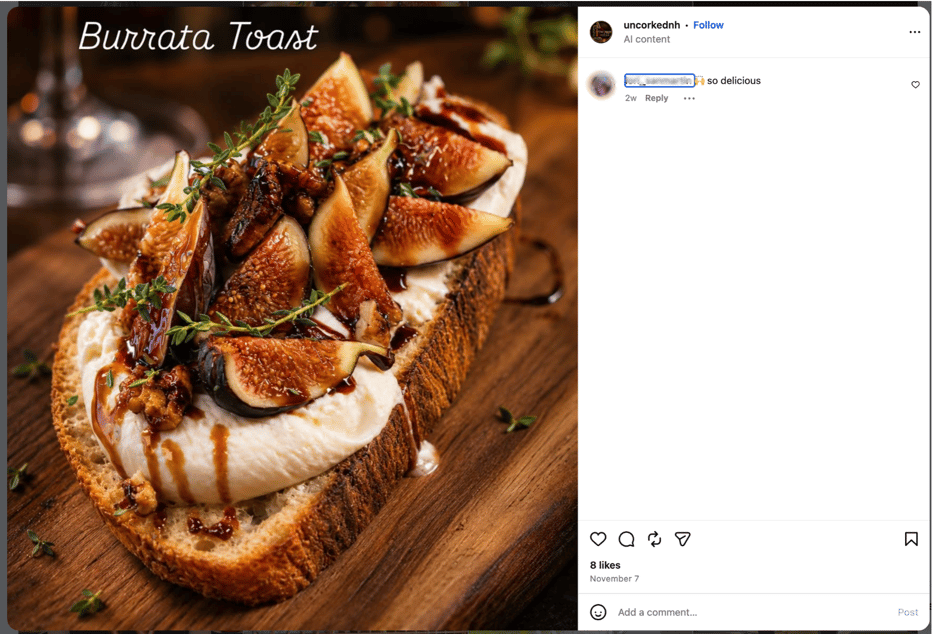
However, customers can’t always tell what’s AI and what isn’t. The new Uncorked Wine Bar on State Street recently posted an AI-generated photo of their burrata toast, which Instagram labeled as “AI content.” One viewer seemed to not notice, and commented “🙌 so delicious.”
A cost-cutting, time-saving measure
The restaurant industry is a notoriously challenging one to be in. Using AI for flyers and menus has been marketed by artificial intelligence companies as a time-saver for owners already stretched thin. Plus, some owners may feel incompetent to design materials themselves.
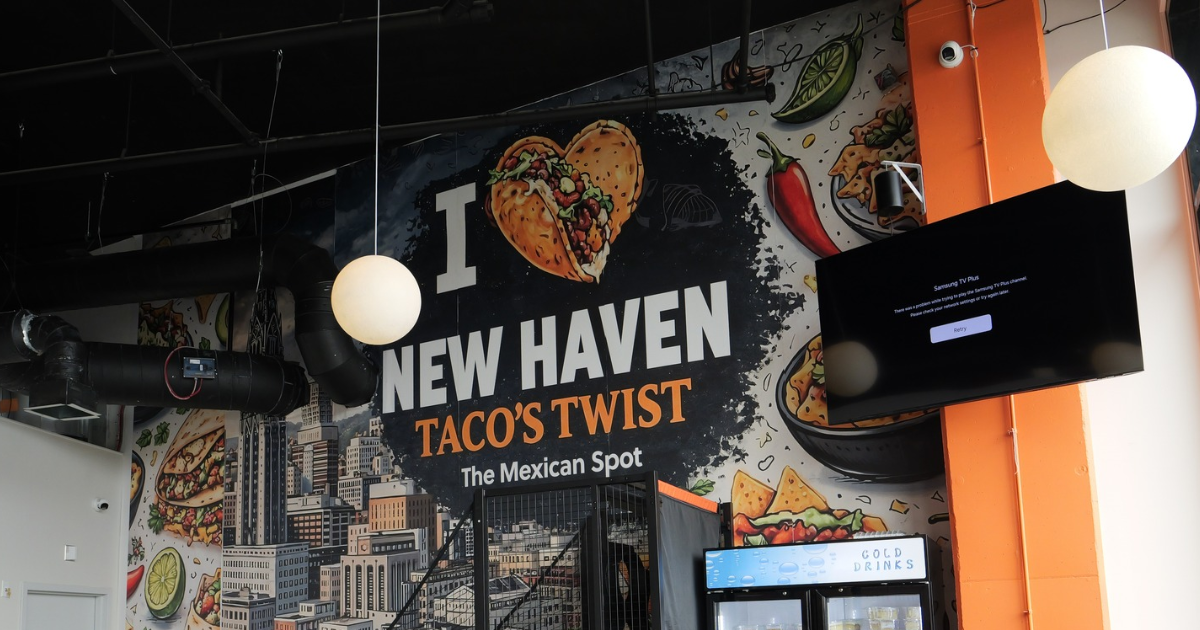
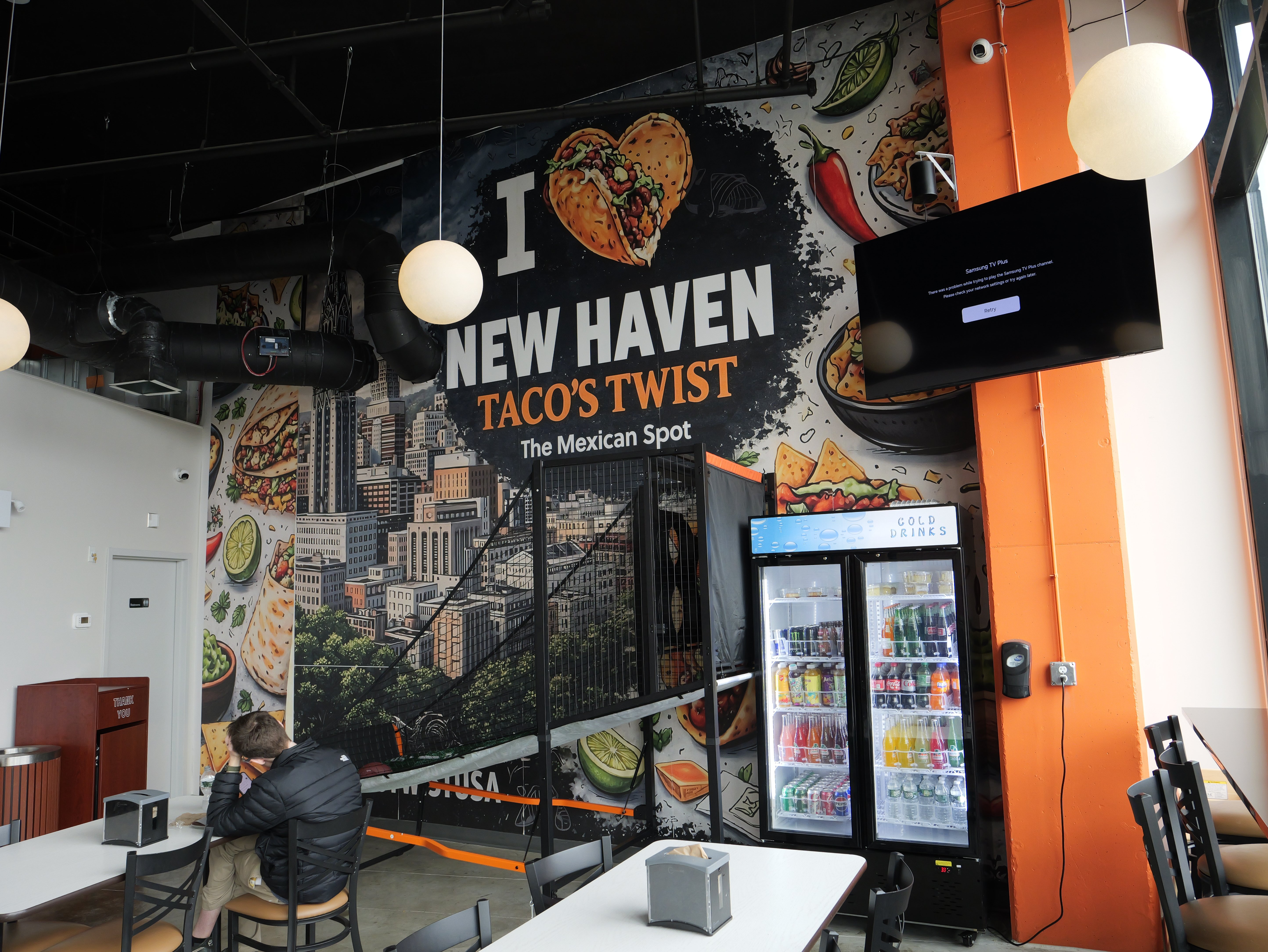
A new fast-casual Mexican New Haven spot, Taco’s Twist, has a large AI-designed mural next to its wide front-facing windows, making the “I [Love] New Haven” art (with a heart made out of tacos) easy to spot when walking down State Street.
Taco’s Twist is the first tenant of the newly built Grove and State Street retail space. The restaurant owner, Hetal Trivedi, wanted to fill the giant blank wall by the front door, but felt limited by the high cost of opening a new restaurant. She asked her son, a 22-year-old computer engineer, to design something to fill the space.
While Trivedi said that the mural will likely be replaced once business picks up, it’s not going anywhere anytime soon. “Right now, we are concentrating on growing the business.” In her opinion, the fact that the art is AI-generated should not (and does not) matter to people who truly care about what they’re eating.
Online, some have ridiculed Taco’s Twist for its AI use. On a New Haven Reddit post about local artificial intelligence in restaurants, commenters berated the new restaurant, writing, “It isn’t even open and they’re canceled,” “We live down the street and have already laughed about how the AI slop means we won’t be going” and “They opened this weekend and I will certainly never be going.”
Hayden Gaillard, a New Haven artist who designs marketing materials for restaurants around the city, including Bobbi’s and Pizza House, believes that everyone should try their hand at making promotional materials. To people who aren’t sure if they can design a flyer, they say: “Please make fliers, even if you don’t think you have any graphic design skills or artistic merit. It’s easy, it’s fun.”
The local artist says AI flyers “suck,” particularly because they do away with the author’s thought process. Ultimately, Gaillard wants to remove the barriers people have projected onto the designing process. “It doesn't need fancy illustration, or any good knowledge of typography. If I can get a sense of what you're trying to say just from looking at this piece of paper in front of me, it's a successful flier.”
Listening to feedback
East Rock Coffee’s new owners, Ericka Goodman-Hughey and DeShone Goodman, posted a flyer on Instagram announcing a grand reopening under their new leadership. Goodman-Hughey created the flyer on the popular design platform Canva, using its AI features to put a finishing touch on the post.
The graphic received angry feedback on social media, prompting Goodman-Hughey to take down the post. East Rock Coffee barista Lucy Newman reimagined the flyer with a drawing of the coffee shop, which was used in a new post that received more positive feedback online.
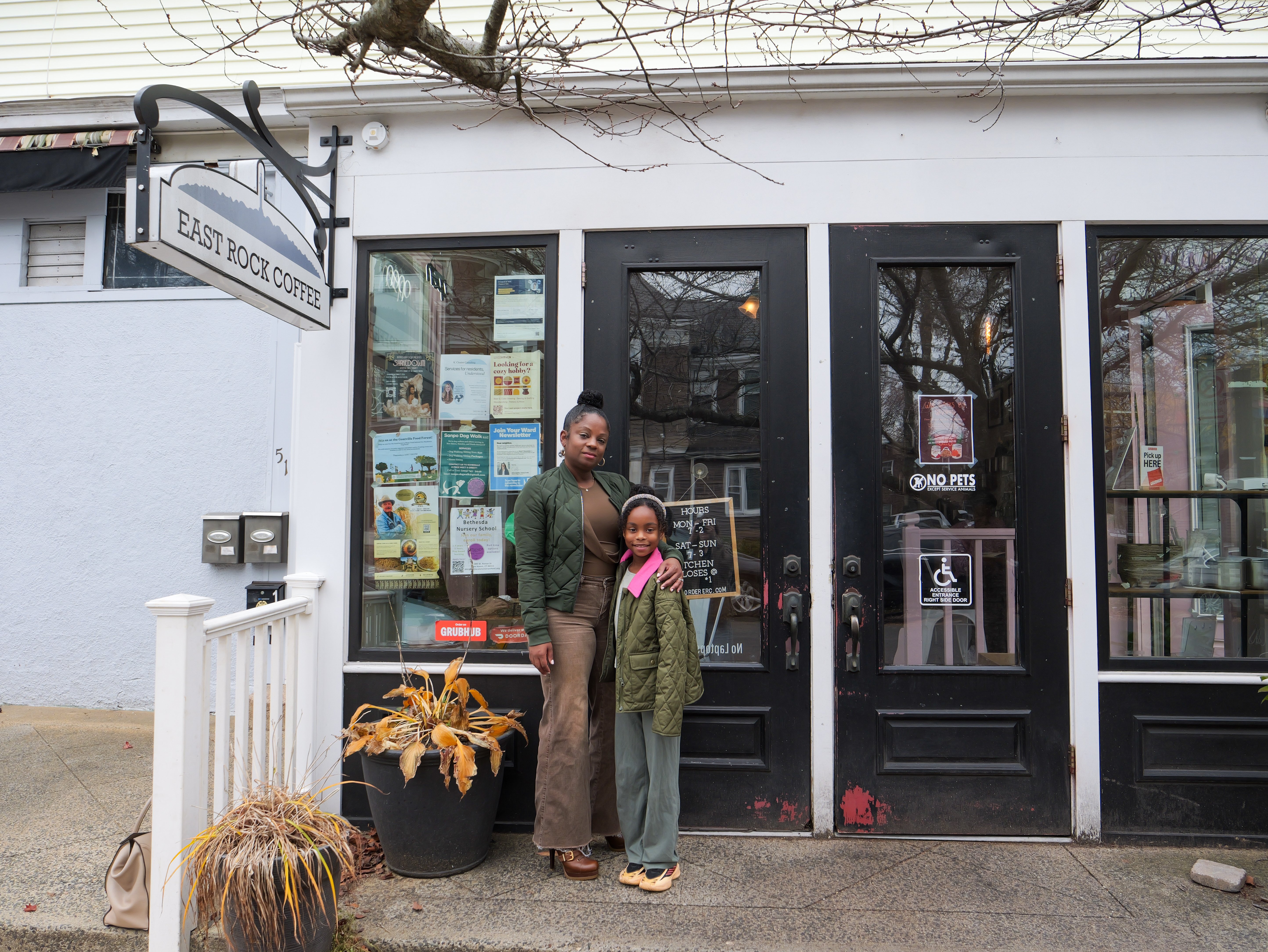
The response reflects Goodman-Hughey’s larger aspirations for the shop. She was born and raised in New Haven, growing up in Newhallville and attending Hill Regional Career High School. After living in New York City for 16 years, she moved back to her hometown to start a family. Her husband saw that the East Rock Coffee business was for sale, and said to her, “This is what you’ve always wanted.”
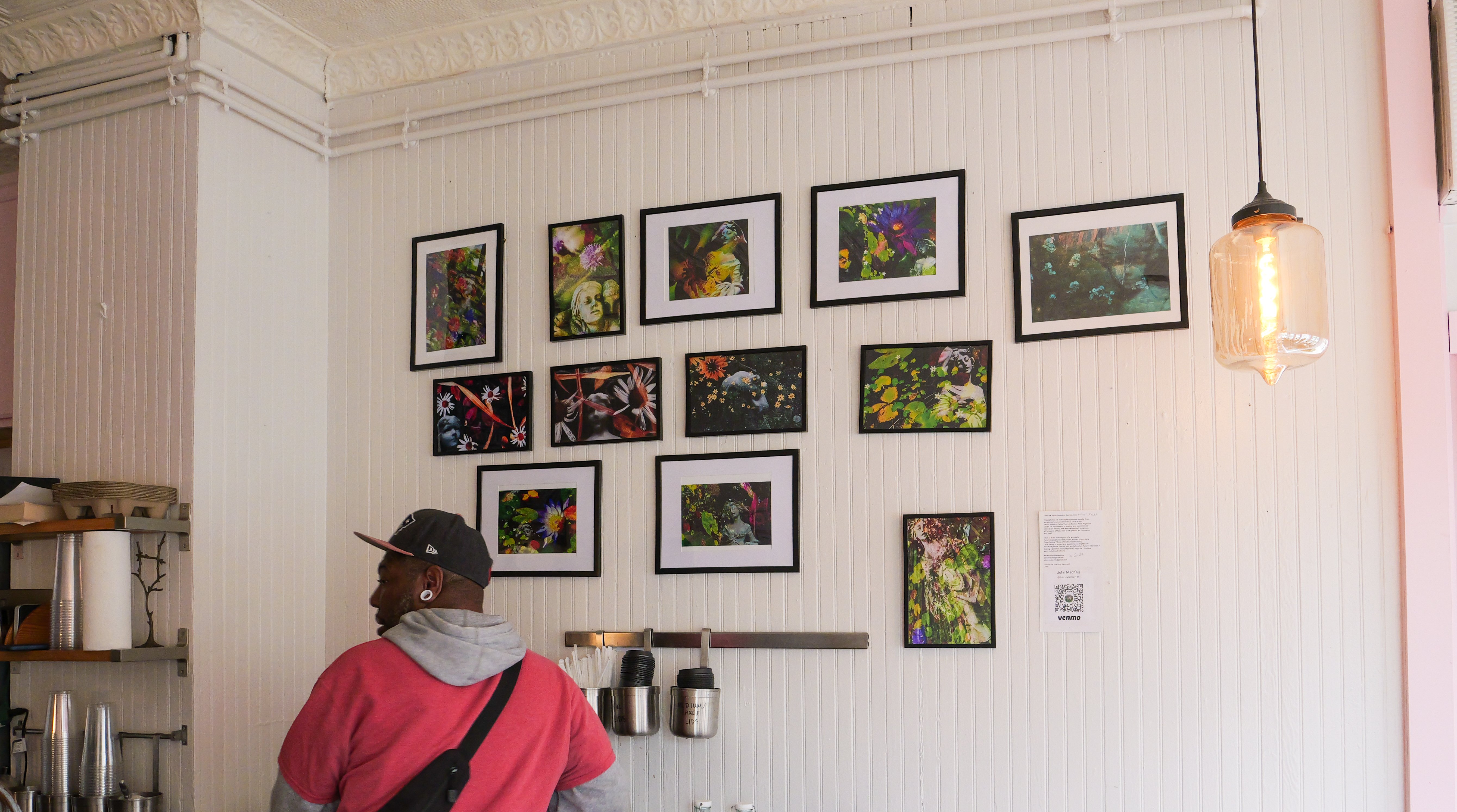
Goodman-Hughey has poured herself into the project; she wants to ensure East Rock Coffee keeps and improves upon its standing in the community. She created a 401(k) program for all staffers, retained all baristas during the leadership transition, and started an artist-in-residence program where all artists who sell items featured at the coffee shop keep their sales proceeds entirely.
She does not see the backlash to the poster as negative, but instead as helpful feedback:
As a restaurant owner, you have to be willing to just listen. We have social media for a reason: so you can directly talk to your customer. I’m not saying you have to change it right away like we did, but you should hear them out.
Goodman-Hughey said they’re going to only use staff-created or local artist-designed flyers moving forward.
What can, and what should, be made with AI
Restaurateurs make decisions everyday on whether to outsource a task or handle it themselves—anything from sourcing ingredients to designing a space or cooking when the chef is out. The Crooked Goat’s Torello believes that some things can be done with AI, but shouldn’t be the default choice.
“[AI] helps organize or does something efficiently–which could be good. But as far as anything created by a person, [AI] can’t touch it.” He believes cocktail menus are better when designed by a bartender, and menus are more appetizing when done by a chef.
For Torello, the decision of what is done by AI or a human sends a message to the consumer. Posting AI food takes out the human element, which is always the best. If you’re going to use a shortcut for this, what else are you using a shortcut for?”