

Culture & Community | Arts & Culture | Neighborhoods | Community Heroes | West Hills
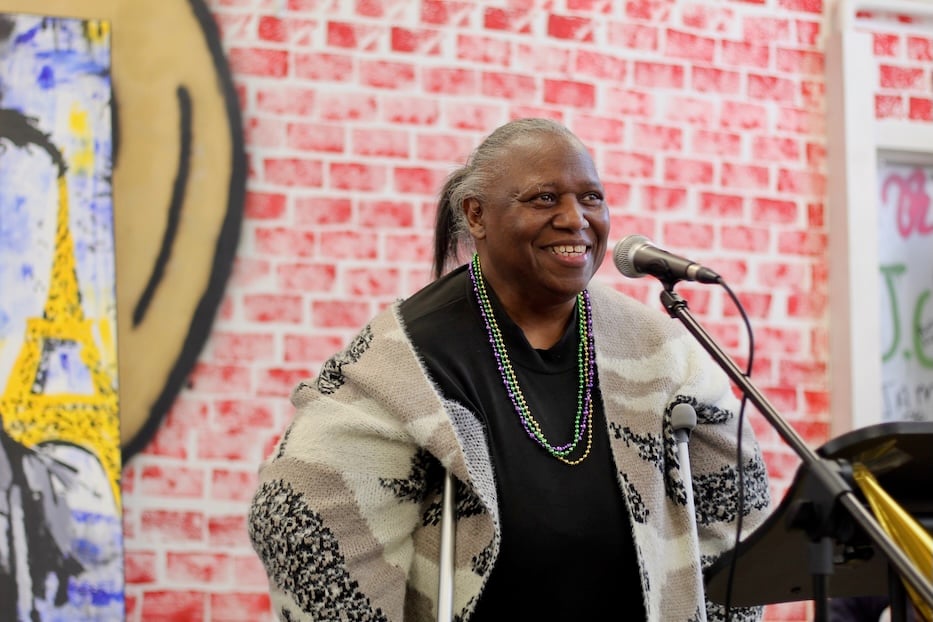

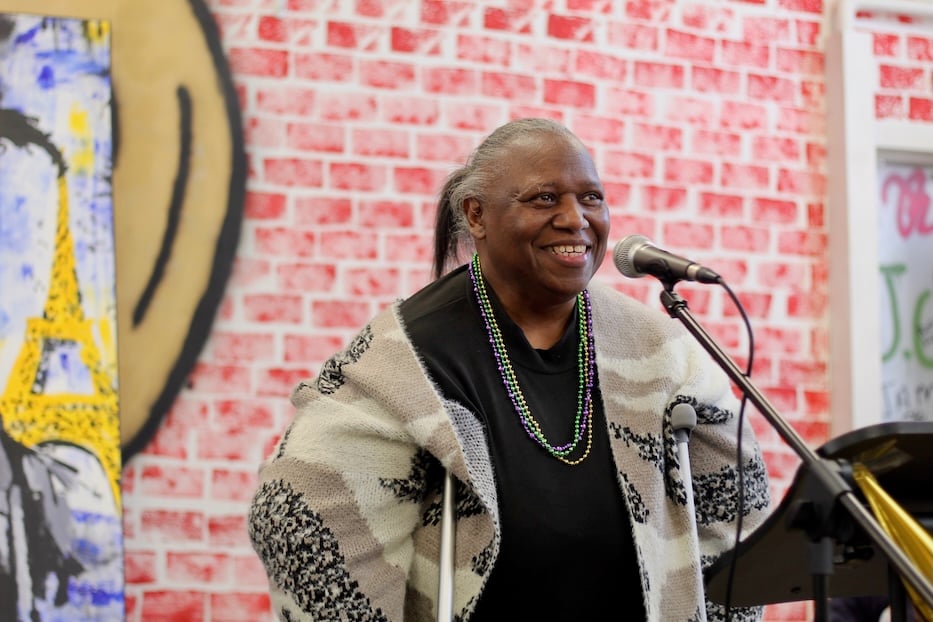
Top: West Hills Alder Honda Smith. Bottom: Jamire Casteel, a senior at Hill Regional Career High School who plans to attend a performance intensive in Paris this summer. The Shack, he said, has been his creative launchpad. Lucy Gellman Photos.
When West Hills Alder Honda Smith launched efforts to “bring back The Shack” just over five years ago, 333 Valley St. had been closed to the community for close to two decades. Around the neighborhood, she kept hearing the same thing: people wanted a safe, intergenerational space to gather, where kids could come after school and in the summer, and neighbors could get to know each other.
As they rallied around it, those neighbors shared their own visions: food and fellowshiping, homework help, arts and music classes, urban farming, and programs for kids and seniors. And when she set out to rebuild it, one step at a time, she had a whole village behind her.
Thursday morning, a long-held West Hills dream came vibrantly to life, as Smith joined aldermanic colleagues, friends, neighbors, and dozens of city officials for the grand reopening of The Shack, a revitalized Valley Street building that has become the vibrant heartbeat of the neighborhood and a hub for everything from arts to educational activism. After years of rebuilding—during which the community has had access to the space—she joyfully reopened the doors, welcoming New Haven to a community center years in the making.
At moments, the opening felt less like a ribbon cutting and more like a church service, as strains of praise and gospel floated through the air and sunlight streamed in through the windows, making curtains patterned with video game consoles seem more like stained glass. A nonprofit board, helmed by former Mayor Toni N. Harp, has helped steward the process.
“This was a long journey,” Smith said at the opening, which included a walk-through for city staff, alders and neighbors in the morning, and a celebration that lasted well into the afternoon and early evening. She nodded to the number of people who helped make it happen, from city and state officials to funders like the Community Foundation for Greater New Haven.
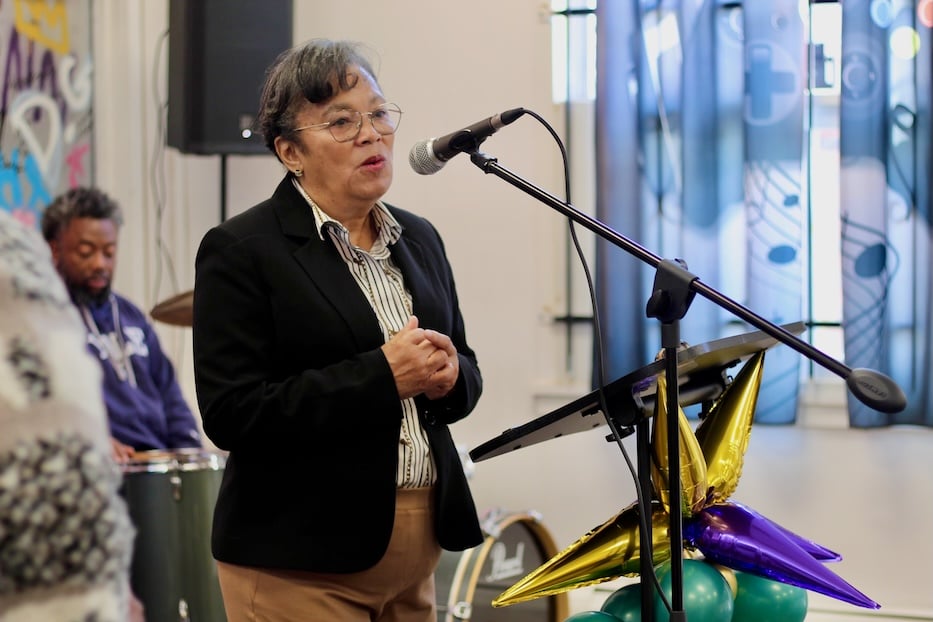
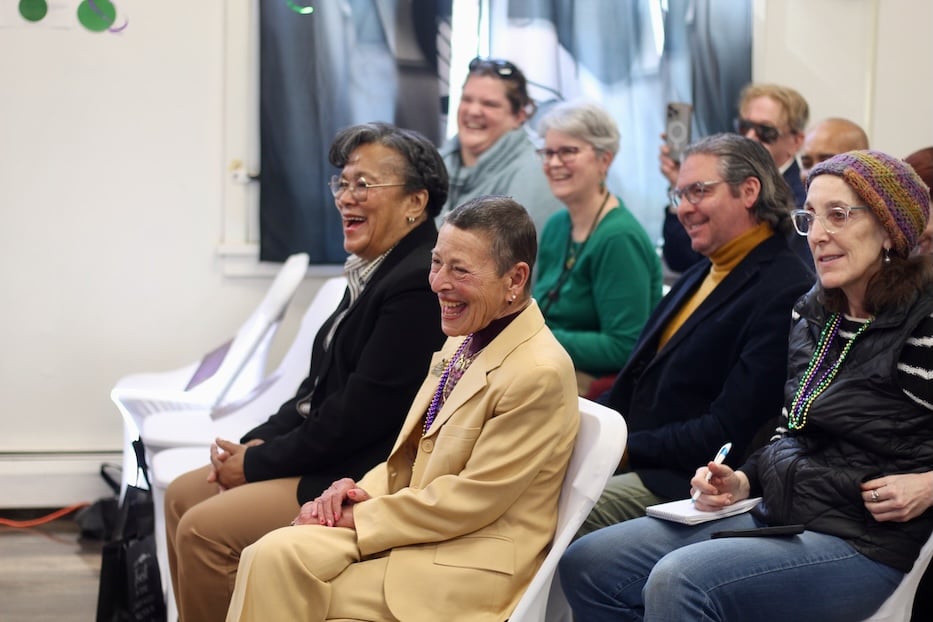
Top: Former Mayor Toni Harp, who chairs the 333 Valley St. board. Bottom: Lindy Lee Gold, who is an economic development specialist for the State of Connecticut.
Currently, The Shack—which serves roughly 750 people each month—includes a recording studio, youth newsroom, tutoring program, “Shack Seniors” group, and classes in visual art, music production, acting, graphic design and financial literacy, as well as access to on-site therapy. In the kitchen, Ms. Monica Clark turns out everything from steak and potatoes to her chip-studded cookies, which have just enough salt to appreciate the sugar.
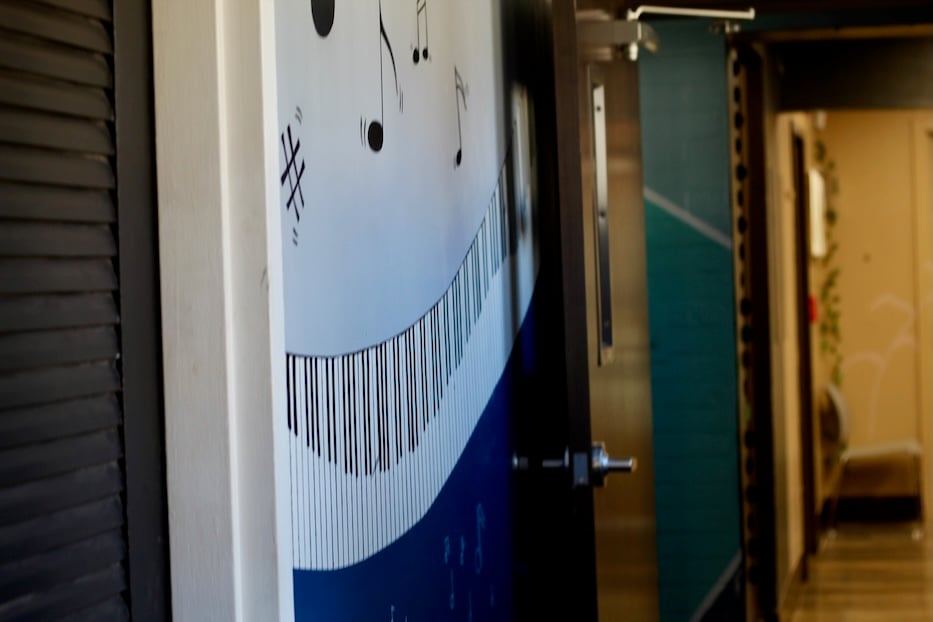
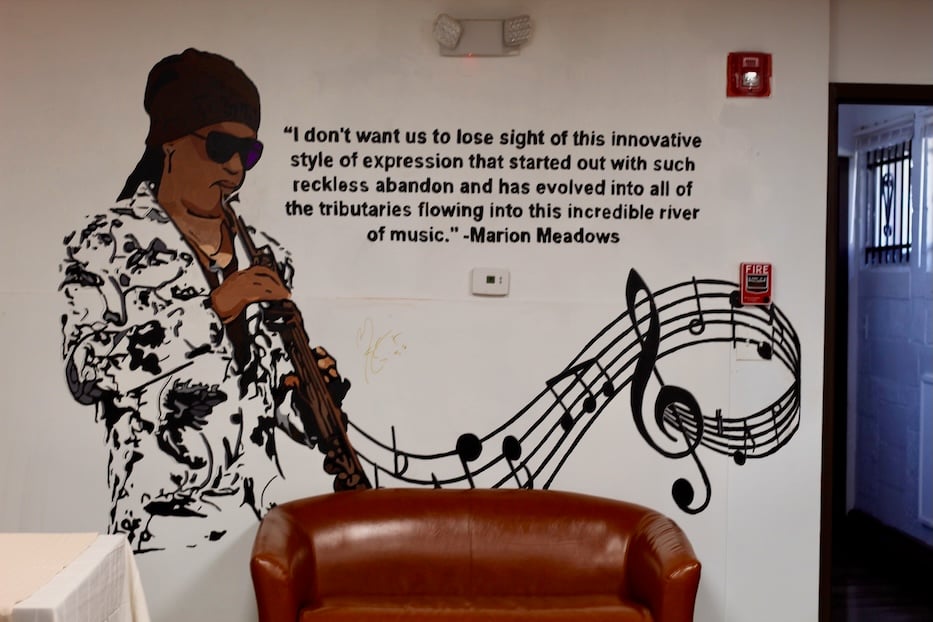
Past the Valley Street doors, a small screening room, relaxation space, and multipurpose area sit down a hallway, the walls brilliantly decorated with work by artist Rebecca LeQuire, who has also worked with youth to brighten the building with public art. A new hub for music production, often in use and already adored by West Hills’ budding creatives, is tucked neatly behind it.
Thursday, Smith and fellow speakers made it clear how unique and beloved the space has become to the hundreds of people who walk through its doors, grow food in its gardens, tend its chickens, and flourish under its roof each month. Around them, that love was palpable, where purple and green balloons and marching strings of Mardi Gras beads co-mingled with musicians sitting regal at their keyboards, and a standing-room-only crowd.
Taking the mic early in the lineup, State Rep. Toni Walker remembered watching Smith at work during a Christmas toy giveaway years ago, as drivers pulled up with truck loads of toys to make sure that no child in West Hills went without during the holiday season. By then, Walker had seen Smith’s dedication firsthand, and knew that she was building something special.
“I think she has about 780 children around the city,” she said to laughs. “And because of this woman and the fact that she said, ‘Our children need it, they came.’ How do you stop following somebody like that? I mean, she can move that many people, you want to be with that person. You want to feel God in your presence.”
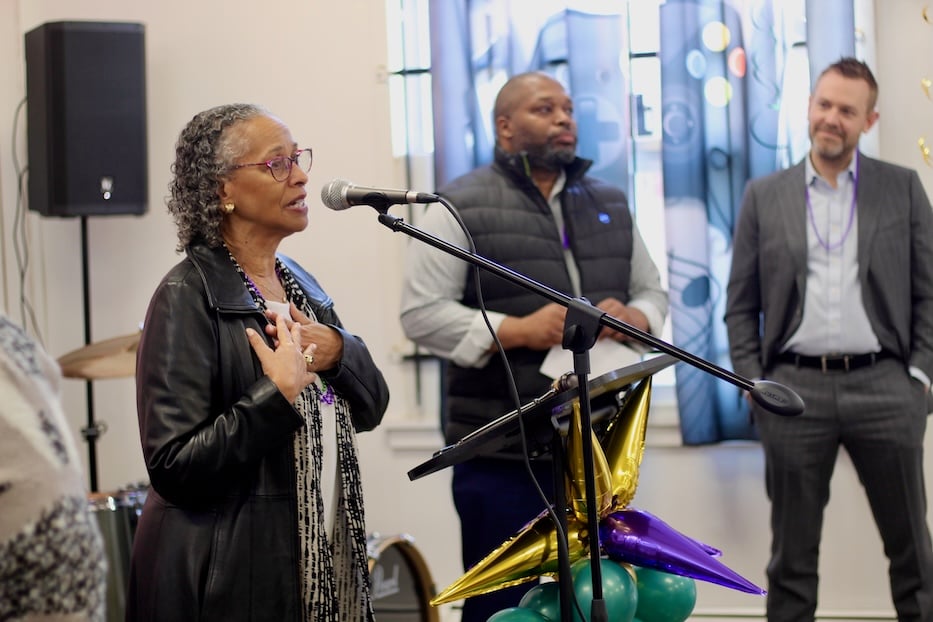
"You want to feel God in your presence," said State Rep. Toni Walker.
So when Smith embarked on her journey to revitalize the space, Walker was happy to help find state support, she added. She and Sen. Gary Winfield “had a couple of nickels we threw together,” and then they kept asking colleagues in the state legislature to get involved. They described, again and again, the role of this community center in West Hills, and the equally miraculous woman midwifing it into being.
It came through, to the tune of $550,000 in the first months of 2022. Now, almost exactly four years later, Walker joked that her morning had improved dramatically the moment she walked through the building’s front doors, to columns of green, purple and yellow balloons and a bright mural of the late rapper Stēzo stretching across the wall. She had been exhausted from poring over the state budget with colleagues. And The Shack reminded her why she got into public service in the first place.
“This is what we do it for,” she said as musicians dashed out a sort of “amen” from the keys behind her. “It’s bringing people together that want their community to thrive. Let’s get the red tape out of the way. Let’s just get to the heart of it … we love it, and we love her.”
“When Honda calls about The Shack, I’m not hearing what I hear all the time from folks who want money for a program, folks who want money for an idea,” Winfield added moments later. Often, he said, he hears from constituents who are interested in coming into a community that isn’t theirs, sharing a time-limited educational program, and then leaving again, not having built something sustainable.
“What I’m hearing is the call of someone who is concerned about her kids.”
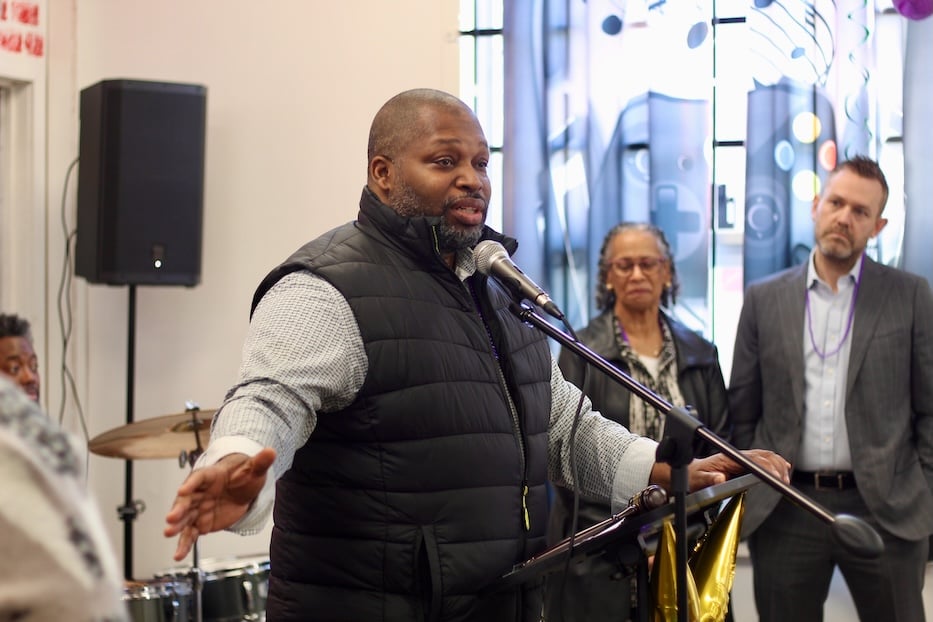
State Sen. Gary Winfield: Smith is advocating for her community.
That makes a difference in not just the West Hills community, but the city, he and other speakers noted. Harp, who chairs the 333 Valley Street board, recognized the grit, sticktoitiveness, and determination with which Smith approached restoring the space, an old blue building “that was about to fall apart” after its life as a community center had ended 20 years ago. Now, people come to The Shack whether it’s open or not, because they know that Smith is there to help them.
Smith, with a dream and a vision, was able to gather a board, talk to legislators and funders, and raise the dollars necessary not just to reopen the doors, but to make it a rare “third space” that offered something to every member of the community. Young people learned to flock there for homework help and college readiness. Elders met neighbors they’d never known. Musicians found a space to practice and perform. There were even chickens, with eggs that could (and do) nourish the community.
Smith kept growing the space—and building out a community that understands and supports the value of the work. With her H.O.L.L.A. ((Helping Our Ladies Learn and Achieve) Mentorship Program, funded by the Amore Propre Fund’s Lindy Lee Gold, she has been able to mentor 125 students from eighth grade through college, and now onto careers in graduate and professional school.
“Honda has changed not just their lives, but the lives of their future generations,” Gold said of students who have come through the program, handing Smith a check before walking back to her seat. “You can open it,” she added with a little nod and approving smile, as the envelope fluttered like a delicate bird in Smith’s hands.
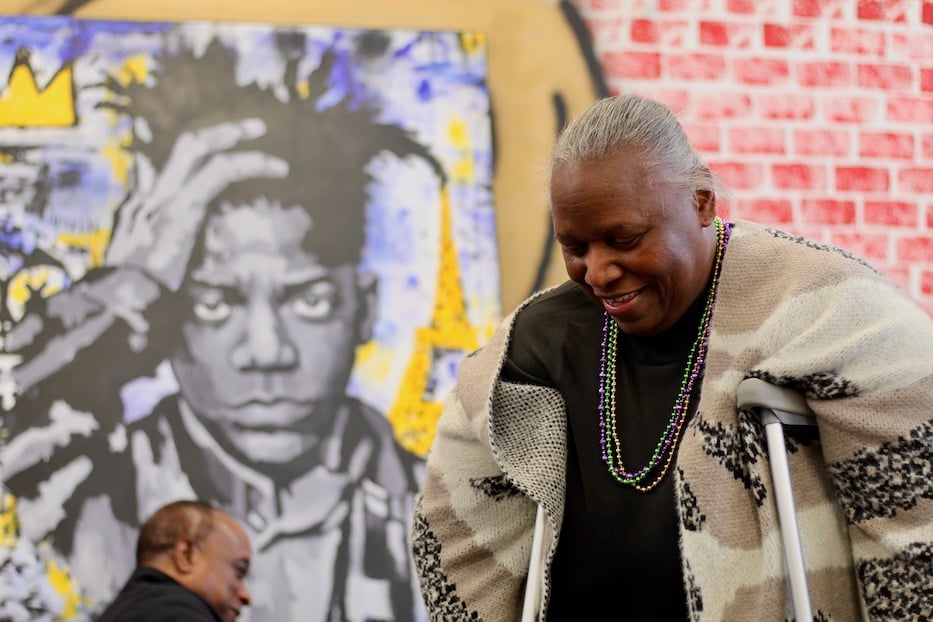
Work by Rebecca LeQuire graces nearly every room and hallway at the Shack. Thursday, she said she has loved the artist Jean-Michel Basquiat since she was three, and was honored to do the portrait for Smith.
Behind them, Gold’s words came to life, as attendees studied a portrait of artist Jean-Michel Basquiat by the artist and educator Rebecca LeQuire. Smith later auctioned off the painting for $1,001 to Dwight Alder Frank Douglass, noting that it will help pay for her grandson, Jamire Casteel, to study music at a performance institute in Paris, France this summer.
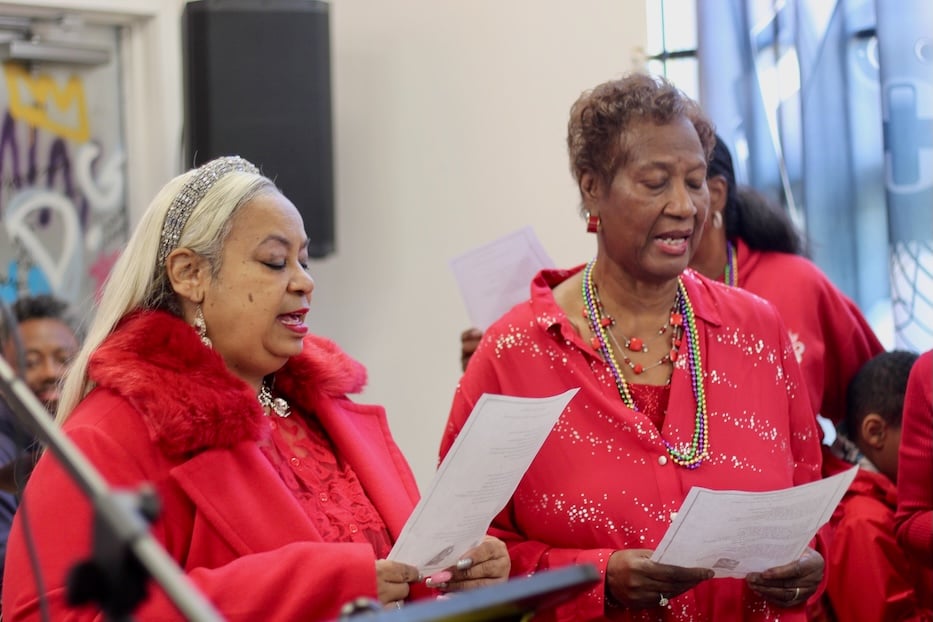
A person could feel that love in the space itself, where music hung low and sweet in the air, and vocalists approached the podium nonchalantly, then took an entire audience to church. After a moving rendition of “Lift Every Voice and Sing”—a twentieth-century poem often recognized as the Black National Anthem— vocalists wove music joyfully into the program, with selections from Stevie Wonder’s “Overjoyed” to CeCe Winans’ “Let Them Fall In Love With You.”
As a spirit flowed through the space, Smith also shared her own testimony, in a reflection that was as candid as it was galvanizing. With every ear in the room turned toward the speaking podium, she explained that “there was a time in my life where things got grim,” and she couldn’t imagine a bright future like the one stretching before her Thursday, with a room packed to the gills with supporters.
At the time, she remembered, a false accusation landed her in a jail cell, where she was afraid and confused, unsure of why this had happened to her. She remembered crying out, thinking Why this? Why me? Why now?
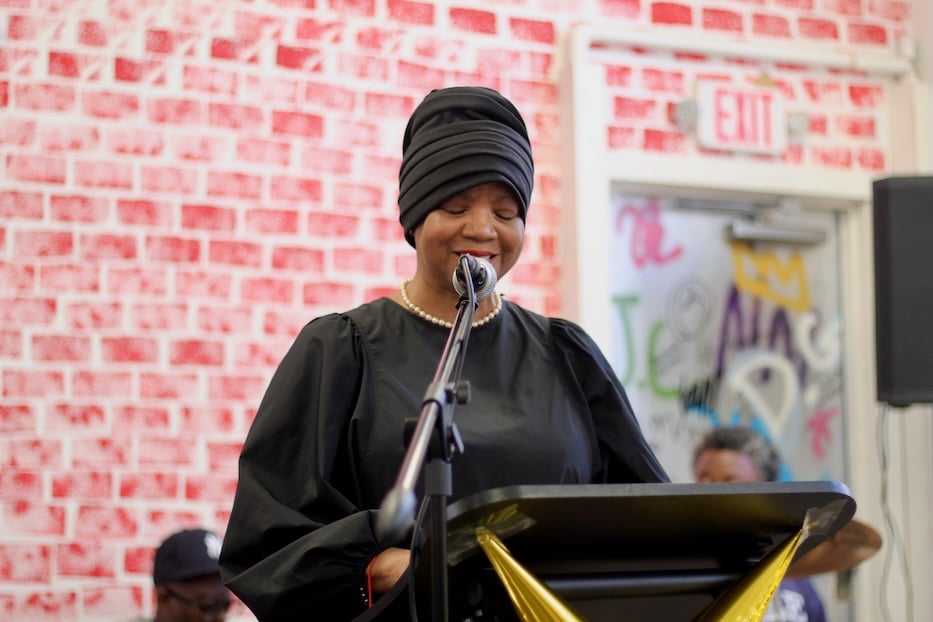
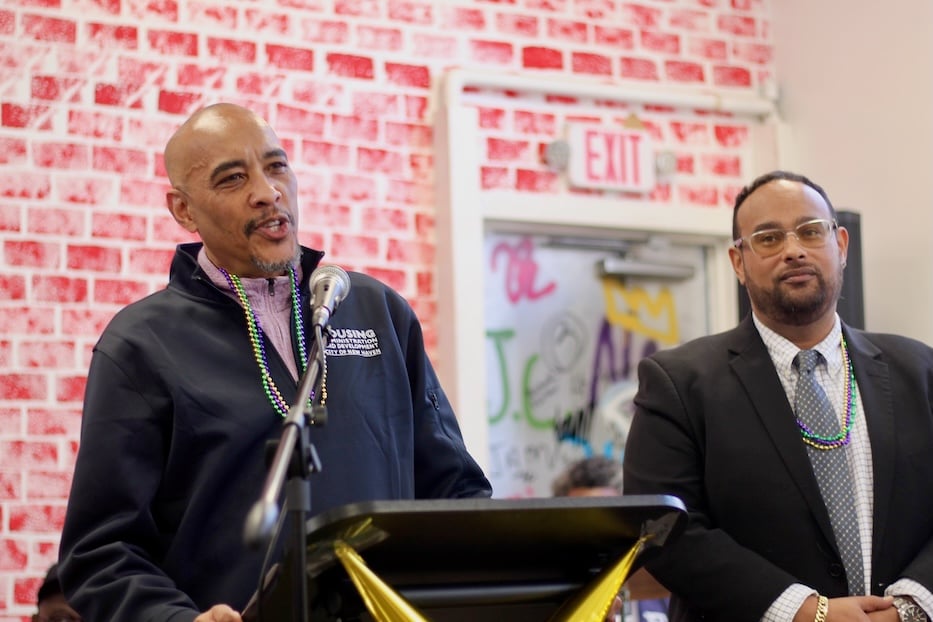
Top: Karen Thigpen performs "Let Them Fall In Love." Bottom: Mark Wilson and Jeff Moreno, who work for the city's Housing & Development Administration. Wilson remembered a meeting in which Smith, who received a call that West Hills resident Anthony Strother had been shot, had to leave immediately, and realizing how deeply she was entrenched in and trusted by the community.
Then “I had a moment,” she said. “A moment with God.”
“My heart softened,” she continued. “My vision got clearer. My purpose became greater than my pain.”
Back in West Hills, she transformed the heavy weight of that moment into a bright fire that she carried, and still carries, for the community. As she listened to neighbor after neighbor speak about the need for a space where people could come together, her vision for The Shack took shape. What was an old, tired blue building began to transform into a shining beacon of hope for the neighborhood.
“This is a place where rejection doesn’t get the final word. Love does,” she said. By now, the packed room was talking back to her, as if the podium was a pulpit, and it was a sunlit Sunday morning service. From the front row, Gold and Mayor Harp seemed to radiate light. A few chairs away, Board of Alders President Tyisha Walker-Myers and her granddaughter Tait snuggled for a sweet moment.
Walker-Myers later praised Smith—her favorite “late-night caller,” she said with a smile—for the life-saving and life-giving work she does each day through both her work at The Shack and her leadership on the city’s Board of Alders. In addition to her work fielding constituent concerns, Smith currently sits on the board’s finance and public safety committees.
That deep affection and respect for Smith is contagious, others added after vocal performances that brought the room to its feet, and an auction that had alders outbidding each other by hundreds of dollars as attendees laughed and clapped gleefully along.
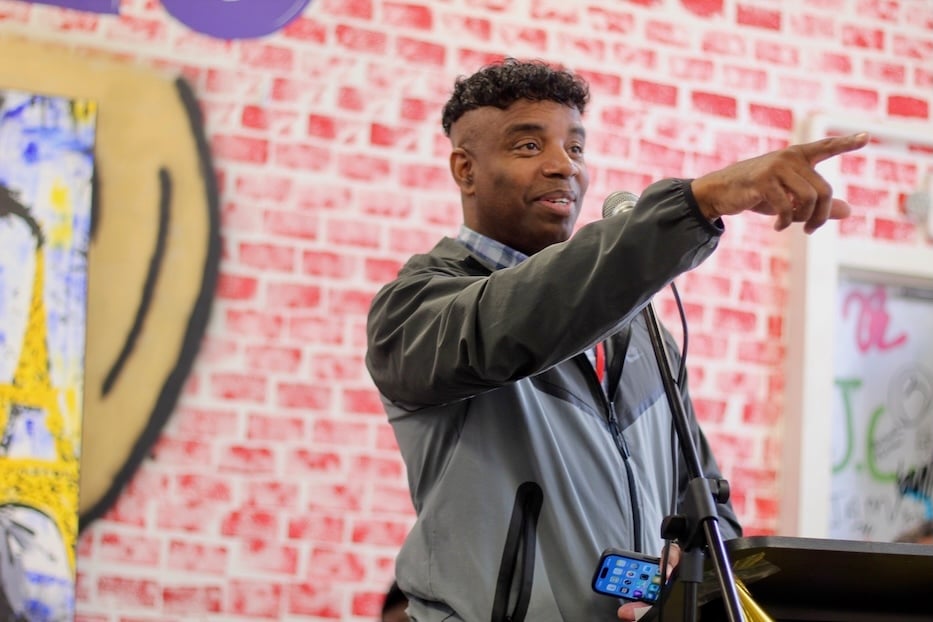
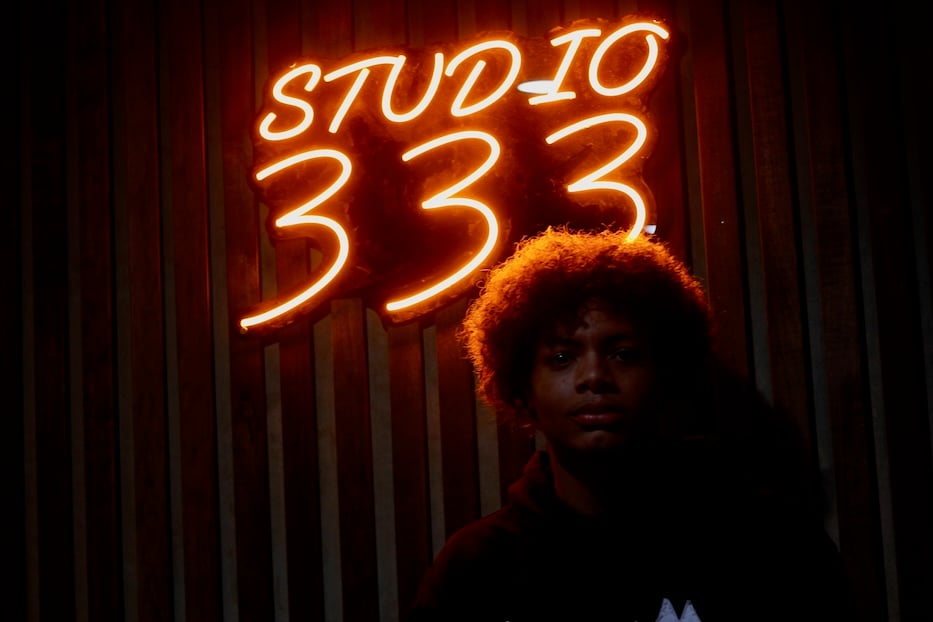
Top: Alder Richard Furlow. "Thank you for allowing me to have a small part" in this, he said to Smith. "Not only do I have access to the building, but I have access to the lives of these young people. You are building the legacy for the future ... this is just the beginning. Bottom: Isaiah Clark in the studio.
Willa Hemingway, one of the Shack Seniors who came dressed in red and ready to perform, lauded the center as a place where she was able to find community after the passing of her husband, David, in February 2020.
While Hemingway has lived in West Hills for years—she settled in the neighborhood after coming to New Haven from Virginia with her family in 1970—she didn’t really know her neighbors until the Shack started offering programming.
“Oh, I think it’s wonderful!” she said. “It gives people an opportunity to connect, mingle, form friendships … It's like a family for us.”
Down a hallway to a recording studio that has been years in the making, 19-year-old Isaiah Clark and Casteel were working with engineer John “Dilli” Moran to record a track that Casteel had the lyrics to on his phone. Clark, who graduated two years ago from Cooperative Arts & Humanities High School, said he’s been grateful to watch the evolution of the space for at least half a decade, as it comes back to life and becomes a cultural home for so many in the community.
“This is a safe place to go when you have nowhere else to go,” he said. From the studio on the other side of the wall, a rush of lyrics—I wanna be your protege! I wanna be your favorite thing!—came through. Casteel, popping his head out of the room minutes later, echoed that enthusiasm. Without Smith and The Shack, he said, there’s likely not a world in which he would be headed to Paris to hone his craft this summer.
Her encouragement has pushed him to work harder as a musician—and to pursue new opportunities, like being a mentor with the Daedream Arts Theater Company.
“This place means so much to me,”he said.