

Elm Shakespeare Company | Arts & Culture | Theater | New Haven Academy | Much Ado About Nothing | Legacy Studios
Legacy Studios and Elm Shakespeare’s take on Shakespeare’s rom-com at New Haven Academy is groovy with personality and history
 There’s nothing quite like school after hours: The halls are empty, the chairs stacked, and striding past quiet lockers under the fluorescent strip lighting feels thrillingly transgressive. Students stand a little taller after the sun goes down, walking the halls like they own them—which, in the truest sense, they do.
Last Thursday night, at New Haven Academy, the familiar smells of floor polish, pencil shavings, and hot lunch lingered underneath new, stronger, show-night aromas, like hairspray, concession-stand popcorn, and dust toasting on stage lights: The student-led, faculty-supported Legacy Studios Drama Club was opening their production of Shakespeare’s Much Ado About Nothing, in partnership with Elm Shakespeare Company.
At NHA, students may not officially run the school, but they do run the drama club. Legacy Studios is operated by a board of trustees that includes beloved faculty member Ty T. Scurry, NHA’s Performing Arts Director—but nine NHA students fill the other leadership roles, including Executive, Artistic, and Managing Directors. They were all present in the NHA gym for opening night, donning costumes and adjusting headsets. They had worked with their peers (technical directors, scenic designers, light and sound board operators, makeup crew, and more) for weeks to get the space ready for opening.
Co-directed by Scurry and Liz Daingerfield, Shakespeare’s light-hearted rom com gains as many layers of meaning as students contributing to the production. As Scurry writes in a director’s note, “Beneath its quick wit, romantic entanglements, and delightful misunderstandings lies a story about reputation, societal expectations, pride, vulnerability, and the courage it takes to love and trust one another.” This is a Much Ado after hours, when everyone feels freer to mingle outside of cliques, letting their whole personalities come out.
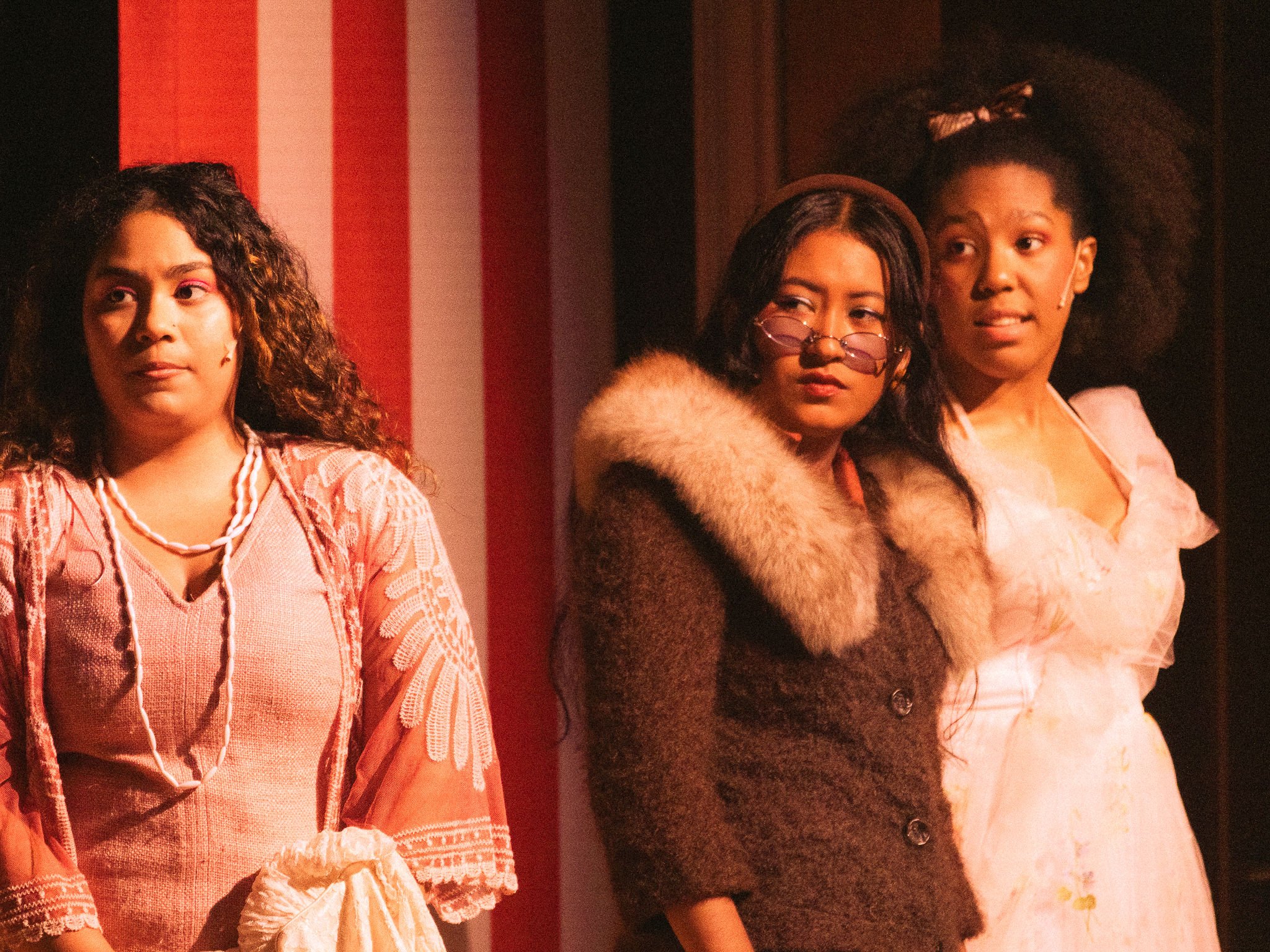
On stage, red and white striped flats frame a fairground pageant platform casually bedazzled with red velvet ropes, sitting pleasantly before a cheerful curtain displaying blue sky and fluffy white clouds (scenic design by Delaney Stachacz). A metal stencil-like sculpture of the globe sits in the wings of the constructed stage-upon-a-stage, setting us in the 1964 World’s Fair. The toes of seated audience members tap to a pre-show oldies playlist: Numbers by Little Richard, Elvis Presley, and Chuck Berry call to the imagination high schoolers of sixty-, seventy-years ago doing the twist, then shifting into an awkward slow dance when the rock n’ roll is replaced with something schmaltzier.
 Into one of these slower numbers, the company of Much Ado enters the stage clad in retro browns and oranges, flares and furs (costumes by Katie Upton, with designs by Solimar Quintanilla and Janiyah Correa). Marilyn Acosta Robinson steps up to the platform and begins to sing “Cupid” by Sam Cooke, her rich voice dipping low, stirring the dust off tired hearts and tired ideas of the pas—here, the past is prologue.
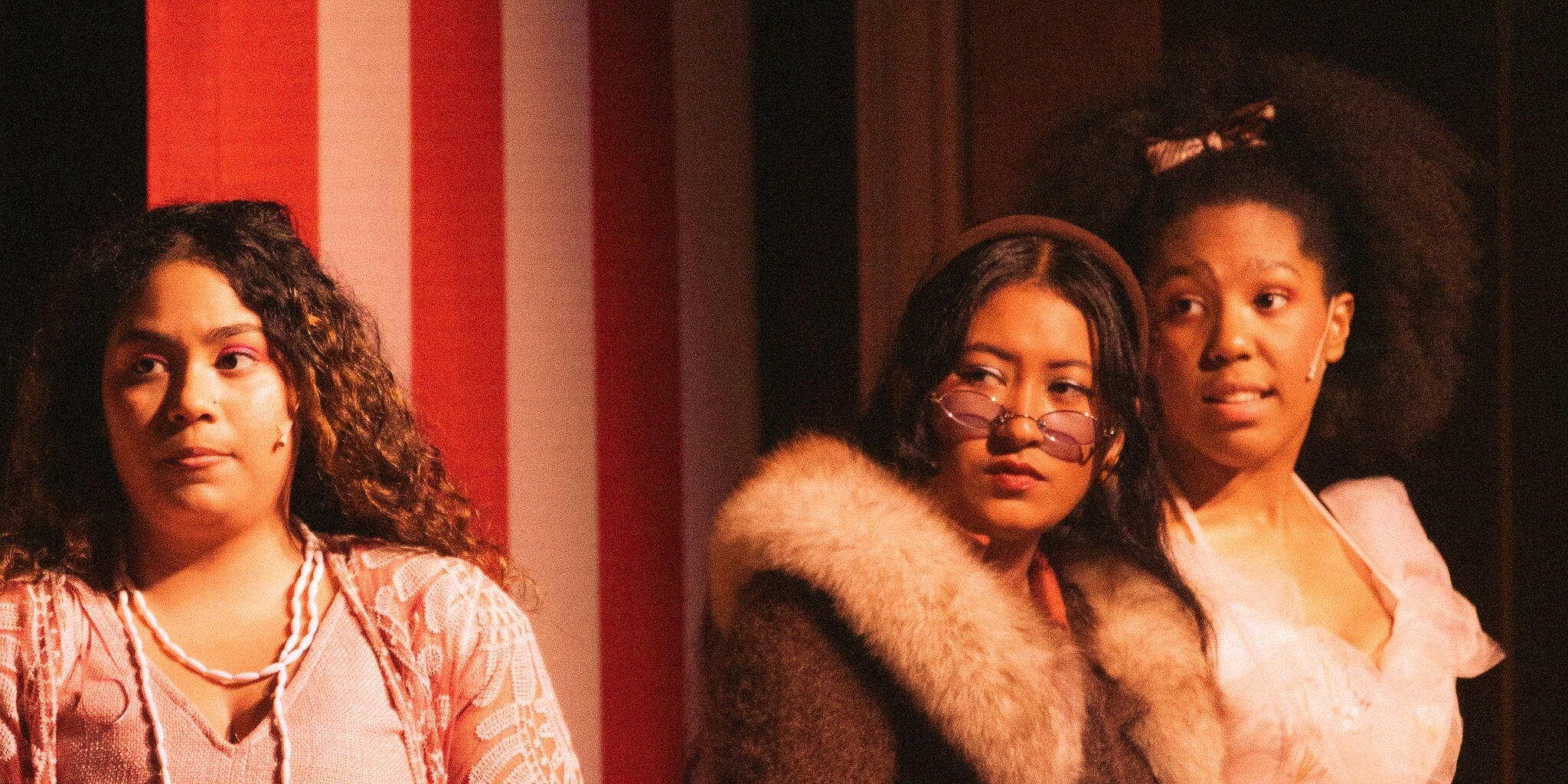
As Acosta Robinson sings, Shakespeare’s famous bickering enemies-to-lovers, Beatrice (NHA junior Olivia Tapia Ko) and Benedick (sophomore Molly Davis), take the foreground of the fairground, miming a flirtatious fight. It is immediately clear that Beatrice is very cool, while Benedick is not: Beatrice, sporting teal corduroy flares that match both her eyeshadow and her tinted lenses, appears to have invented side-eye, while Benedick (or “Ben, a dick,” as Beatrice calls him) thinks finger-guns are the last word in rizz.
But as the story develops, and the lovers get mired in obfuscation and misunderstanding, Tapia Ko and Davis’s brilliantly layered performances reveal their characters’ hidden depths. Tapia Ko’s Beatrice’s cool-girl bravado masks a vulnerable heart easily bruised. As Benedick, Davis achieves what so many awkward people (I’m speaking from personal experience) lack: the confidence to speak slowly. Davis’s impeccable comic timing gives Benedick a magnetic charisma. We’re on his side and he knows it. It’s only a matter of time until Beatrice is there too.
Swirling around the lovers are a bevy of other characters rendered just as complexly. As Hero, Beatrice’s much more accommodating and even-tempered cousin, Acosta Robinson goes from beaming to scheming, radiating joy even while making it clear she’s nobody’s fool. As Claudio, Hero’s husband-to-be, Jonah-Theo Ssemwezi hides the character’s deepest feelings behind a tightly knit brow, going from soft-spoken to taunting and defensive when he believes his fiancée has wronged him. But when the accusations of cruelty are turned back on him, Ssemwezi shows us a Claudio who, though he may be still learning how to trust, needs no instruction on how to love.
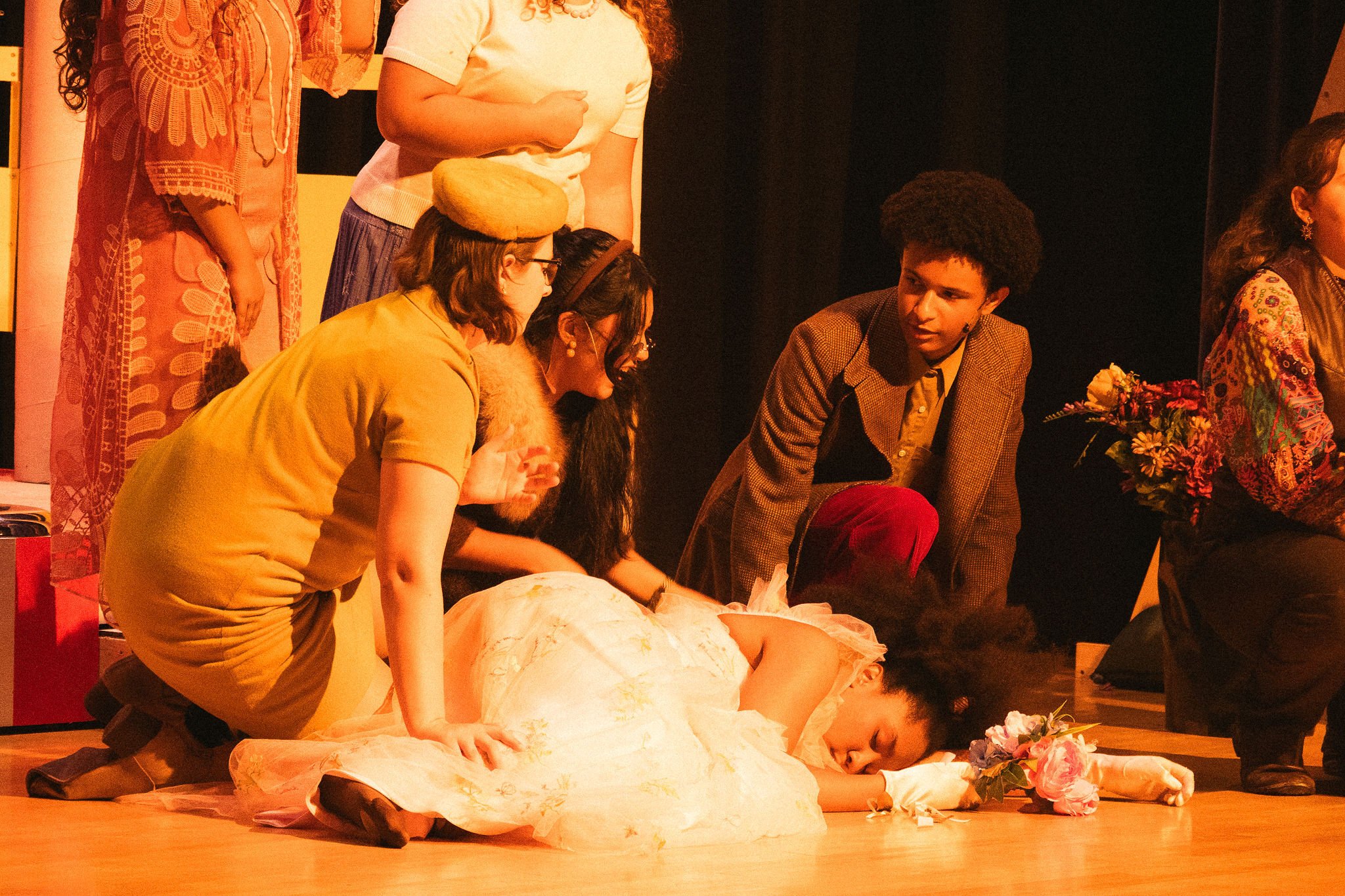 The same is true for Curtis Reason’s portrayal of Don John, the character responsible for the misunderstanding between Hero and Claudio. Reason brings a severe gravity to the role: When asked by his comrade Conrade (Eugenia Jelis Rodriguez, very funny) why he’s such a grouch, Reason imbued such self-possession and reasoned conviction into his “If I had my liberty, I would do my liking. In the meantime, let me be that I am, and seek not to alter me,” that he drew resonating “mhmms” from the sympathetic audience.
Semaj Battle-Reed fleshes out the deceptively savvy Borachio, Don John’s partner in crime, into a suave player who struts, swaggers, and salsas instead of walking. When plotting to ruin Hero and Claudio’s engagement, Borachio tells Don John of his intimacy with Hero’s lady-in-waiting. “I think I told your Lordship a year since how much I am in the favor of”—and here Battle-Reed’s voice went up, indicating a question mark not in Shakespeare’s text, as if he’d forgotten her name: “…Margaret?” Too many women hast thou, poor Borachio.
Borachio and Conrade are eventually foiled by inept constable Dogberry, played by a fully committed Oliver Reymond, using a perplexingly heavy southern-adjacent accent that made Dogberry at times (true to the script) “too cunning to be understood.”
While the 1960s setting read more as unifying aesthetic than social context for the production, the choice to set the show decades in the past speaks to the Studio’s intention to provide young artists the opportunity to interpret challenging material and produce, in the words of Scurry, “not watered-down versions of great theatre…limited by age or experience.”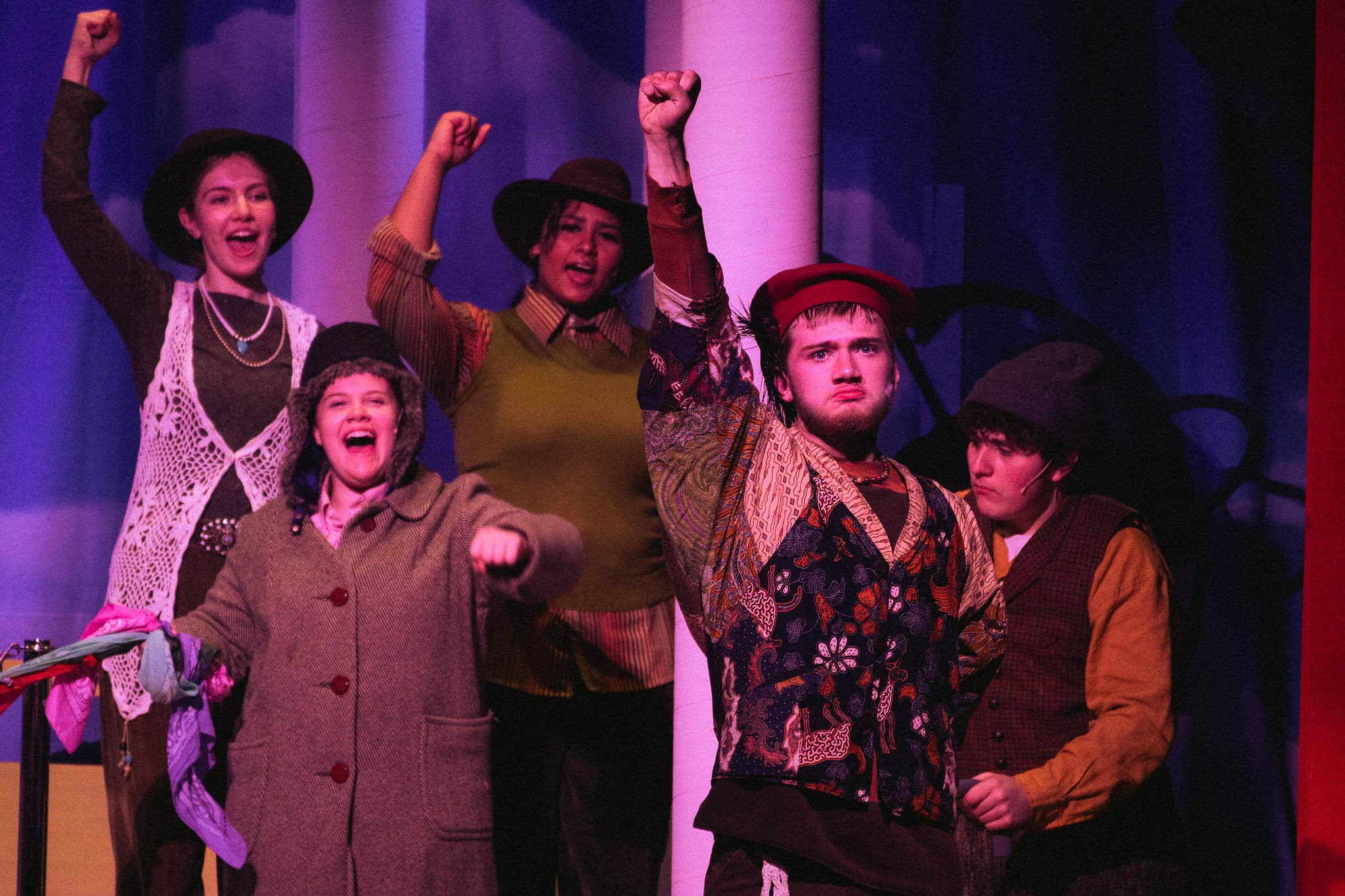
It’s a common misconception that student artists can only access classical and canonical works by way of the symbols and aesthetics of their direct twenty-first-century lived experience. In this Much Ado, Legacy Studios, heading into its fifth anniversary season after this production (its eleventh), refuses to underestimate the imagination and empathy of young artists, trusting students to translate the problems and politics of the 1590s and the 1960s into something that feels active and alive today.