

Culture & Community | Kehler Liddell Gallery | Arts & Culture | Westville | Youth Arts Journalism Initiative
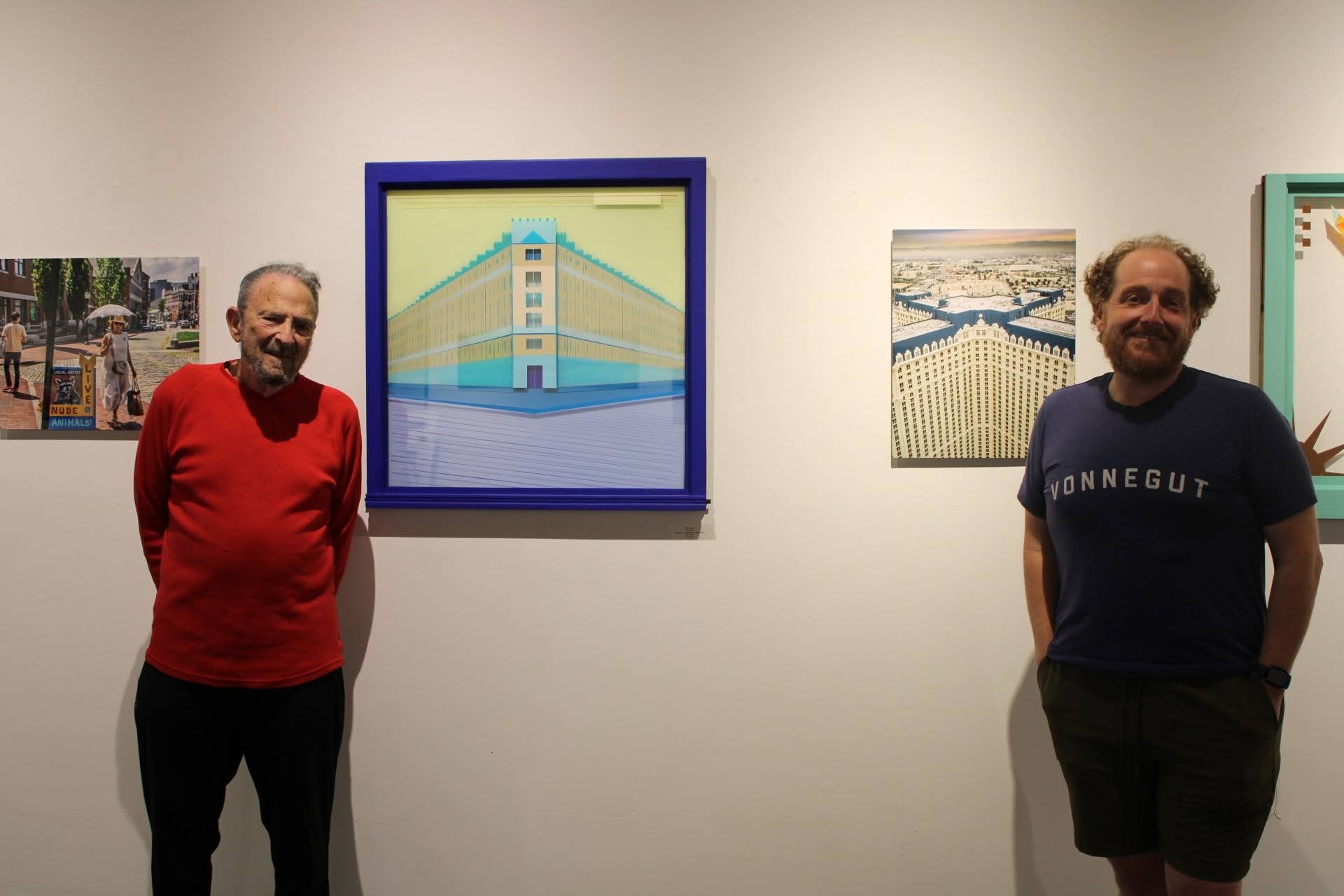
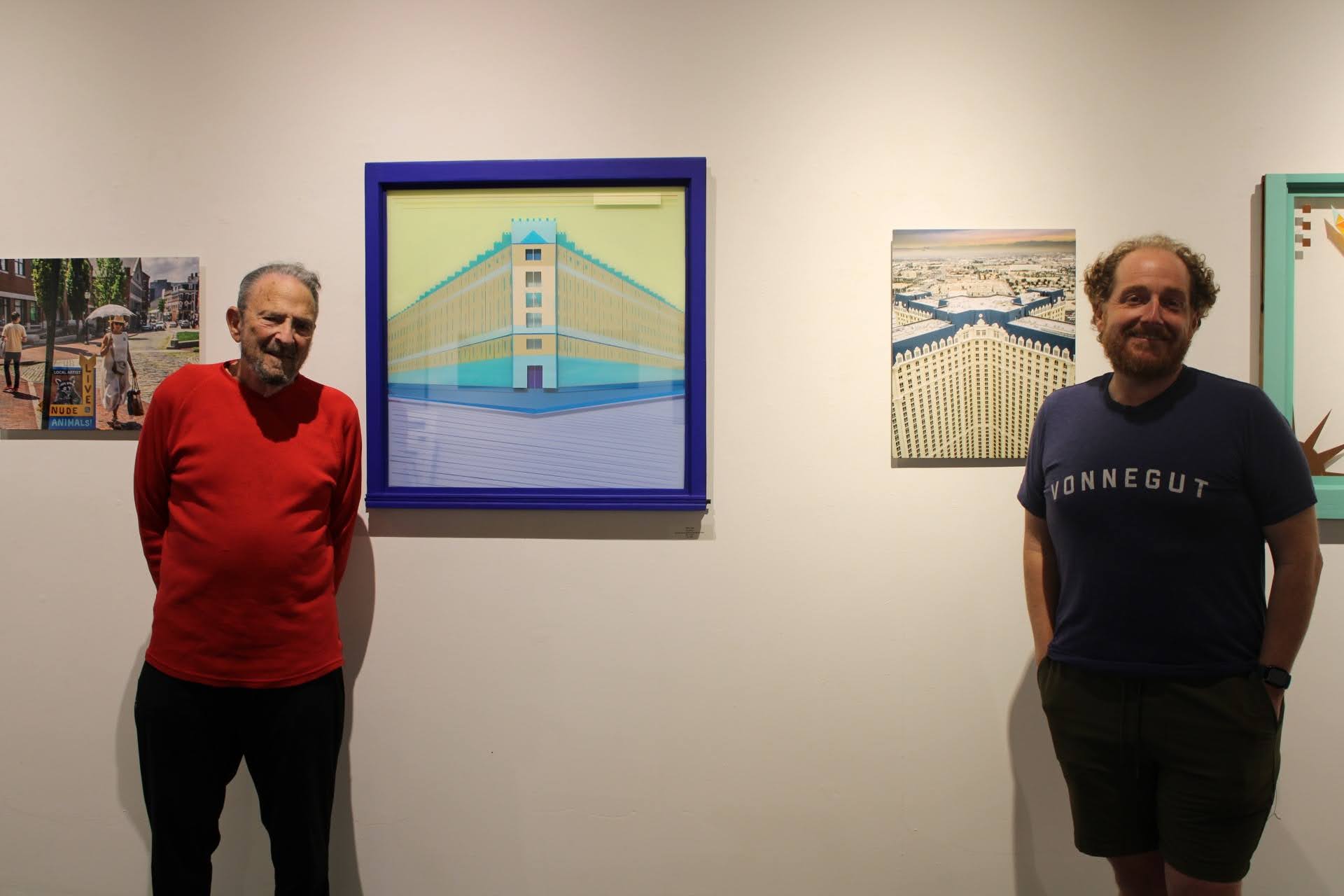
Artists Hank Paper and Eddie Hall. Jarelis Calderon Photos.
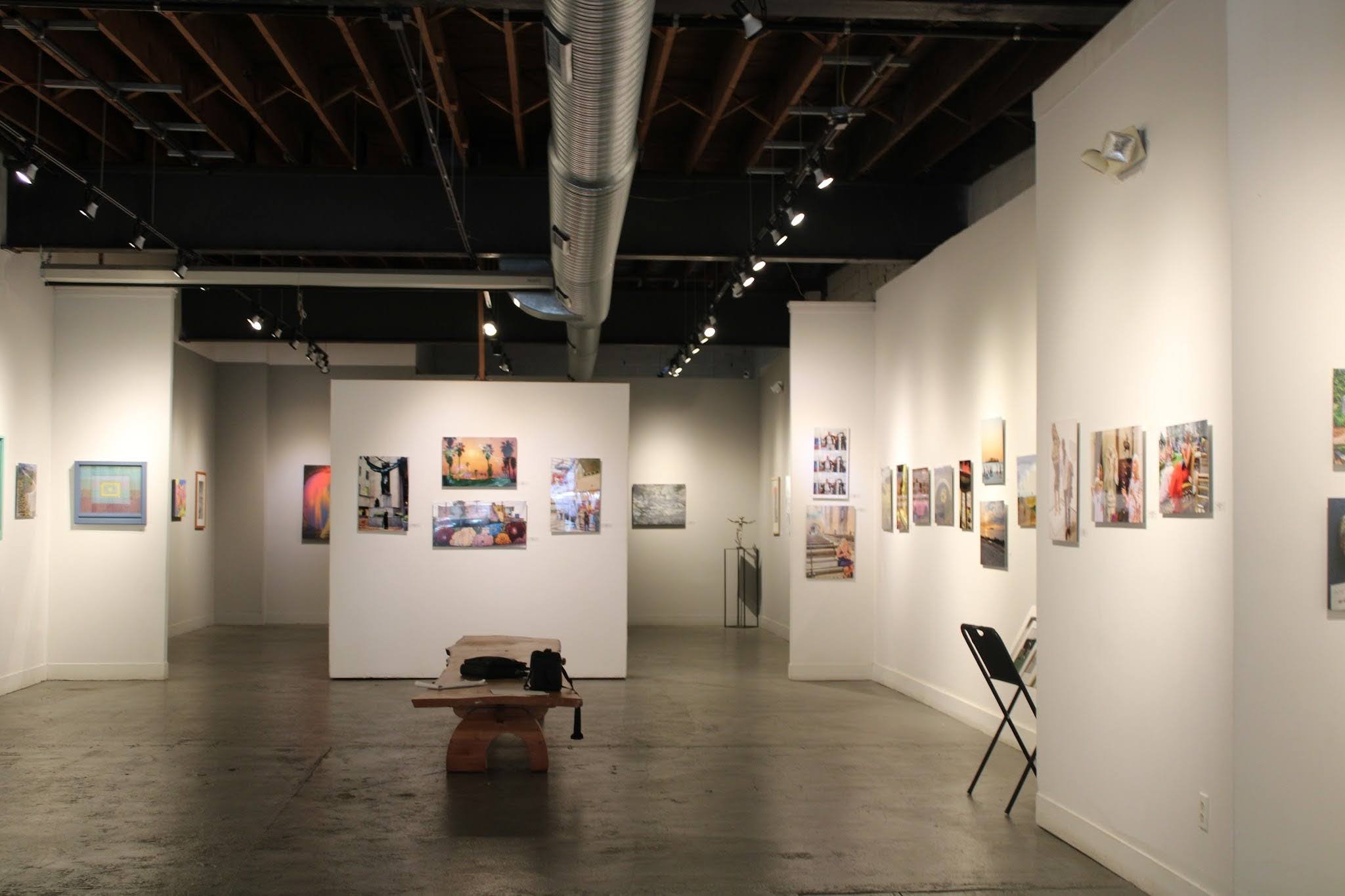
Walking into Kehler Liddell Gallery, it’s hard to miss the sheer amount of creativity filling the space.
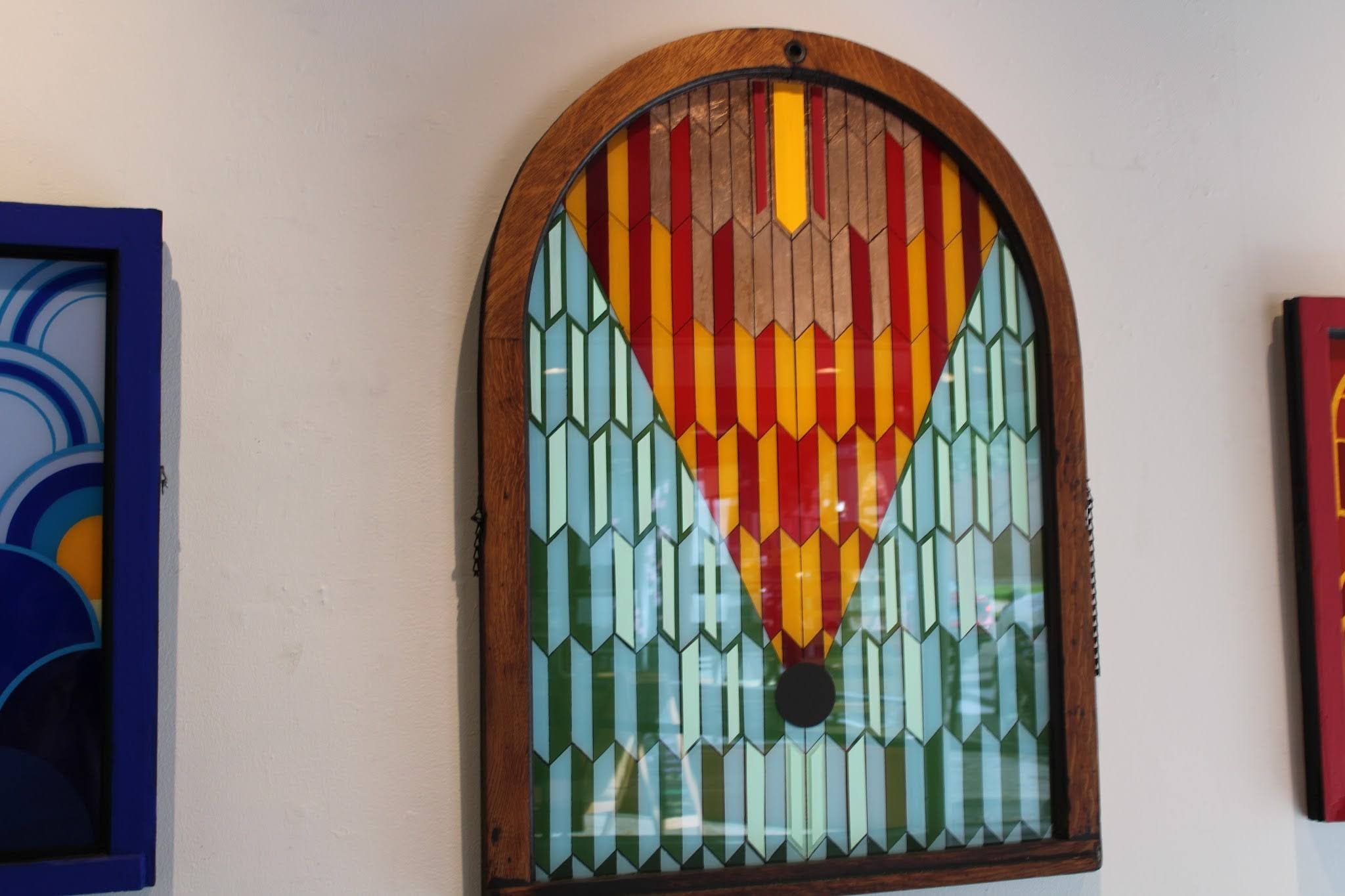
Two pieces stand out for their bold, geometric designs and bright colors. One, titled “Quarrel,” is a tall, arched window framed in dark wood, filled with blue, green, red, orange, and yellow shapes with a small black circle at the center. The other, “Cortege,” resembles a colorful geometric building with a white structure, yellow windows, and brown roof, surrounded by sections of red, blue, green, and orange.
Both combine vibrant colors and carefully placed shapes with an architectural, modern style—and leave a viewer excited to see more.
That atmosphere comes to life in Framework and See-Scapes: Street and Landscape Photographs, two parallel exhibitions from artists Eddie Hall and Hank Paper on view at Westville’s Kehler Liddell Gallery through Oct. 11. A welcome prelude to a month of open studios in New Haven, the exhibitions bring together Hall’s work using reclaimed materials, especially old windows, and Paper’s photographs of streets, landscapes and everyday moments.
The artists also share a wall in the gallery, creating a connection between their different styles and showing how two different forms of art can explore the way people see and experience the world around them.
At the center of this artistic marriage are two artists who work in very different mediums, but share a similar way of looking at the world. Hall, who hails from Berlin, Conn., began painting about seven years ago on canvases before discovering how much he enjoyed working with glass. After visiting the Frank Lloyd Wright foundation in Arizona, he also became more interested in the relationship between color, architecture, and design. He eventually painted a window from his own kitchen as an experiment, and that project led him toward the work he creates today.
When he is working with windows, Hall keeps the original frames, hardware, and imperfections of the windows instead of treating them like blank canvases. For him, that feels natural: he likes to honor that they each have their own history. He also creates his paintings in reverse on the glass, meaning that the first layer he paints is the one that viewers see.
Unlike canvas, mistakes cannot simply be painted over, so Hall sometimes has to use a razor blade to remove sections of paint. The glass, along with its reflection, adds another element to the work and changes how a viewer experiences the colors and patterns.
“The windows are doing a good portion of the work. They’re really beautiful objects on their own.” Hall said in an interview at the gallery last week.
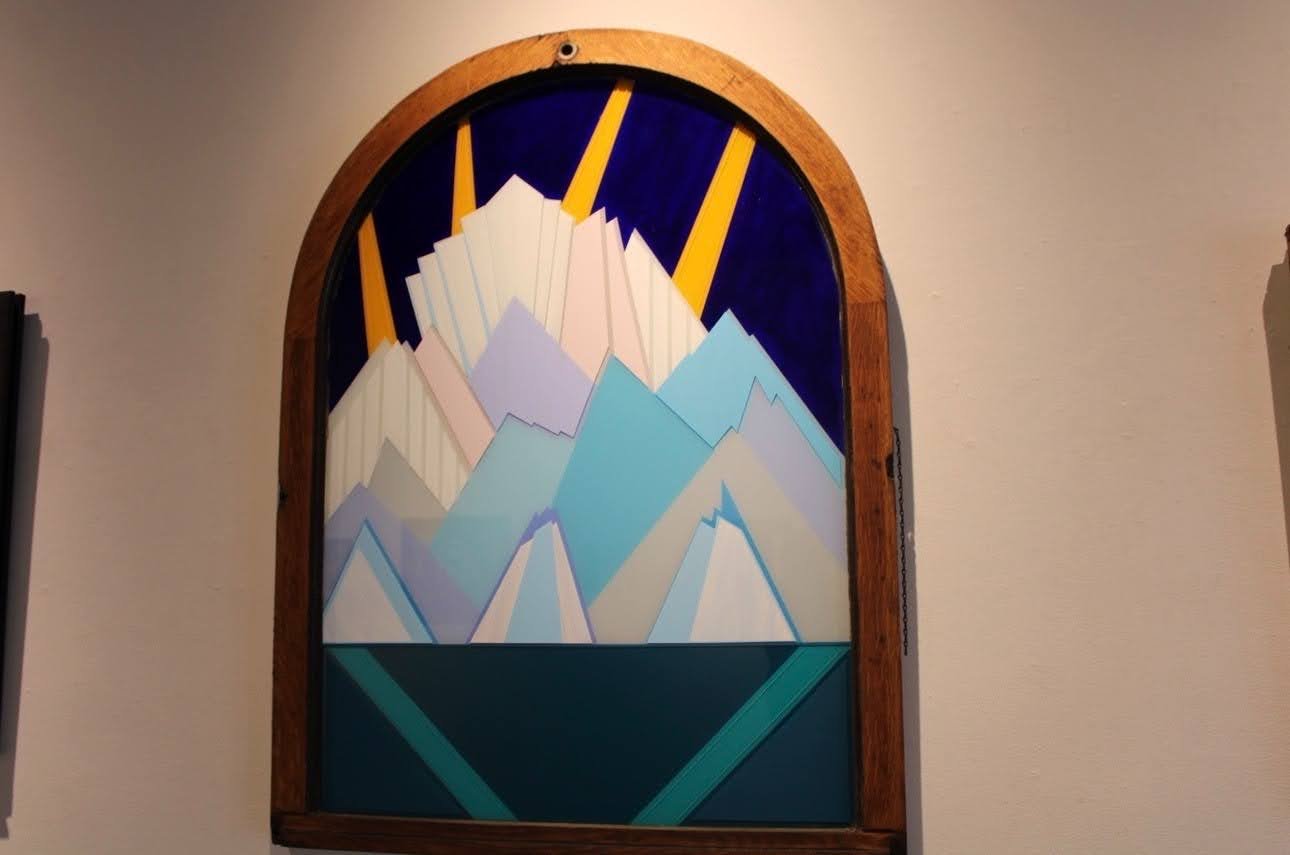
Eddie Hall, "Boreal."
One piece, titled “Boreal,” features a large, arched wooden frame filled with a layered mountain landscape. Sharp, geometric peaks overlap one another in shades of white, lavender, light blue, and turquoise, creating a sense of depth. Behind the mountains, bright yellow lines that resemble rays of light cut through a deep blue background.
At the bottom, darker blue and teal shapes create another layer, making the piece feel almost like a viewer is seeing it through a window. The combination of the wooden frame, glass, and layered shapes gives the landscape a three dimension quality.
“It’s almost kind of creating an optical illusion with it.” Hall said.
Paper, meanwhile, takes a different approach. A long time photographer and writer (for years, he also founded and ran Hamden’s Best Video), he focuses on the unexpected moments he notices while walking through streets in public places, and looks for instants that people may not even realize are happening and captures them before they disappear. His photographs often bring together people, he said—whether it’s to look at landscapes, share common humor, probe mystery, and point out small details that might otherwise go unnoticed.
“Every photograph is a story in itself,” he said.
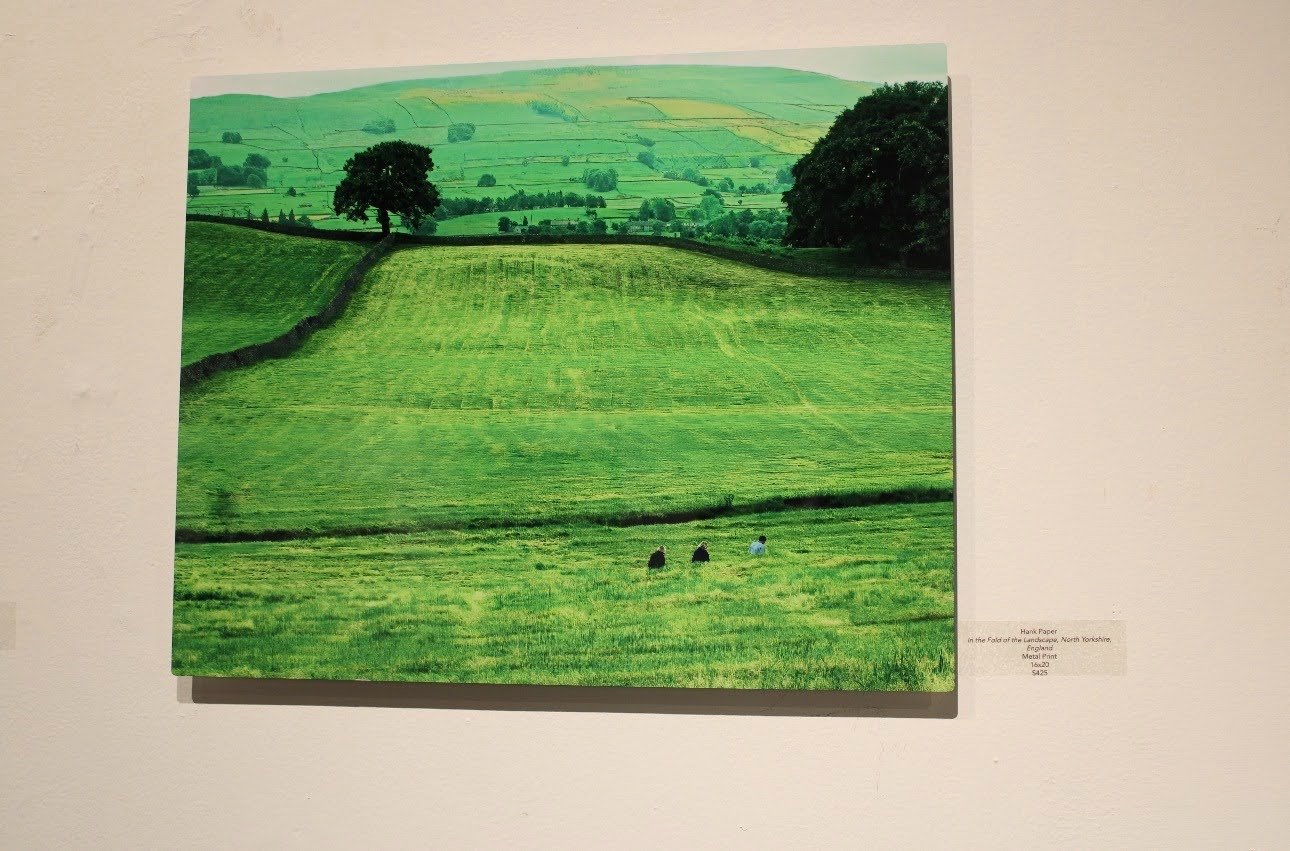
Take, for instance, Paper’s photograph “In the fold of the landscape, North Yorkshire, England,” which draws the viewer into the rolling hills of the English countryside. The photograph is filled with layers of green hills and open pastures that curve and overlap across the landscape. The hills seem to fold into one another, with different shades and textures that emphasize the natural patterns of the land, and the man-made interventions on it. The soft light and expansive greenery give the image a quiet, peaceful feeling, capturing the imagined or ostensible stillness of the countryside.
Although Hall and Paper work in different mediums, their artwork comes together naturally throughout the gallery. Both artists use color in noticeable ways, but they approach it differently. Hall’s reclaimed windows combine bright colors, patterns, and reflections, while Paper’s photographs capture colorful people, places, and unexpected moments. Their connection becomes especially clear on a shared gallery wall, where their pieces are placed alongside one another.
Together, the artwork gives visitors two different perspectives while still sharing a common idea: finding beauty and the world and encouraging people to stop, look closer and decide for themselves what they see.
“Each of us has our art as a window on the world,” Hall said.
A senior at Wilbur Cross High School, Jarelis Calderon is an alumna of the 2025 summer cohort of the Youth Arts Journalism Initiative (YAJI). YAJI is a program in which New Haven, Hamden and West Haven Public Schools high school students pitch, write, edit and publish articles through the Arts Paper.