

Culture & Community | Dixwell | NXTHVN | Arts & Culture | Visual Arts
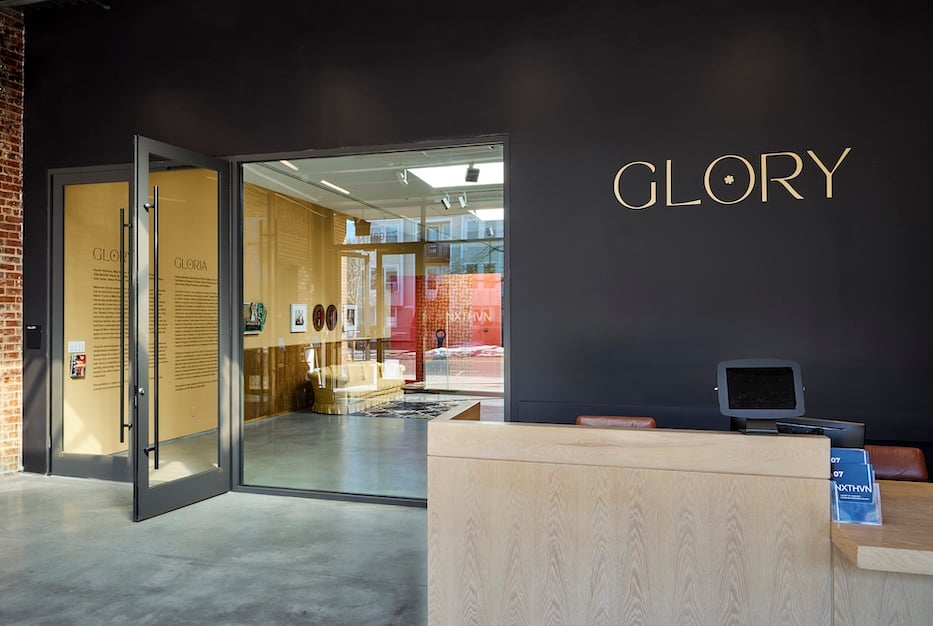
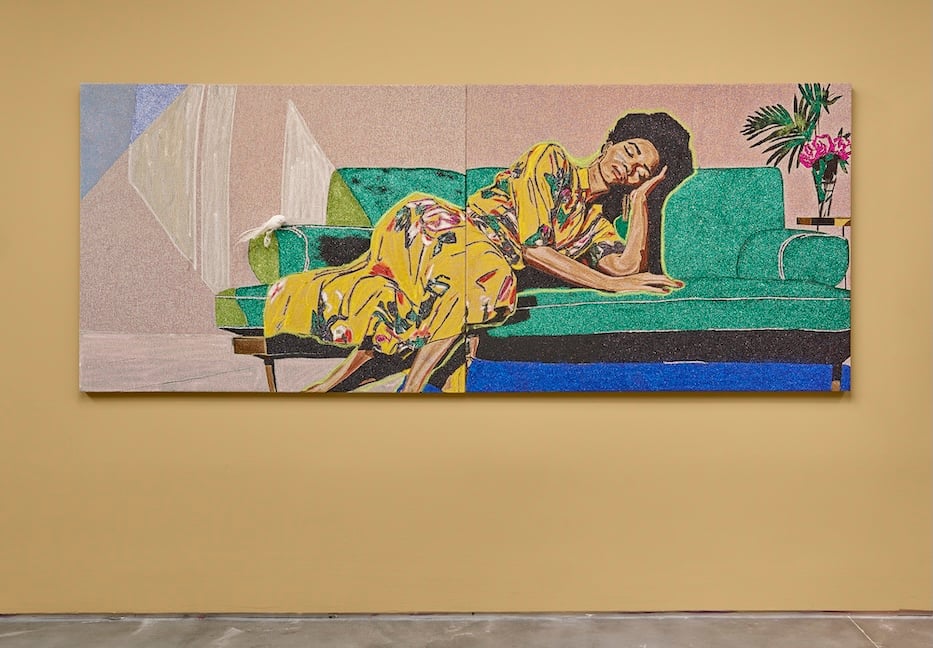
Top: Glory runs at NXTHVN, 169 Henry St. in New Haven, through August 30. The show is curated by 2025-2026 NXTHVN Curatorial Fellows Tara Fay Coleman and Juanita SundayBottom: Akea Brionne, Where The Body Lands, 2025. Jacquard, glitter, adhesive, oil stick, flocking, feather, foam, 48 x 120 inches (total). Chris Gardner Photos.
A Black woman in a bright yellow floral dress reclines on a Kelly green couch. One hand supports her head, while the other rests on the glittery surface. A fake white bird perches on the arm of the sofa, positioned between irregular shapes of sunlight cast on the wall. Her eyes are closed, and she appears tired, but a vibrant neon-green outline encircles her whole body—a protective barrier against the blank interior behind her.
Akea Brionne’s large textile-based diptych, Where the Body Lands, peers into a luxurious yet stark domestic environment. The scene not only captures a private moment of repose but also upholds the space as free from the public gaze. Elevating this kind of care as essential—for both Black identities and their homes—is central to the group exhibition Glory, on view at NXTHVN through August 30.
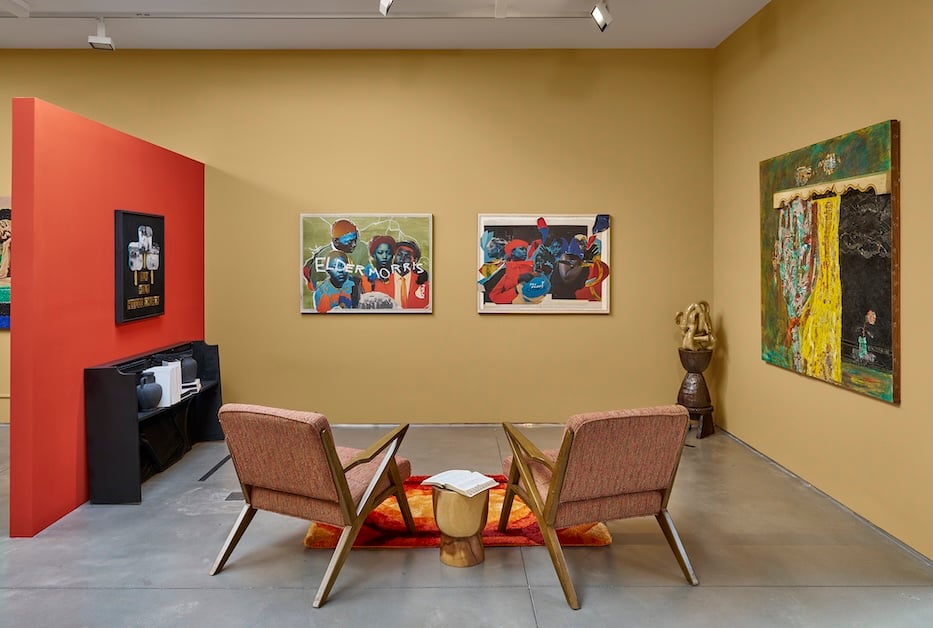
Installation view, Glory. Chris Gardner Photos.
Curated by 2025-2026 NXTHVN Curatorial Fellows Tara Fay Coleman and Juanita Sunday, the exhibition pulls from two significant sources: bell hooks’ 1995 essay “In Our Glory: Photography and Black Life” and The Black Interior, by poet and scholar (and former New Havener) Elizabeth Alexander. In the latter, Alexander writes, “We are the unconscious of the entire Western world. If this is, in fact, true, then where do we go? Where are our dreams? Where is our pain? Where do we heal?”
Through photography, painting, assemblage, mixed media, textile, and sculpture, the artists present a range of answers, meditating on different conceptions of restorative interiors.
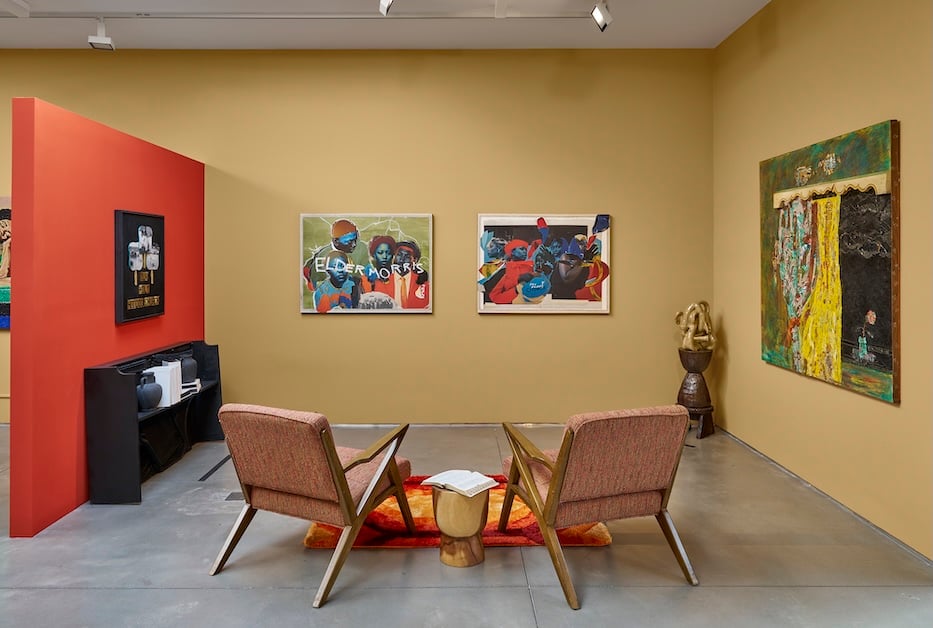
Glory transforms the gallery space into a psychic space of healing, complete with a recliner upholstered in a gold fabric with a satin finish, an old box TV, and coffee tables topped with a photo album of vintage film photos. Most of the walls are painted golden beige, with deep burnt-orange accent walls, while the back wall is avocado green.
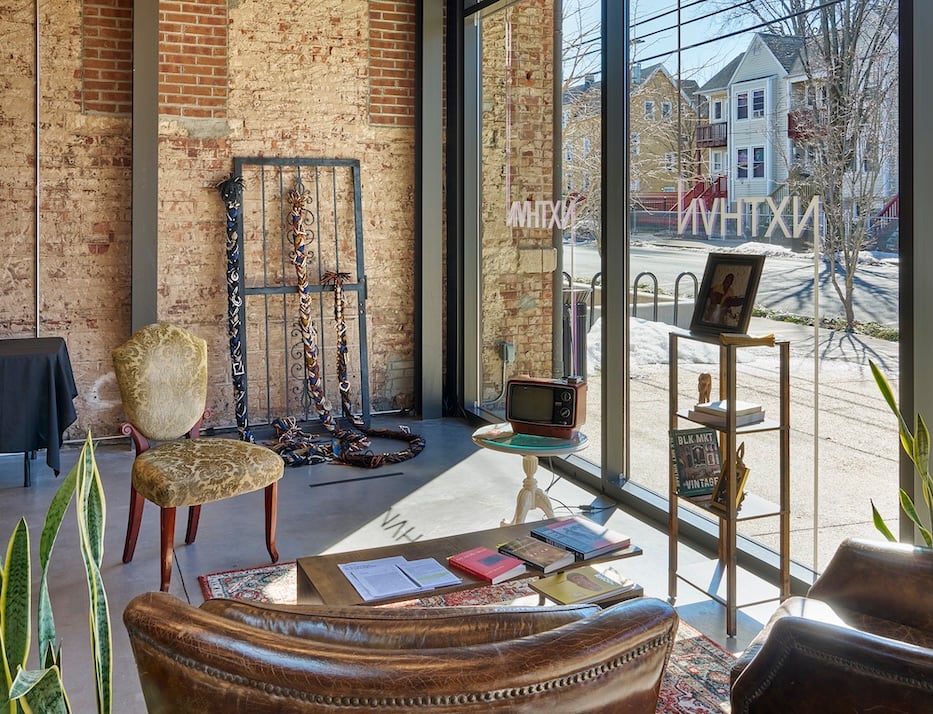
Against the wall is Chire Regans' (VantaBlack), Armor. Chris Gardner Photos.
These colors, alongside other tropes such as bold geometric patterning and faux shag rugs, riff on the recognizable pomp of the 1970s, “an era that symbolizes cultural pride and transformation,” according to the exhibition wall text. Together, the artists connect visually or symbolically to this decade by showcasing how working-class Black American families, past and present, conceptualize and construct their homes—spaces crafted for shelter, belonging, and beauty.
Marking the liminal space between exterior and interior—metaphorically and physically positioned right within the NXTHVN entrance—is Armored III by VantaBlack, a nom de plume that refers to the blackest black, the darkest man-made substance, which is composed of carbon nanotubes.
An iron security screen leans against the unfinished brick wall, its vertical slats shielded by three elaborate plaits of synthetic hair interwoven with strips of fabric reminiscent of African wax print. Large plastic hoops and other pieces of flashy jewelry punctuate these thick strands that pool together on the concrete floor below.
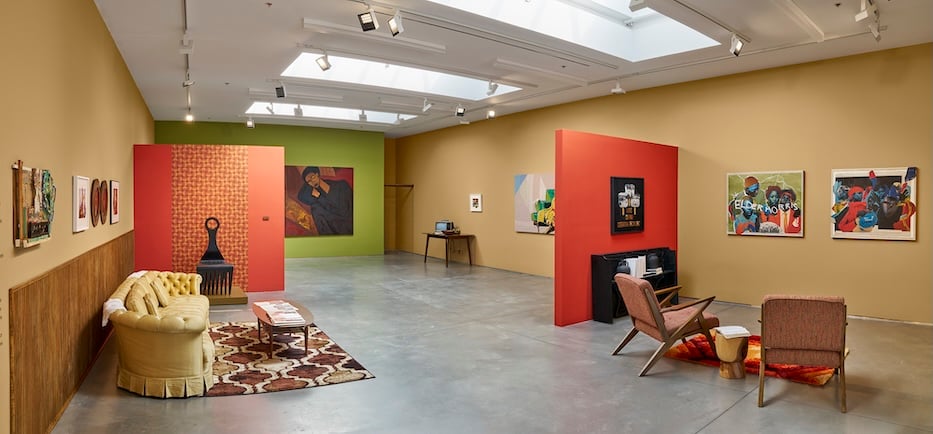
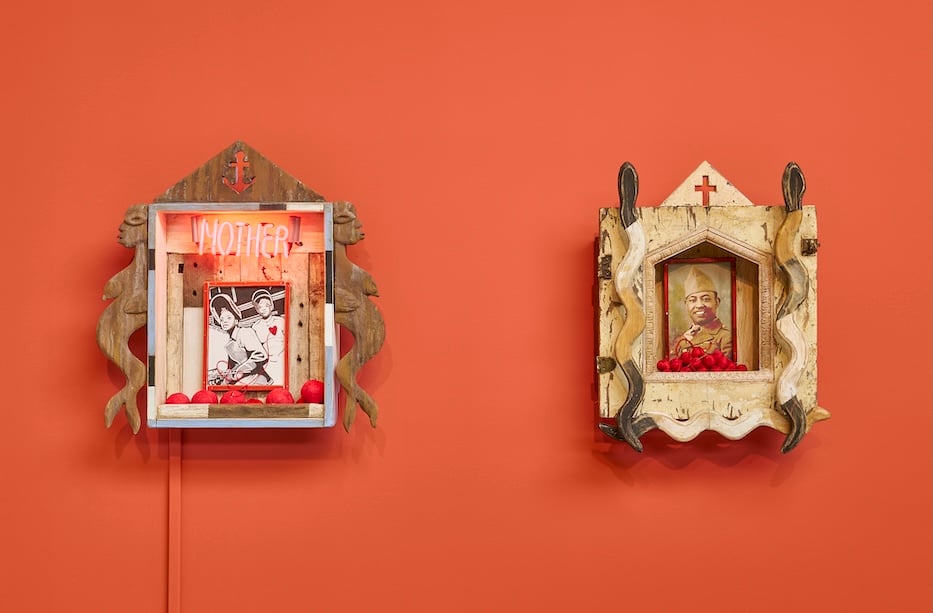 Top: Installation views, Glory. Bottom: William Rhodes, Women in Labor, Wood, pencil, ink on paper, thread, paint and neon glass 20in x 16in x 4 in. and Damballa, Reclaimed wood, photo on fabric, thread, paint 20 in x 18 in x 4 in. Chris Gardner Photos.
This site-specific installation underscores the idea of protection, while raising the complementary concepts of care and domestic labor. The rigidity of the heavy frame stands in stark contrast to the malleable tendrils. The soft netting placed over the dense structure also alludes to the labor and time-intensive act of braiding hair, itself a way of safeguarding individual strands from breakage.
Inside the gallery, above the couch, a pair of striking photos by Tyler Mitchell speak to the complex construction of self within an unsafe culture. Set within oval frames, both images depict a young Black man; in one, he points a gun at the viewer, and his face feels close to the viewer. In the other, the same figure appears seated, legs crossed, holding a book, its brown leather binding clasped firmly in both hands.
Across the photos, he sports a respectable brown suit, accessorized by a patterned tie and woven vest. Flowery scribbles adorn the mahogany of the frame, a material sourced from colonized lands and supported by enslaved labor beginning in the seventeenth century.
These photographs, entitled Double Consciousness, draw from W. E. B. DuBois’s eponymous concept. In his book The Souls of Black Folk, DuBois describes the psychological dissonance of Black Americans seeing themselves through their own eyes while simultaneously perceiving how their identity is seen within a racist society. Mitchell’s diptych—one of many two-faceted works included in the show—nods to this duality of Black identity, but here, the duplicity is safely ensconced within the ersatz living space of the gallery.
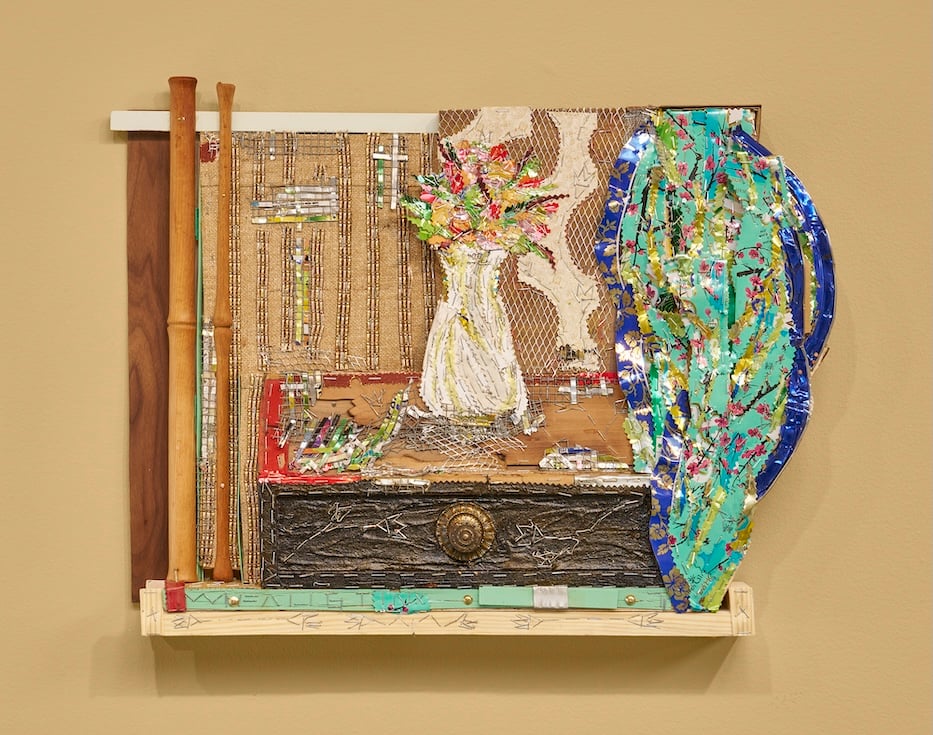
Faustin Adeniran, L'intérieur du salon, aluminum, plywood, canvas. Chris Gardner Photos.
Glory asserts that beauty is a necessary part of care, and some of the most abundantly gorgeous works in this exhibition come from Faustin Adeniran, who was born in Lagos, Nigeria, and is based in New Haven. Adeniran’s recent interior scenes resulted, in part, from an accident. Reclaimed and recycled materials have long been part of the artist’s practice, but when a fire claimed some of his belongings, Adeniran began to incorporate things found from the wreckage into his artwork.
For example, in Beautiful Flower Curtain, the folds of fabric are rendered by glinting pieces of teal AriZona Tea cans. A small vase holds a single flower in front of a tar-black backdrop, seen through the open window. Above the petite bud, the skies open to a ceiling of clouds, drawn with a network of silver utility staples.
Taken as a whole, the artists of Glory present flashes of renewal and resilience, care and community. The exhibition unveils the interiority of private homes and posits these spaces as tantamount to the prospect of more widespread civil union. Within these manifestations of Black homes, interior design transcends decoration. These domestic environments are self-defined and self-contained places where care in its myriad forms is exercised, and beauty above all is exalted.
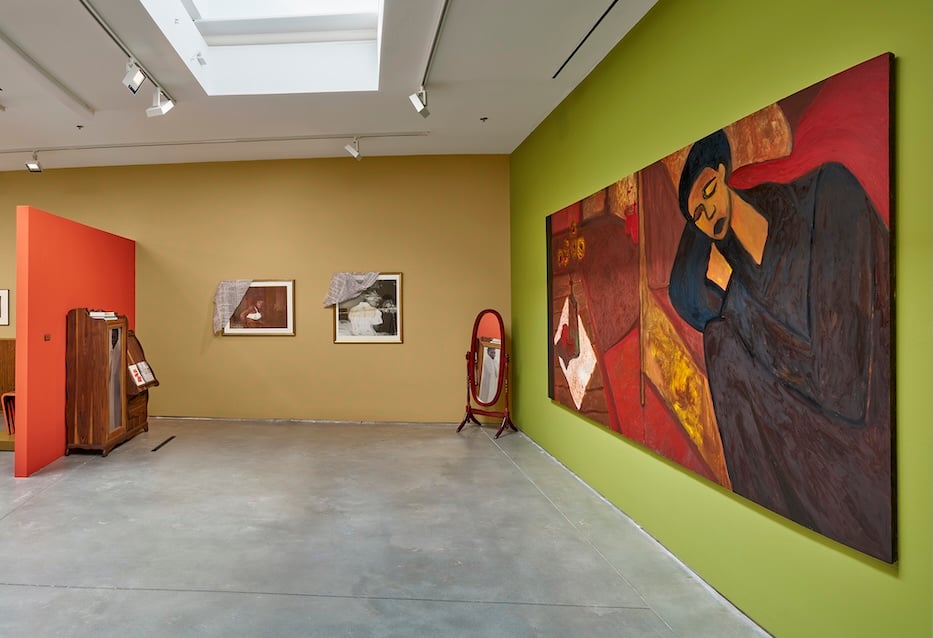
From left to right: Tyler Mitchell, Altar III (Open Pastures), 2023, UV print on aluminum, walnut, ephemera; Bria Sterling-Wilson, Joan's Bedroom (Psalm 23) 1 & 2, 2024 archive photograph on Moab Juniper with Psalm 23 printed on cloth, 21.3 x 30 in.; Patrick Eugène, Alone with Dreams and Blooms, Oil on canvas, 72 x 72 in per panel; diptych, 2023. Chris Gardner Photos.
Glory continues through August 30, 2026, at NXTHVN, 169 Henry Street, New Haven, CT.