

Culture & Community | LGBTQ | Arts & Culture | West Haven | APNH | Ballroom
 Linda-Cristal Young Photos.
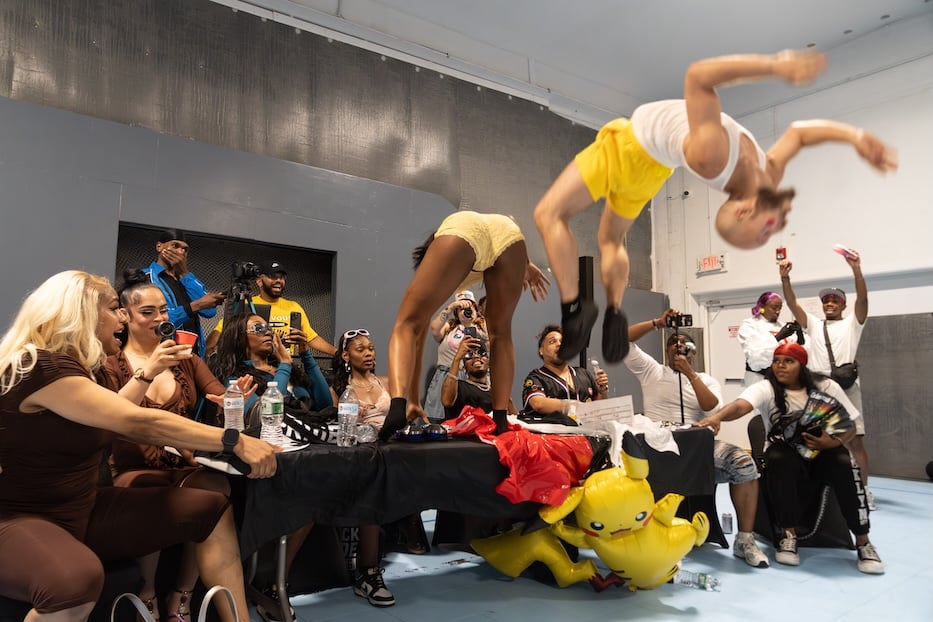
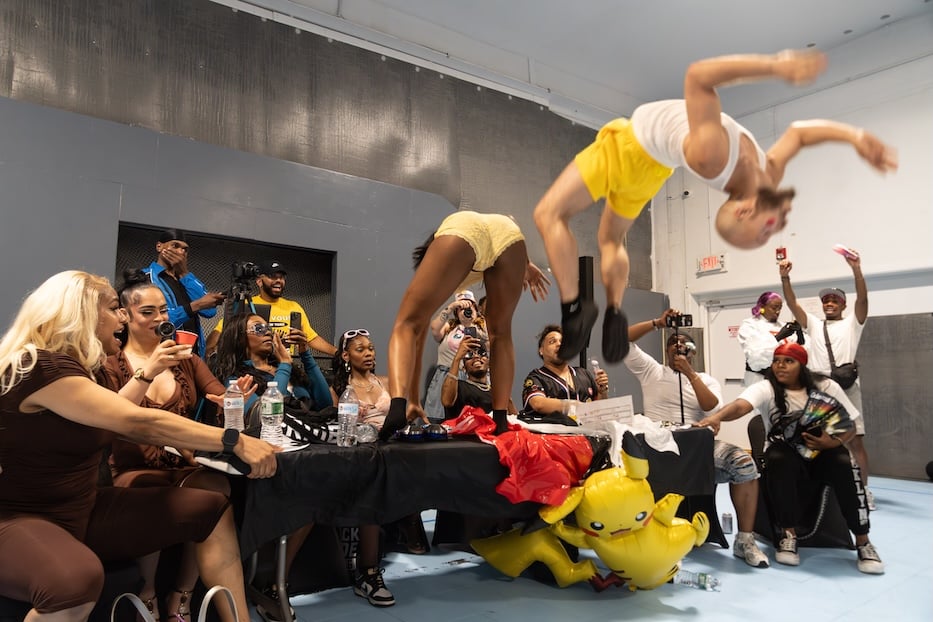
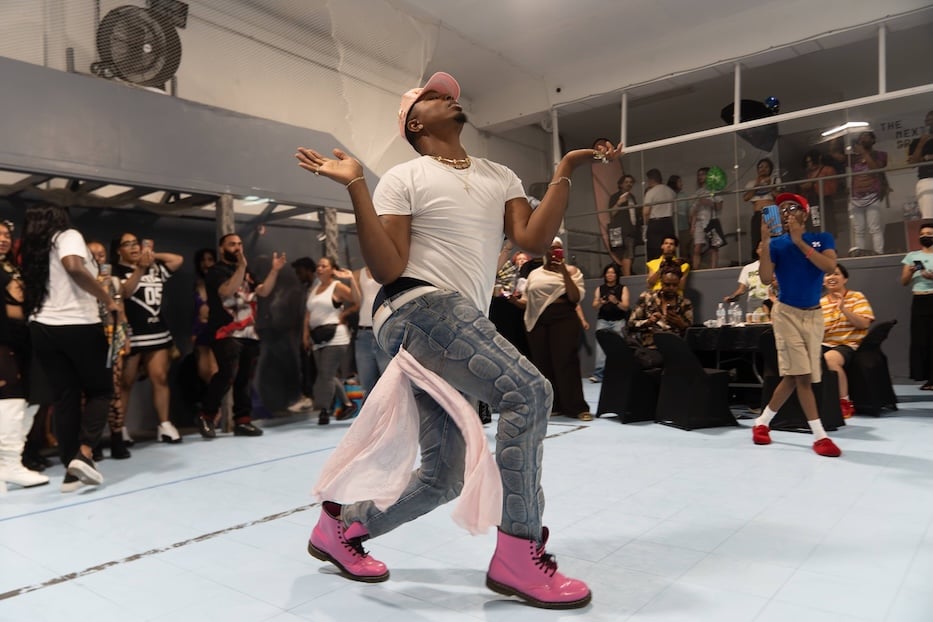
Amidst the red and white sheen of inflatable Poké Balls, greater New Haven was feeling the realness—and the love. At the center of a makeshift stage, a contestant took a beat, lifted her arms, and then strutted forward with the precision of a dancer who had been training for years. Forearms, wrists and hands moved from side to side with a sharp edge, like the music went bone-deep. She was Misty Copeland. She was Crystal LaBeija. She was Dunham and Divine at once. She was utterly herself.
That palpable, sometimes literally propulsive joy came to West Haven last Friday, as A Place To Nourish Your Health (APNH) hosted its fourth annual Greater New Haven Visibility Kiki Ball at The Building Complex, a sports complex and community hub run by sisters Sylvia and Brina Yanez, during the seventh annual New Haven Black Pride. Organized as a way to spread pride and stop stigma, the event brought in hundreds of people and left New Haven dancing for literally days. Attendees commuted from at least five states, organizers said..
This year, the ball’s theme was inspired by a resurgent interest in Pokémon, with red-and-white decor that made the space feel at once steeped in the LGBTQ+ history of ballroom and like a kid’s birthday party in the late 1990s. In addition to APNH, which hosts the event each year, the Norwalk-based service organization Ally Wellness came onboard as a major sponsor.
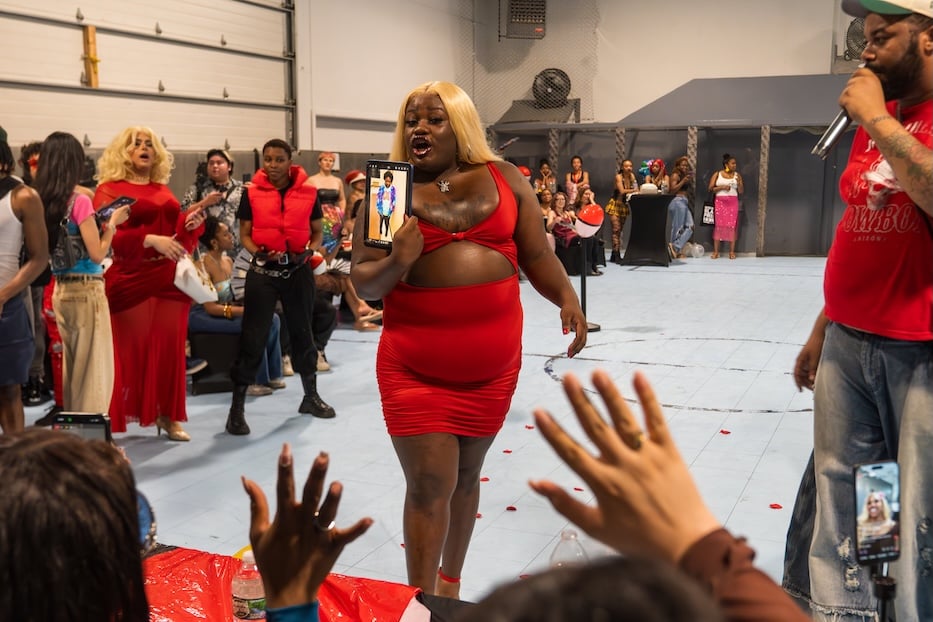
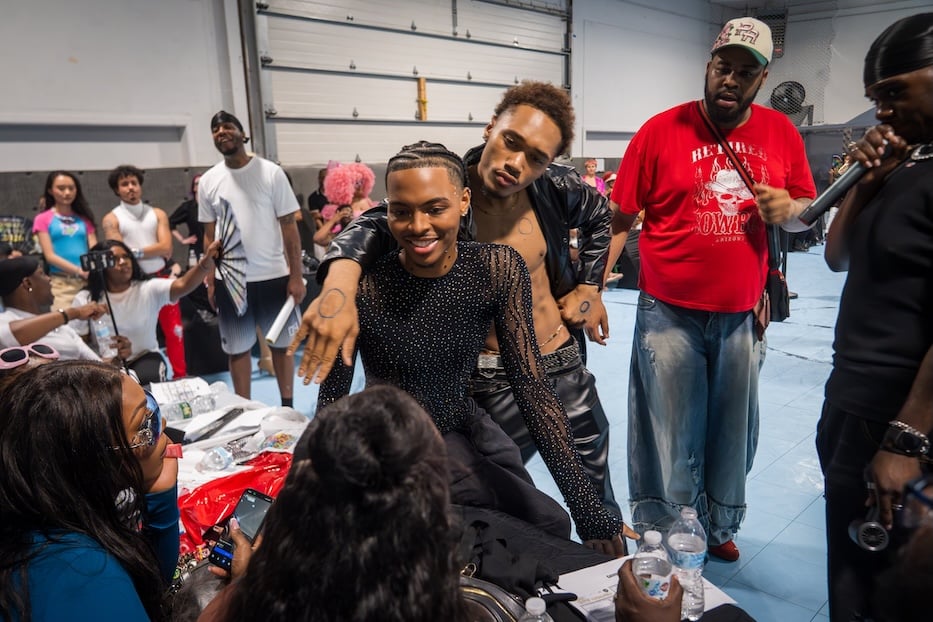
“It’s about visibility! It’s about community and building,” said Tim Mack (“pronouns are he, him, king,” he said with a sweet smile and laugh), who founded New Haven Black Pride in 2019, and has watched it grow and blossom in the years since. “I just want everyone to know that everyone is welcome here at New Haven Black Pride. We really run off visibility, and we just want to let people know that you are seen, you’re heard, and that we’re here for you.”
“Come in! Stop in. Say hi,” he added, noting that he’s excited to be partnering with Hartford Black Pride for the first time this year. “Let us know what we can do to help make our community better, and not just for us.”
This year, Mack, HIV Tester Jovanni Cabanas, and others at APNH organized an entire week of events, to celebrate the diversity of New Haven’s Black queer community. Well before the ball, that began with a “Full TRANSparency” open mic at Blue Orchid, which is queer owned, followed by a vogue night at APNH, a Wednesday evening drag bingo session at 80 Proof American Kitchen, and an impersonation drag show at 168 York St..
The festivities concluded with the ball on Friday night and an outdoor festival at APNH’S 1302 Chapel St. home on Saturday.
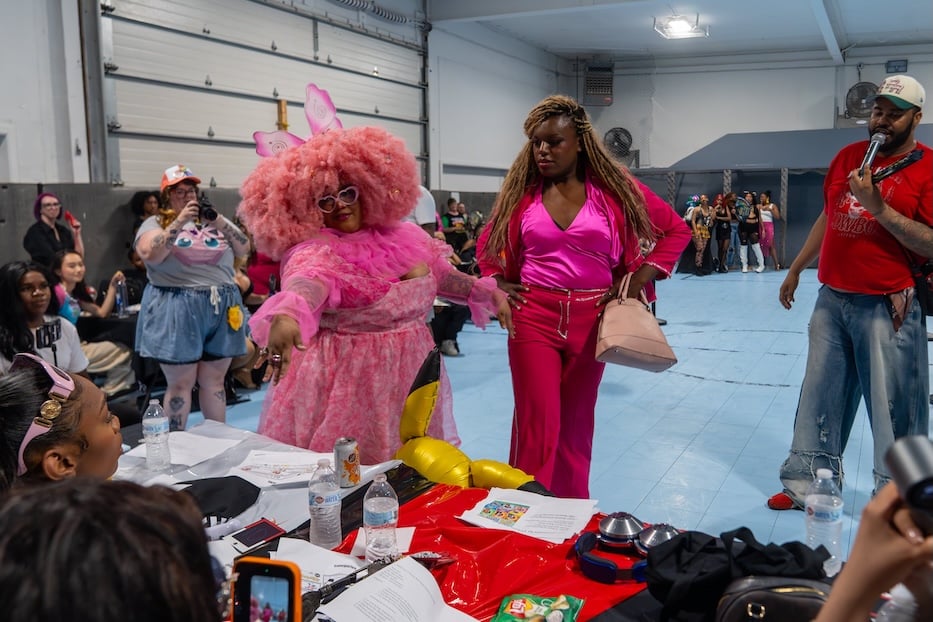
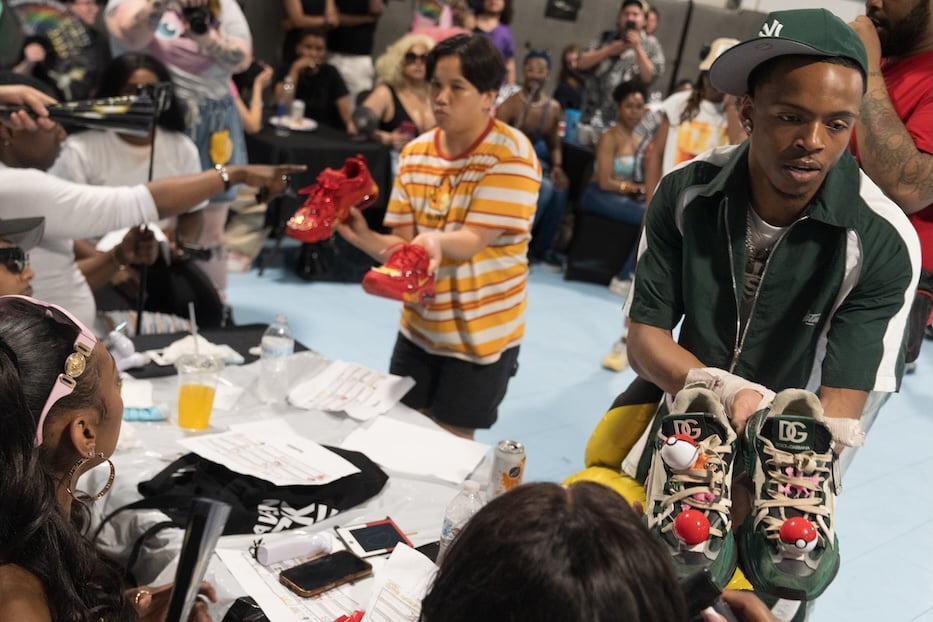
This marked the first time in the ball’s history that it has expanded to West Haven (previous iterations have taken place in Hamden, at the Whitneyville Cultural Commons), a decision that came from both a need for more space and APNH’s support for Building Complex co-owner, Sylvia Yanez. At a Pride flag raising ceremony earlier this month, Cabanas said they love that Yanez is a queer artist and Latina and that the business, which has faced recent pushback from the town, is family-owned and operated.
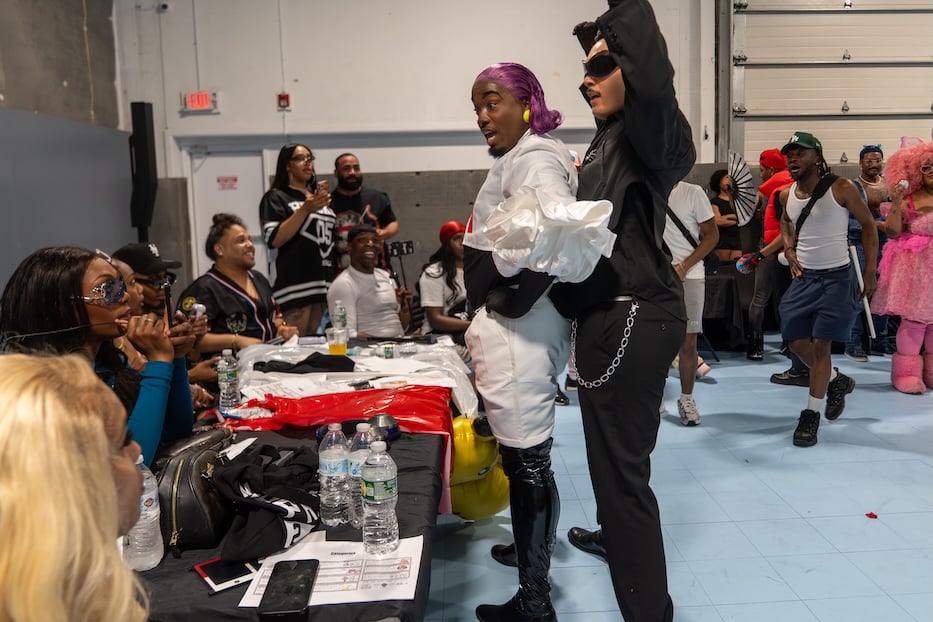
Inside, the crowd was vibing, and then some. In between a dozen ballroom categories that included “Hand Performance,” “Best Dressed,” “Face,” “Shake That Ass” and “OTA [Open To All] Performance” among others—each accompanied by a Pokémon reference—attendees mixed and mingled, cheering each other on before taking the stage themselves, or catching up with friends they hadn’t seen in months.
Over and over again, many emphasized the importance of community, particularly in a political climate that has become openly hostile to queer people. Naomi Jones, a New Havener who had turned out for the “Best Dressed” category, said she was excited to be at the event. Thomas Evans, creative design director at Ally, buzzed around the space throughout, taking photos for Ally’s series “Community Warriors,” a visual storytelling project that helps fight stigma and discrimination through personal narrative. Beneath the music, a constant current of laughter and conversation rose and fell around them.
“Shame, fear, regret has no place in our community anymore,” Evans said. “So let’s stand in the light and be our authentic selves, and just stand together and fight.”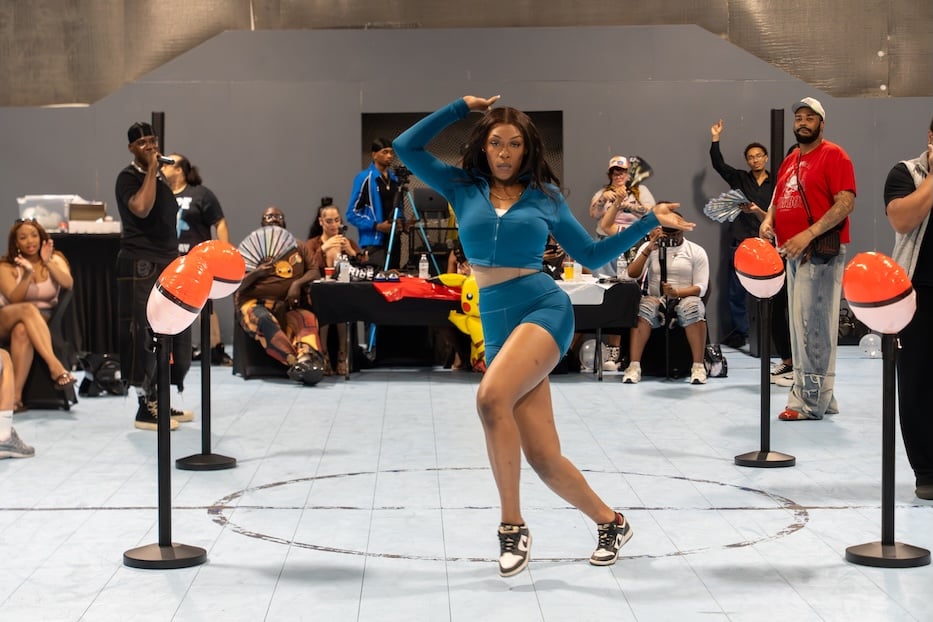
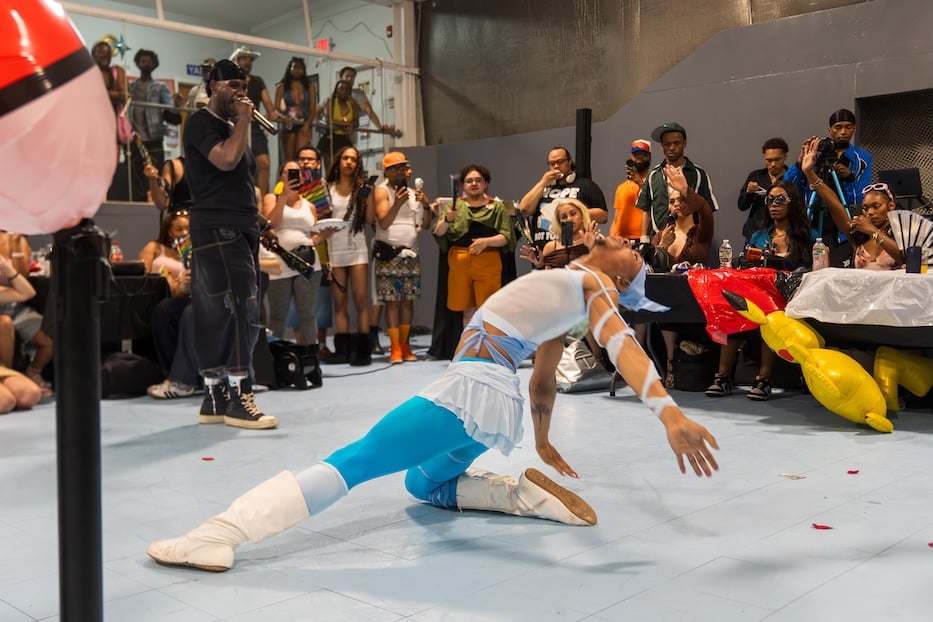
“I feel like we need the community, especially right now,” echoed Isadora Marr, a visual artist who came with Khallidio of the Connecticut-based performance collective Haus Posh Pearl. “We need somewhere to have creative expression. So many of us are afraid, you know what I mean? And this is my family. This is where we celebrate.”
“In a timeline where everything feels so dark and twisted, it’s nice to be able to hang out together and just have fun, celebrate each other’s art, celebrate each other’s beauty,” added Khallidio. “This is what beauty is supposed to look like and feel like.”
Inside APNH’s mobile testing van outside, staff members Atiba DeCruise and Tiny said they were both thrilled to be on-site for the event. For over a year now, they and fellow APNH staff have piloted the van out into the greater New Haven area, offering free testing services regardless of whether or not a patient has insurance. They encourage everyone they meet to get tested, so that they know their status and can protect themselves and their sexual partners.
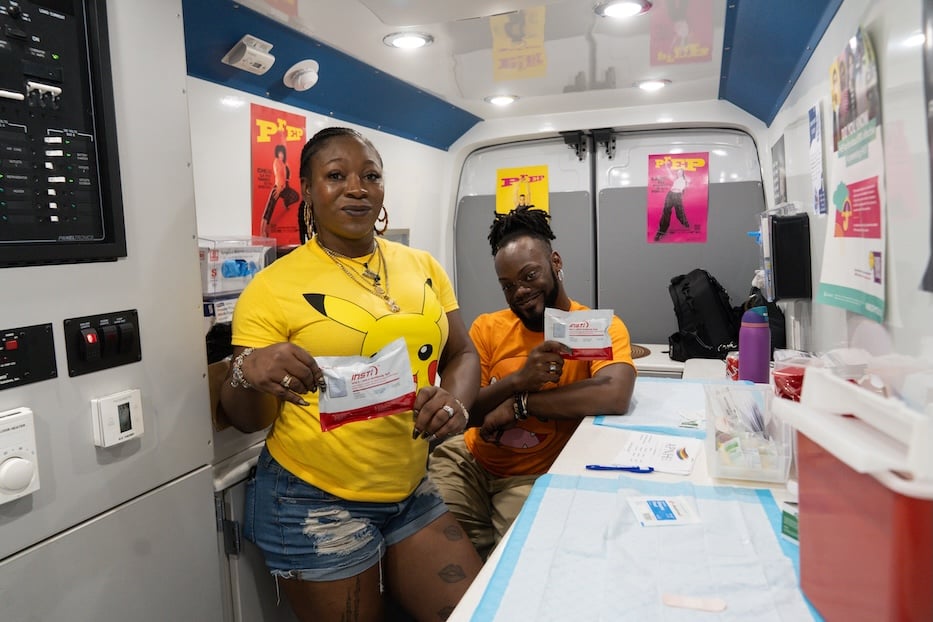
 In addition to rapid testing for HIV, staff provide screenings for hepatitis C, syphilis, gonorrhea, and chlamydia, as well as treatment referrals, information on medical resources available, support services at APNH, and access to medications like PrEP (Pre-Exposure Prophylaxis) that can be lifesaving.
Both described it as a professional duty to make sure more people know their status. That’s unfortunately not a given, DeCruise noted: many people with HIV don’t know that they are living with the virus, or do not learn until they experience health complications that are associated with it.
“This is an event that attracts a lot of people of color, and you don’t really see a lot of people of color from our community coming together in these spaces,” said DeCruise, an HIV tester with the organization. “We can educate people on their sexual health, and empower them by offering HIV testing for free.”
HIV Counselor and tester Jovanni Cabanas, a safe space coordinator at APNH who has helped organize the ball since its inception, took a moment to soak it all in. As both a queer person and an LGBTQ+ performer—Cabanas’ alter-ego is the voluptuous Afro-Boricua queen Xiomarie LaBeija—they pointed to how important safe, supportive, loving and joyful spaces are for the queer community, particularly as national attacks on LGBTQ+ people, and particularly trans youth and adults seeking gender-affirming care, intensify.
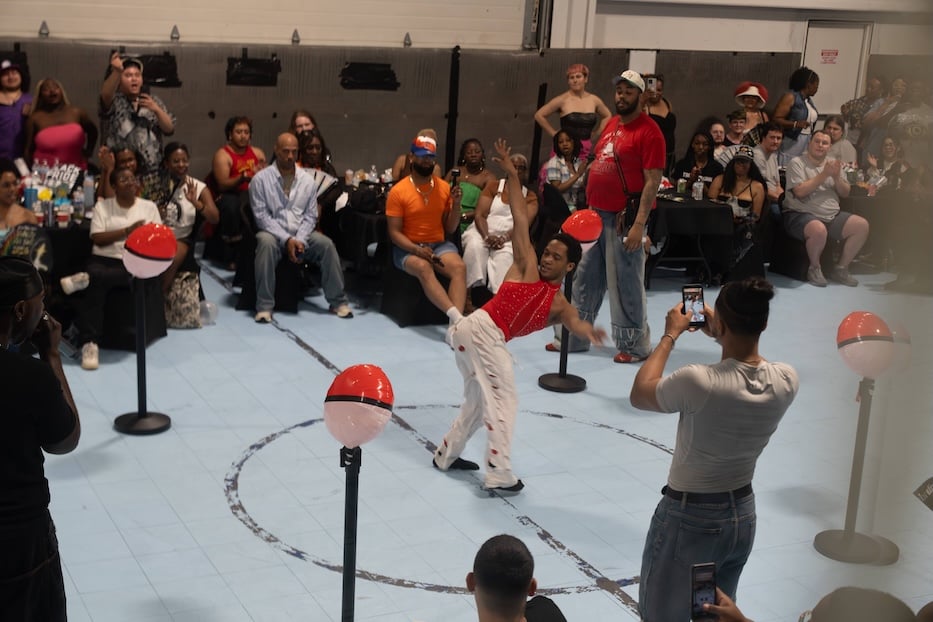
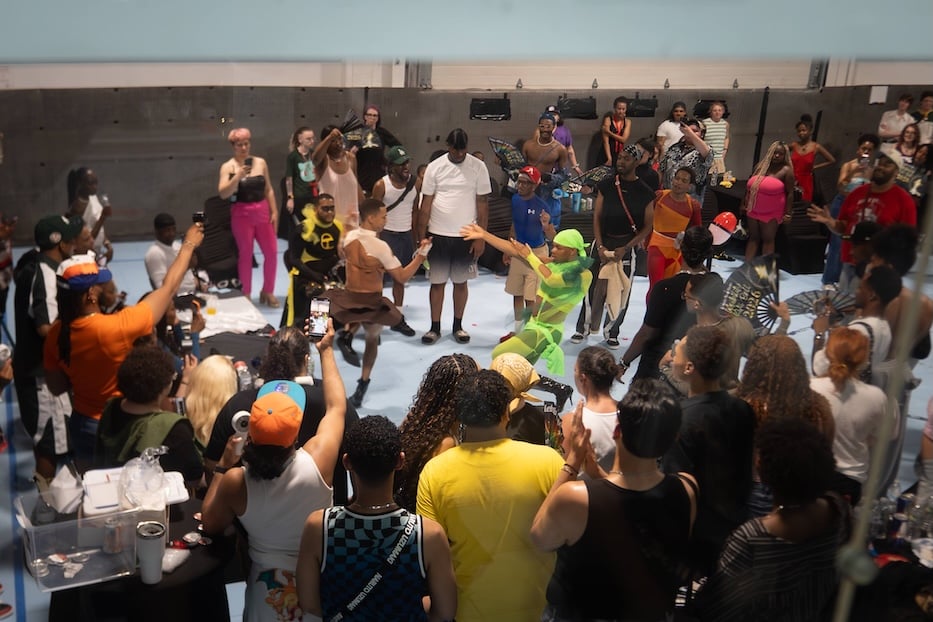 “The fourth year is just another year of showing the resilience we have as a community,” Cabanas said. As they spoke, they pointed out members from the House of Juicy Couture, the Haus of Telfar, and the Iconic Kiki House of Pinklady among others. “We stand united, we make sure we create safe spaces to educate and empower. Events like this are just a reminder of how unity is the main thing, and we just need to continue doing things like this.”
Cabanas’ work is a testament to that resilience. Every second and fourth Tuesday evening of the month, they help organize community vogue nights at APNH, where attendees can learn to vogue for the first time, practice their skills, and gather to both pay homage to the history of ballroom. It’s meant, Cabanas said, to be a safe space for everyone, but especially for Black and Brown LGBTQ+ community members.
“Keep showing up, keep showing out, and showing the visibility,” they added. “We are here. The power of showing up can keep so many people alive.”