

Culture & Community | hip hop | Arts & Culture | Neighborhood Music School | Artsucation Academy Network
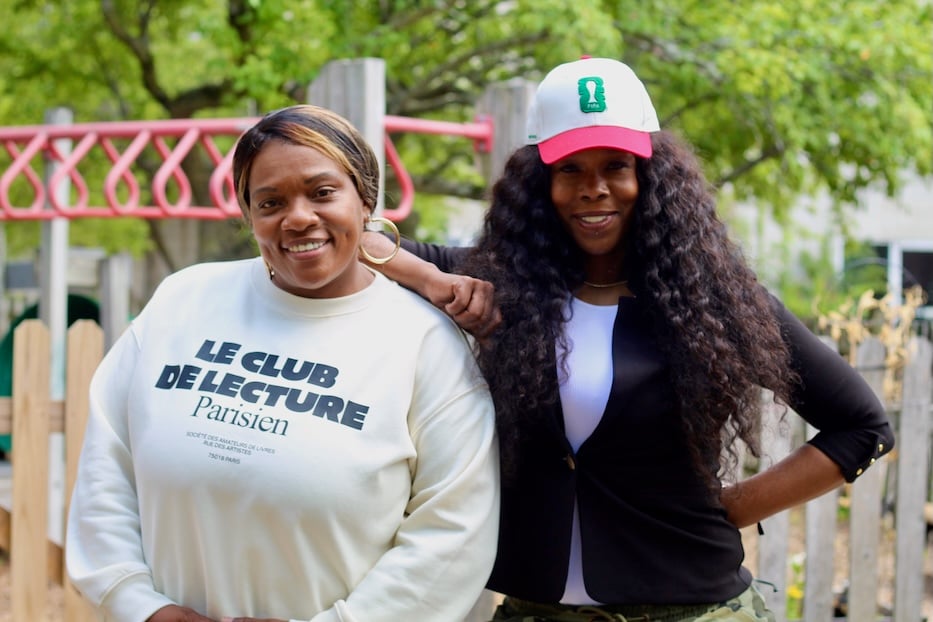
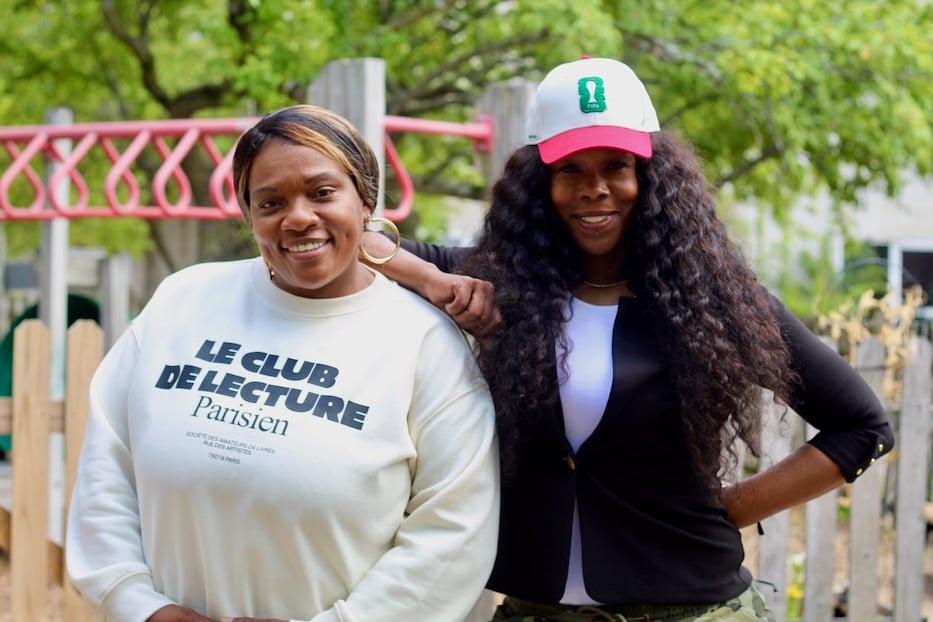
Nikki D and Babs Bunny. Lucy Gellman Photos.
Don’t take the L as a loss; treat it as a lesson. Pull fellow artists up with you, because there is something sacred in that collaboration. Move through the struggle and the stress, with the belief that the result is worth the wait.
That the dream is worth the wait.
Those takeaways—and a needed, timely reminder of the creative power that Black women wield—came to Neighborhood Music School on a balmy, overcast Sunday in July, as attendees and speakers gathered for the eighth New Haven Hip-Hop Conference, moved to an annual event for the first time in its history. Organized by Artsucation Academy Network Founder Dr. Hanan Hameen, two-day event featured panels on the history, present, and future of hip hop, centering the tradition as a vibrant and living thing.
The conference included guest artists like the DJ Tony Crush, artists Nikki D and Babs Bunny, and historians Nirule Salaam and Jill Marie Snyder. Close to two dozen attended, some sitting for hours as they soaked in an ocean of new knowledge. Iman Hameen, who has championed the documentation and archiving of local history (including and especially oral history), also offered onboarding workshops for Wikipedia AfroCrowd training throughout both days of the conference.
“That beauty, that realness, that rawness—that’s hip hop,” Hanan Hameen said as she introduced Nikki D and Babs Bunny to the stage for a presentation titled “Queens of the Culture,” an encore to a series of talks that she and several women in hip hop gave during the International Festival of Arts & Ideas earlier this summer. “The hip hop I grew up with, that’s what hip hop is. That’s why we’re here.”
During their presentation, part-keynote and part candid discussion with the audience, the two artists took that feeling and ran with it, making it their own. As they began, already in conversation with attendees like Salaam and Iman Hameen, both turned the clock back several decades, remembering what it was like to be at the beginnings of their careers—and to learn from other artists every time they saw an opening.
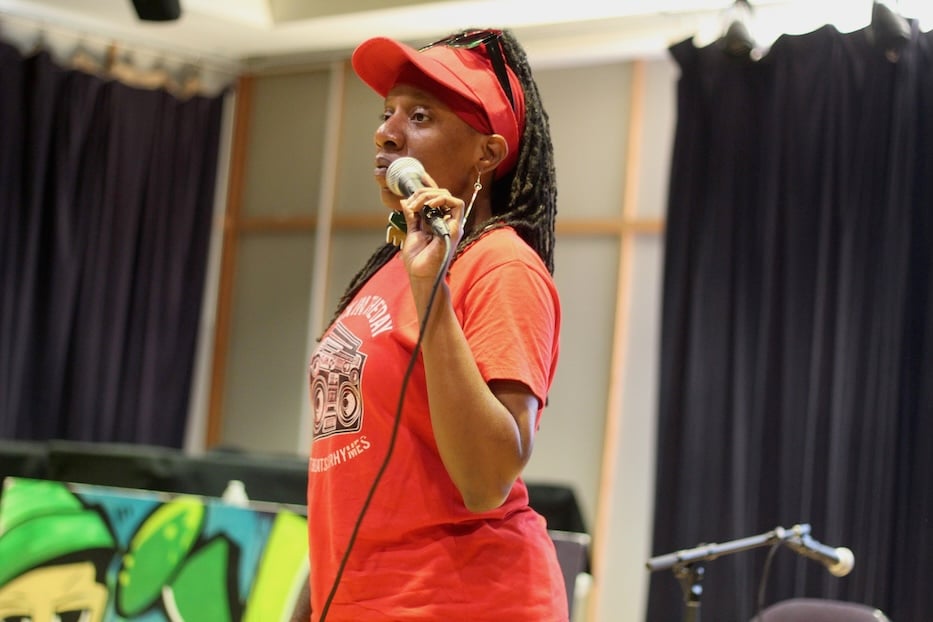
Dr. Hanan Hameen, the organizer behind the conference. “That beauty, that realness, that rawness—that’s hip hop,” she said.
For Nikki D, who in 1989 became the first solo woman rapper signed to Def Jam Recordings, that began when her mother brought the family from New Jersey to Los Angeles. As a kid, the artist was naturally drawn to music and grew up surrounded by a distinctive West Coast sound, which later affected her style more than she would even know at the time.
It was a chance meeting with the rapper Ice-T at a shopping mall that she now pinpoints as the very early start of her career. When she approached him, she didn’t know that it would change her life. That’s one lesson she holds onto, she said—an artist never knows what opportunities a single interaction might open up.
“He pulled me in and was like, mentoring me, so to speak,” she remembered. Through Ice-T, she met the artist Doreen Broadnax, better known and loved as Sparky D (Broadnax passed away last month, at just 61 years old). She started gracing the airwaves at the now-legendary station 1580 KDAY, soaking in inspiration from artists including Ice Cube and Dr. Dre.
By the time she was 15 or 16, she knew that she wanted a career in New York City—and gives her mother credit for helping make it happen.
“I knew a bunch of people, and I felt like this was my calling,” she said. Her mother sold enough of their possessions that the family could take a Greyhound Bus from Los Angeles all the way to New York.
In New York, Nikki D. led with a kind of moxie and sticktoitiveness that she still exudes now, trying to cut her teeth on every opportunity she could. Early on, and thanks to the connections she had hustled to forge in L.A., something clicked: she landed two hours of studio time from a producer who knew that LL Cool J would be late to his recording slot.
It gave her enough time to cut a demo, which became her foot in the door at Def Jam.
“It’s not about figuring it out now,” she said. “It’s about moving in the same direction because you don’t know what waits on the other side … there is a lesson in everything.”
“I don’t feel like there’s anything negative because everything is a lesson for me,” agreed Babs Bunny, nodding as though she could feel the words reverberating in the air. “Even if it’s a hard time. Weigh out your pros and your cons—”
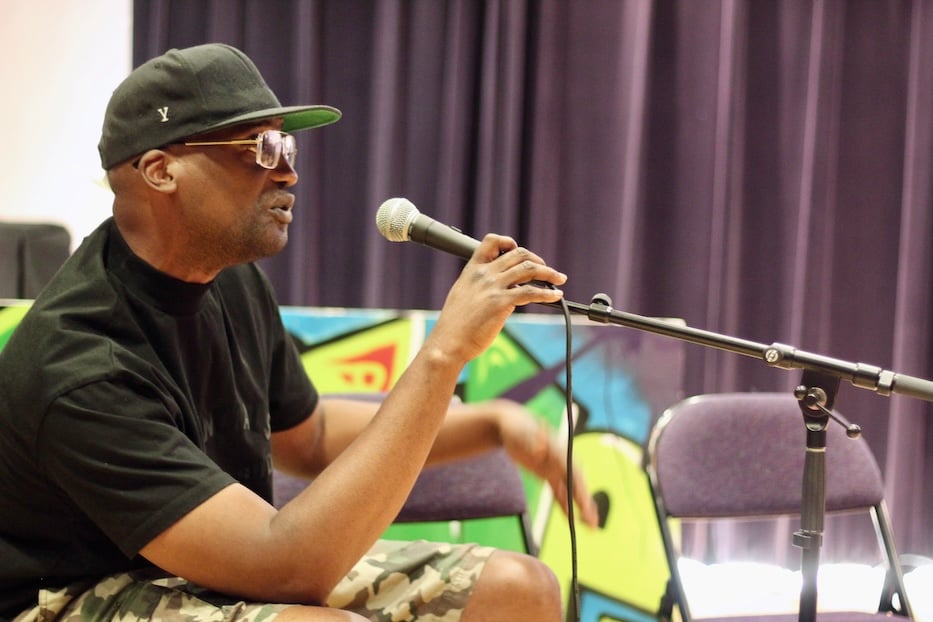
Salaam, who remained deeply engaged throughout and later facilitated a healing session where he also spoke about history.
“You could look at it as an L in both ways,” Nikki D. jumped back in. “It could be a loss or a lesson.”
In the moment, she added, she never knows who she might influence by simply speaking honestly about her life and artistic journey (Namumba Santos, who helps facilitate a “Next Gen” artist showcase with Dr. Hameen’s guidance, seemed especially tickled by this). She remembered speaking to students at Ida B. Wells School, a Queens high school designed specifically for pregnant and mothering teens, before the City of New York closed the school in 2007.
She talked openly about her own path to music, the role of hip hop in her life, and her hopes for the future. At the end of her talk, she remembered, she met a young student who explained that she and her boyfriend had decided to keep an unintended pregnancy. They were now second guessing themselves as the baby’s arrival grew closer. Nikki D. dismissed the thought: there was no parallel universe. There was the present.
“Well, you’re doing it,” she remembered saying. She reminded the student that she hadn’t known how things would turn out either, but had persevered because she instinctively knew she had to.
Years later, the girl—now an adult—approached her during a night on the town. Her boyfriend was now her fiancé, and the two had a young child whom they adored. Simply by speaking the truth, Nikki D. had helped her move past her trepidations, and on to the other side of her fear.
Babs Bunny, who runs the series Queen of the Ring, said that she’s been proud to help other artists—particularly women, who are more likely to be sidelined, overlooked, and chronically underpaid—rise with her. As the mind behind the series, “I will push other artists out in front of me,” as a way of paying it forward.
For her, hip hop is at the very foundation of that work, from verbal sparring as a form of creative respect to the way competitors make amends and ever care for each other after the camera has moved on to something or someone else.
“One thing we brought Babs out here for is not just her battle rap,” Hameen said to attendees. “It’s when she’s doing it, it’s competition, but at the end of it, it’s love.”
“Yes!” Babs Bunny hopped back in. “Battle rap is a sport. Yeah, we gonna go at it, and after this battle is over, we gonna dap each other up.”
Her goal going forward, she continued, is to bring her work into schools and other educational spaces, where students can trade bars about anything from revolutionary history to World Wars to STEM education.
The setting and comment seemed right on time: that’s exactly the kind of work Hameen is already doing through both the Keepers of the Culture dance company and the Artsucation Academy Network, which has brought programming not just to the New Haven Green, but into New Haven’s schools and libraries dozens of times over.
As the three flowed from education to the music industry to misogynoir (“Women are always at the back of the front line, even though they are the front line,” Nikki D. said, and the words cut through any heavy, still air) to the dangers of capitalism, attendees seemed to collectively lean in, listening to every glittering piece of knowledge they dropped.
As they neared the end of the discussion, Nikki D. pointed to the importance of one last thing that has helped her succeed—she’s nice. Even when it’s not the easiest or most immediate thing to do. Case and point: she and Hameen met at the gym, when both were effusively kind to each other.
“To the people who are making music,” she added as Salaam prepared to talk about his work with the Y.A.L.E. Project. “Tell your story now. Because who knows what your story is gonna be later?”
In an interview between presentations, and following the reading of an official city citation for DJ Tony Crush (read more about how much he has taught New Haven, and his pioneering role in hip hop, here, here, here), Hameen said that she is grateful for moments like the conference, and also hopeful that the community can find more ways to support her work.
“I do this because it’s necessary,” she said. “The information that we teach is so important … and we really take care of folks. But we need the community to take care of us, too.”