

Culture & Community | Festival Puertorriqueño | Morris Cove | Arts & Culture | Puerto Ricans United, Inc.
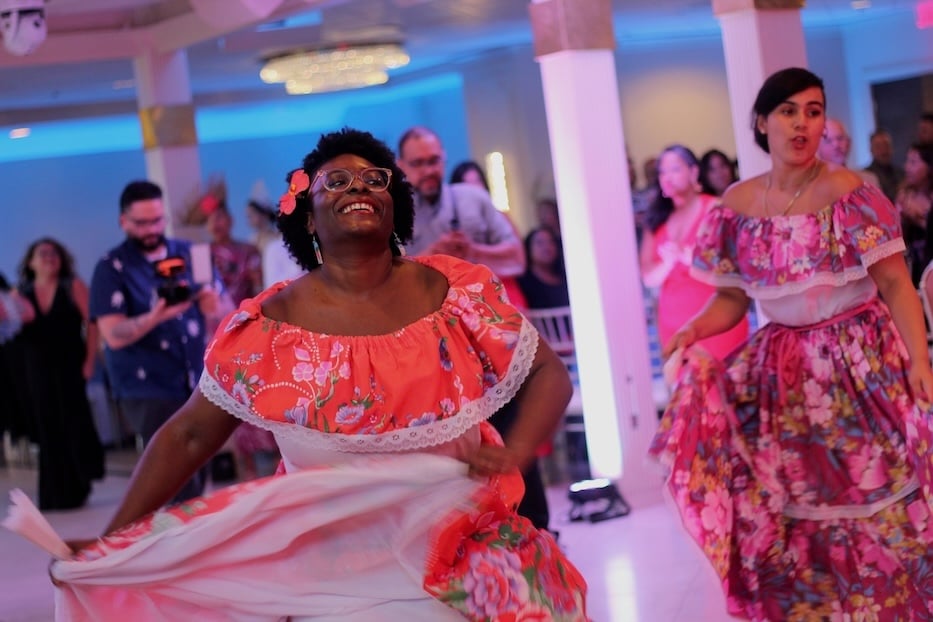
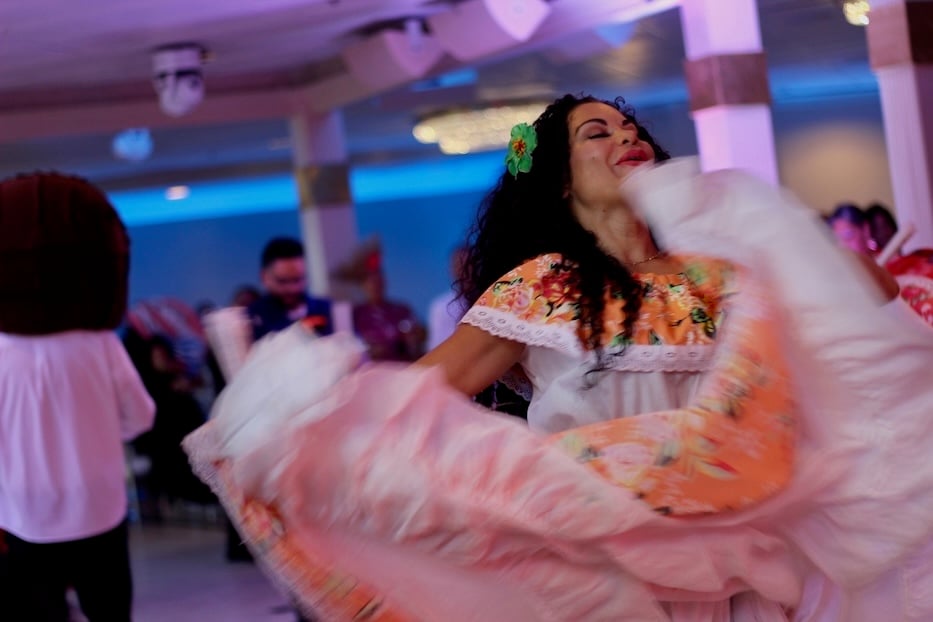
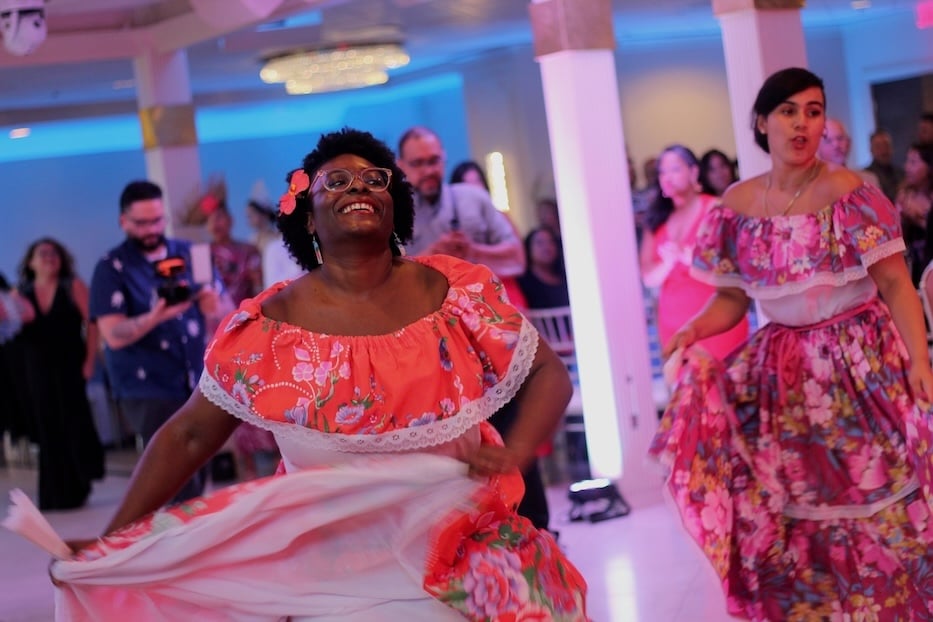
Members of Bomba de Aquí and Movimiento Cultural Afro-Continental (MCAC) join forces. Lucy Gellman Photos.
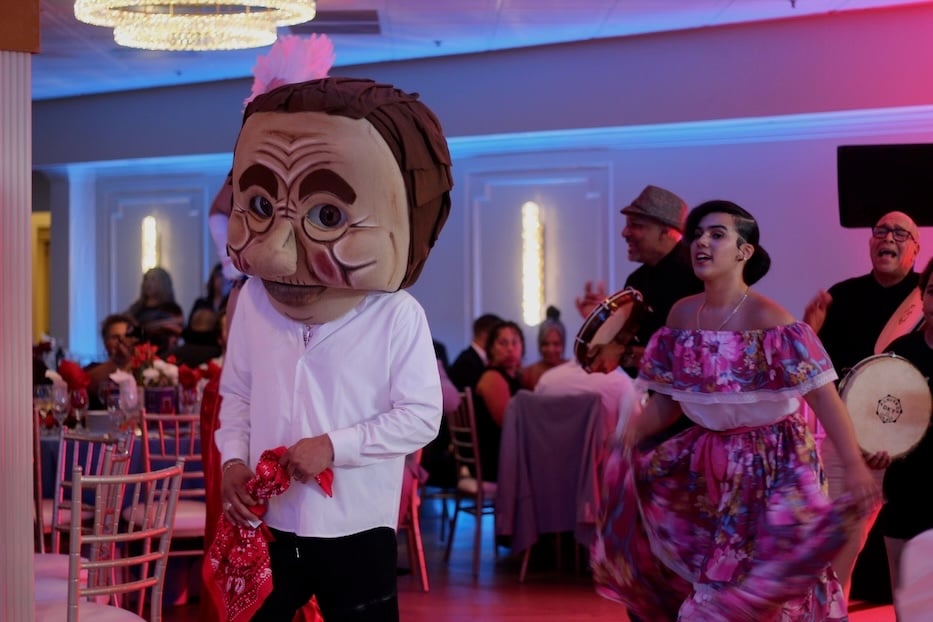
The sound of drums, rolling beneath footfalls like the tide, drifted through a ballroom at Anthony’s Ocean View. Overhead, the sharp, brassy cry of trumpet joined in, weaving between tables as musicians made their way toward the dance floor. Around the room, conversations fell to a hush, attendees watching as bomba y plena sprang vibrantly to life.
Outside, the sun had started its pink-tipped descent into the Long Island Sound—but for a moment, it felt like it could have been Loíza. Saul “El Pulpo” Peñaloza lifted a mic to his mouth, and slipped into 400 years of Afro-Caribbean history.
That sound came to Anthony’s Ocean View last Thursday night, as Puerto Ricans United, Inc. stepped joyfully into a decade with a tenth anniversary gala honoring both individuals and organizations who have helped them build, rekindle, and grow Puerto Rican community and culture across both the Elm City and the surrounding region.
Over 400 people attended, from elected local, state and federal officials to tiara-sporting princesses to the Springfield-based group Bomba de Aquí, members of which have started teaching a class with Movimiento Cultural Afro-Continental at Viva Dance and Fitness in West Haven once a month.
Awardees included New Haven Public Schools Assistant Superintendent Viviana Camacho; educator, curriculum developer, composer and historian Dr. Carlos Torre; vaunted and stalwart arts institution Long Wharf Theatre; and the news outlet La Voz Hispana de Connecticut. This year, PRU gave out two of its signature President's Awards, one to State Rep. Juan Candelaria and one to West Haven business owner and cultural champion Sammy Rivera.
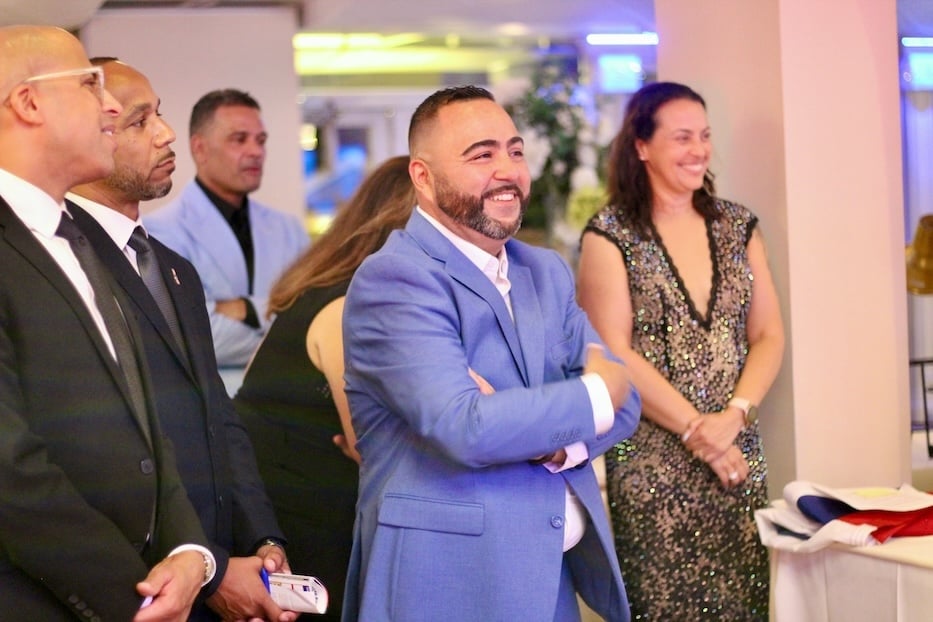
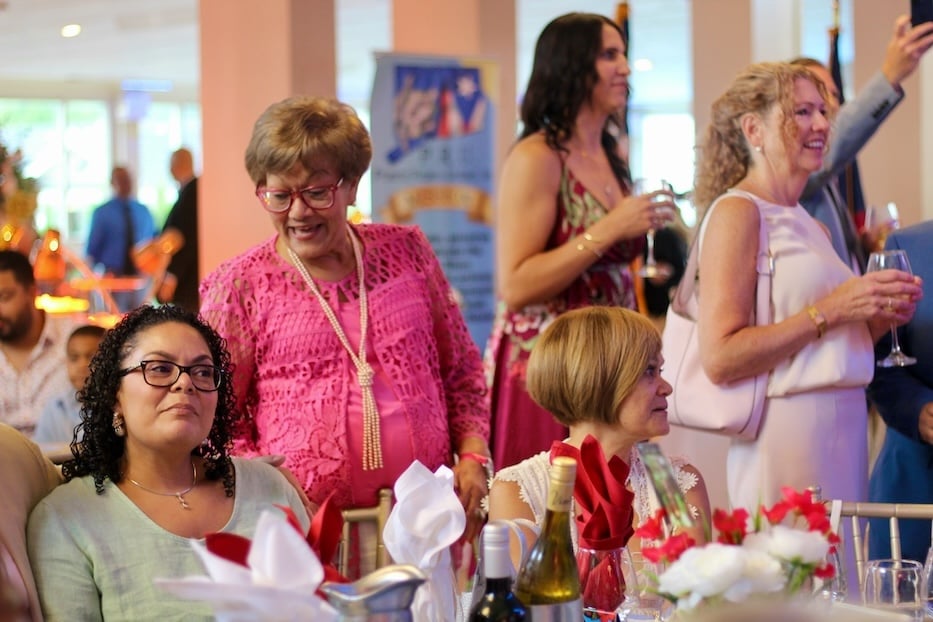
Top: Joe Rodriguez. Bottom: Maritza Rosa.
“I think tonight is a reflection of the work we’ve done in the community over the past 10 years,” said PRU President Joe Rodriguez at the beginning of the evening, as attendees exchanged hugs, searched the room for their tables and lingered to watch a live painting demonstration from Hartford-based artist Andrea Sanchez. “Right now, I’m really focused on building up our cultural footprint.”
That history, he said, dovetailed with the evening’s theme of “Honoring Our Past, Celebrating Our Present, And Building Our Legacy.” Eleven years ago, Rodriguez found himself with friends (and now fellow PRU board members) Edwin Martinez and Jhonnathan Rivera, reminiscing about the city’s once-vibrant Puerto Rican parades and Fiestas de Loíza en Connecticut en Honor al Apostol Santiago (FLECHAS), which ended around 2009.
Rivera, who grew up in Loíza for the first 10 years of his life, told the other two that he’d been talking to his family about bringing a festival back. His dad, the musician Jimmy Rivera, had noted the cultural significance of the parade, and now the younger Rivera couldn’t stop thinking about it. After what Rodriguez described as “a night of cigars” and dozens of memories between them, Puerto Ricans United was born.
In 2015, the group—run by an entirely volunteer board—held its first Fiestas Patronales, which quickly became the Puerto Rican Festival, or Festival Puertorriqueño, of New Haven. While the festival normally takes place on the New Haven Green, past years have also seen iterations at Bregamos Community Theater and in Criscuolo Park. This year, Rodriguez is expecting thousands on the Green for two days of celebration, including artists Lisette Melendez on Friday August 7 and India, who has been called la princesa de salsa, on Saturday August 8.
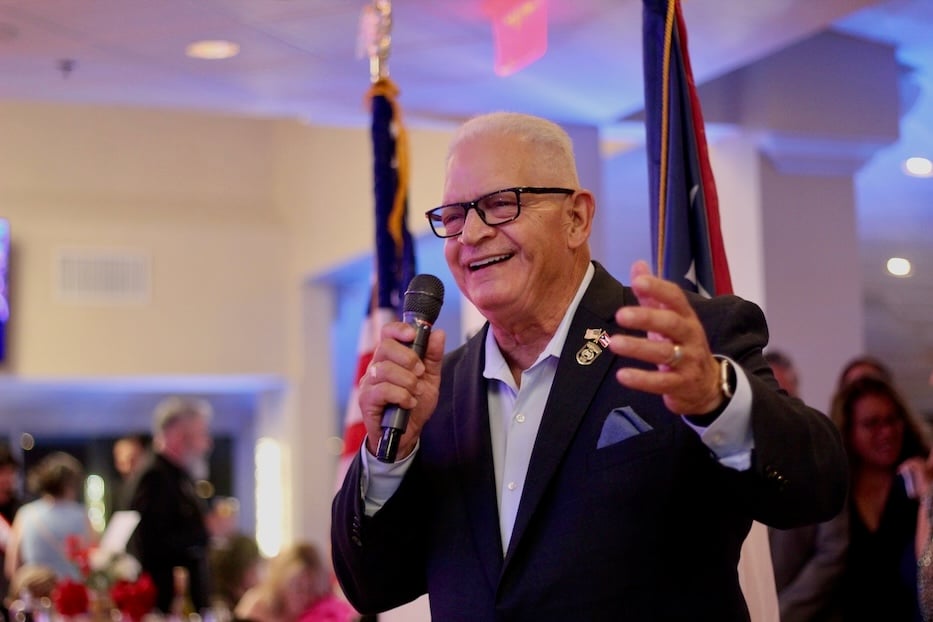
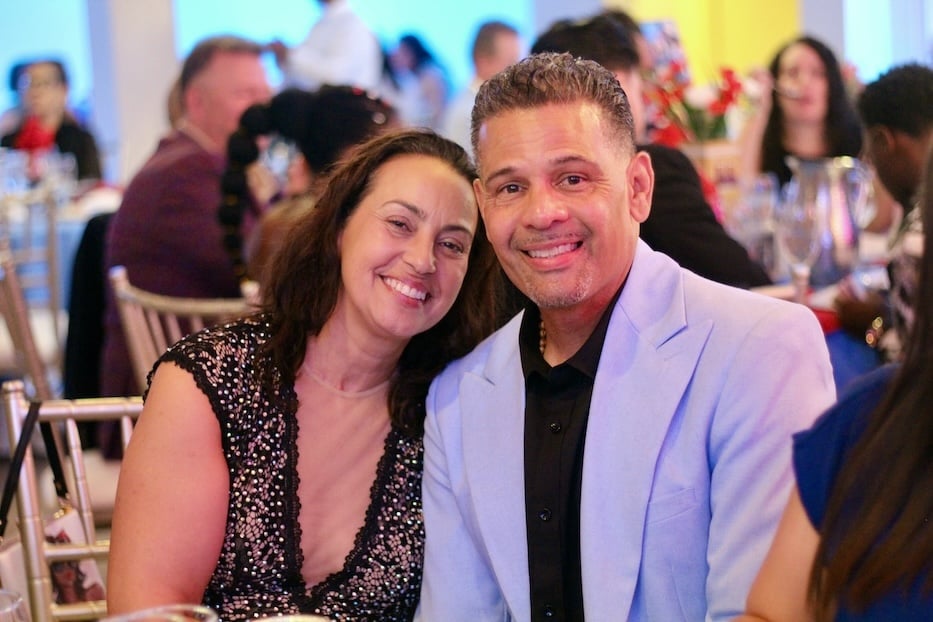
Top: PRU Member Frank Alvarado. Bottom: Board member Magaly Cajigas and Heriberto Cajigas.
In a decade, and despite a pandemic-era pivot that lasted for two years, the organization has awarded $12,500 in academic scholarships, distributed over 5,000 toys at its celebrations of Three Kings Day in New Haven and West Haven, given over $50,000 in sponsorships and in-kind donations, and welcomed over 80,000 attendees across its annual summer festival on the New Haven Green.
In addition, members have worked to champion cultural education, from the revived Miss Puerto Rico of Greater New Haven Pageant and now-annual commemoration of the abolition of slavery in Puerto Rico to classes in bomba, plena and Puerto Rican history with Movimiento Cultural Afro-Continental (MCAC), Bomba de Aquí, and Leaders for Educational Advocacy and Diversity (LEAD).
At a political moment when being Latino can feel stigmatized—even as a citizen, which Puerto Ricans automatically are—Rodriguez said he could not be prouder of the work that PRU has done, and will continue to do in its next decade and beyond.
“I think it’s a powerful statement,” he said, motioning around the room. “In the face of so much opposition, so much hate, this just shows us who we are as a community. It means a lot to stand up and say, ‘This is who we are and we’re not going away.’”
Around the room, that pride came to life as Bomba de Aquí and members of MCAC joined forces to welcome attendees. Filling one end of the dance floor, dancers Kelvia Flores and Brendaliz Cepeda stepped out in perfect rhythm with percussion and brass. As Peñaloza began to sing, musician and educator Kevin Diaz—playing all the while—burst into a kind of wide, easy smile that radiated light.
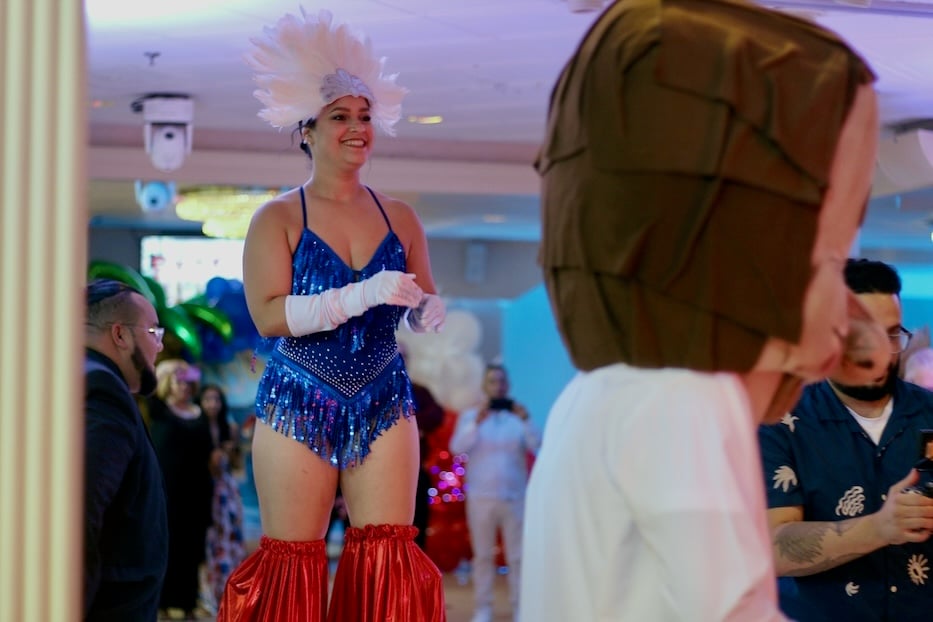
Several yards away, a stilt walker emerged in the blue of the Puerto Rican flag, the sequins shimmering like deep water. More cheers went up from the crowd.
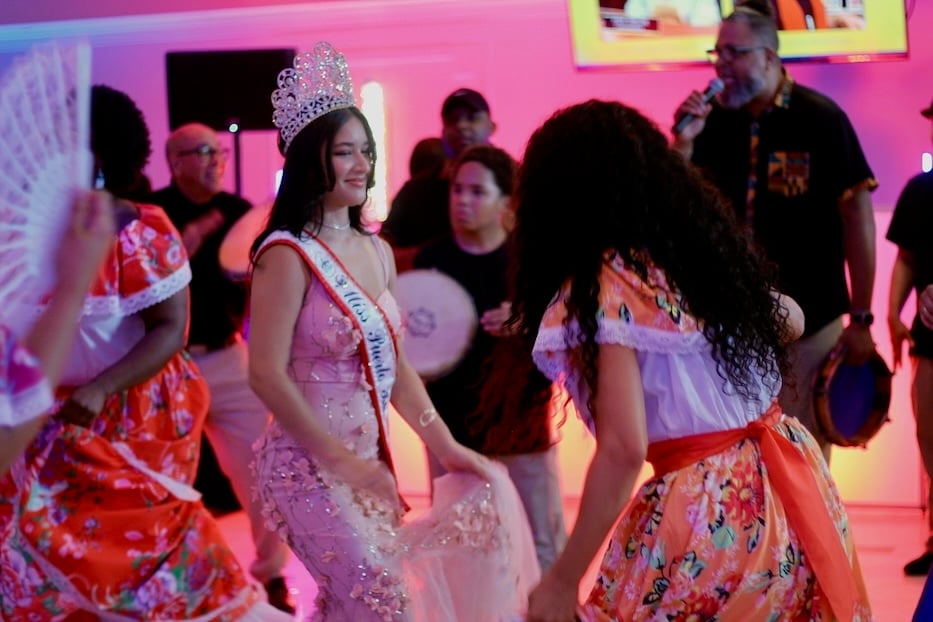

Top: Dancers invite attendees onto the floor. Bottom: Painter Andrea or Drea Sanchez.
The pull, it seemed, was gravitational: attendees began to glide toward the dance floor in suits and ball gowns, many pulling out their phones to record. Some swayed at the shoulders and hips; others tapped their feet, instantly at home in the sound of Peñaloza’s voice. Members of Bomba de Aquí answered back, a call-and-response in horns, vocals, drums and footfalls.
Dancers swirled and rocked to the sound, their wide skirts vibrant beneath the light. Cepeda, who is the granddaughter of the Puerto Rican culture-bearer Rafael Cepeda, smiled as she moved in time with the drums. At some point, Flores held out her hands, and salsera Alisa Bowens-Mercado (a previous PRU awardee who Rodriguez has called an “honorary Boricua”) made her way onto the floor, embracing Flores even as she fell in step with her.
Her hands perched on the arched back of a seat, matriarch Maritza Rosa took it all in, beaming. She later led the room in prayer, her voice reverent as she asked for both gratitude and divine protection. As glasses clinked and conversation rose around plates heavy with food, attendees held onto the holiness of that moment.
Throughout the night, attendees and awardees alike pointed to New Haven as a cultural home away from home. Camacho, who accepted the award with her 11-year-old son Michael jubilantly beaming at her side, remembered growing up in San Juan for the first 14 years of her life, and moving to New Haven when her mother Miriam Camacho was recruited to teach in New Haven in 1987.
At first, Camacho didn’t know what to make of the city, where her mother became a beloved teacher, schools administrator, and later, children’s book author who could present to kids in both English and Spanish. But when Camacho walked into Wilbur Cross High School her freshman year, something just clicked. She knew that New Haven was where she was supposed to be.
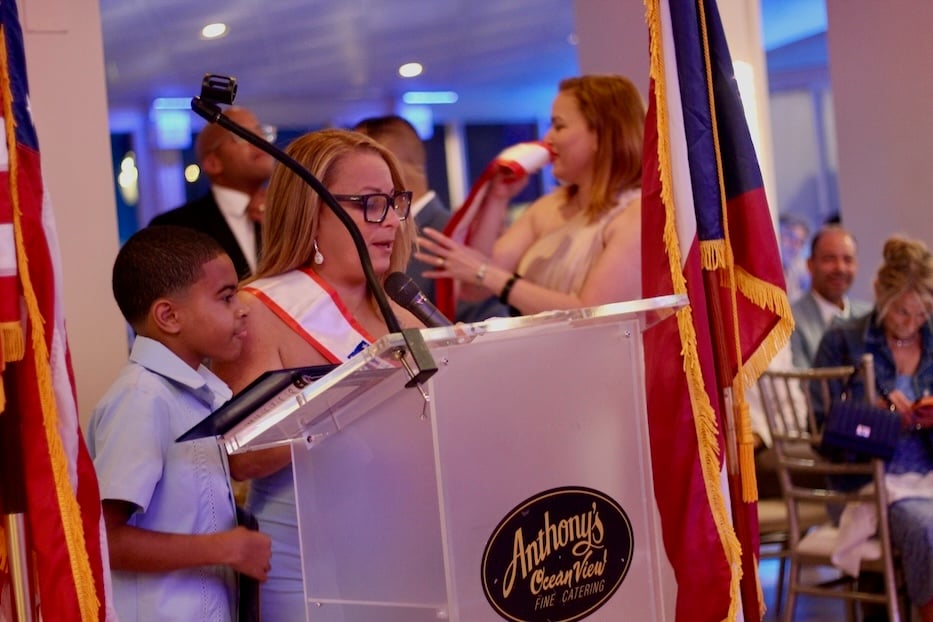
Camacho and her son, Michael.
That sense of being rooted in the Elm City never left. Camacho finished high school in Branford, but knew instinctively she wanted to return even as she pursued communications at Central Connecticut State University (CCSU). So she did, working in the New Haven Public Schools (NHPS) as a substitute teacher, and then pursuing education and administrative leadership at Southern Connecticut State University (SCSU).
In 2003, Camacho started working at the Family Academy for Multilingual Exploration (FAME, formerly Christopher Columbus Family Academy), in what became several years of work in Fair Haven (she also served as assistant principal of Fair Haven School before working as a world language coordinator in the Greenwich Public Schools.
When her work in education took her to other districts—Camacho has worked in the Meriden, Bridgeport, Hartford, and Greenwich Public Schools—“this has always been my home,” she said. It runs in the family: Camacho’s mother spent decades in the New Haven Public Schools and her sister, Mari Camacho, is a teacher at Eli Whitney Technical High School in Hamden. In the fall, her son will transfer into Nathan Hale School.
“I’m very humbled and honored,” she said in an interview at the beginning of the evening. “It’s surreal to me to be recognized by my community in this way.”
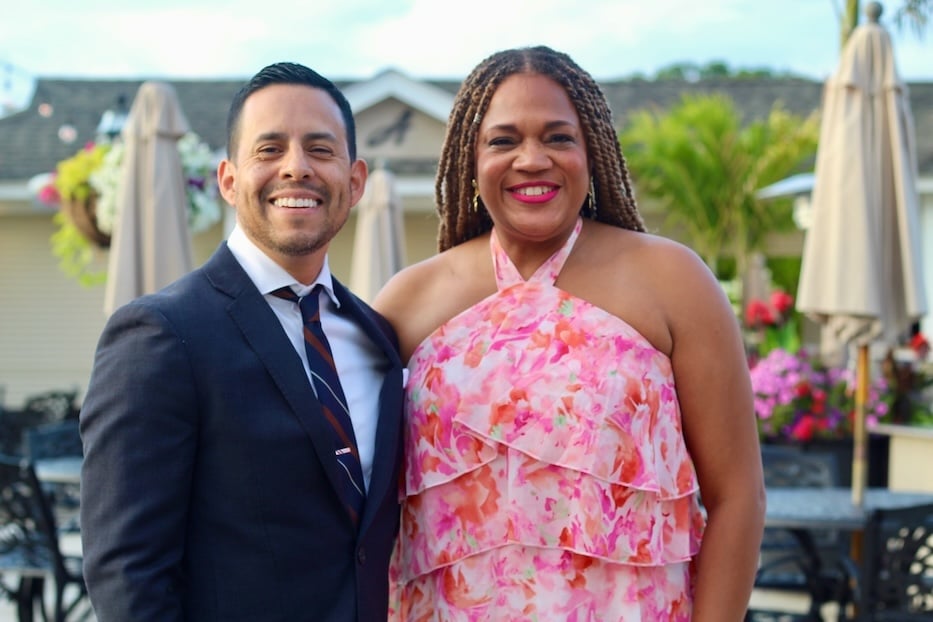
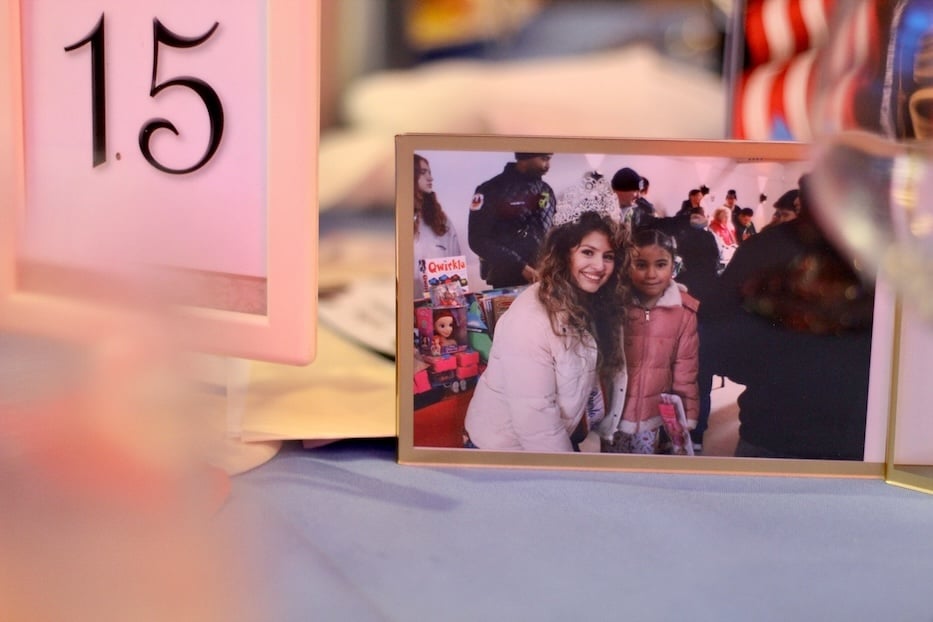
Top: Long Wharf Theatre's Jacob Padrón and Meredith Suttles. Bottom: Photos from PRU's first 10 years dotted each table. Here, former Miss Puerto Rico Johanalyz Arroyo poses with a child at a celebration of Three Kings Day in the Hill.
Awardees, in both formal remarks and interviews with the Arts Paper throughout the evening, echoed that sense of gratitude and groundedness. Jacob Padrón, outgoing artistic director and now a creative producer at Long Wharf Theatre, remembered how exciting it felt to collaborate with PRU when Long Wharf staged Matt Barbot’s El Coquí Espectacular and the Bottle of Doom at Southern Connecticut State University in 2025.
The play follows Alex, an aspiring comic book artist and Nuyorican who is struggling as much with his own identity as he is to craft and popularize the stories he wants to tell. As he forges his own path, he must contend with both real and imagined supervillains coming out of the woodwork around him—and morphs into a Puerto Rican superhero to do it.
When Padrón scheduled it as part of Long Wharf’s 2024-2025 season—which followed the theater’s 2022 move into itinerancy—he knew that he wanted to collaborate with groups in the community. PRU was a logical fit.
“They were instrumental in helping us connect with the wider community,” he remembered. As a member of a wider, diverse and polyphonic Latin American diaspora, Padrón added, he could feel an instant sense of community and kinship with members of the group, some of whom came back to see the play multiple times. “It was really meaningful to bring this story to New Haven.”
Later in the evening, artist-activist and PRU board member (and previous awardee) Juancarlos Soto remembered how miraculous it felt to see his own lived experience reflected onstage. Barbot’s depiction of Alex was “essentially my story,” he joked—Soto grew up obsessed with superheroes—and when he saw it playing out on stage, his jaw nearly hit the floor.
“We are grateful for what you do,” he said to Padrón and Managing Director Meredith Suttles, who accepted the award on behalf of the organization.
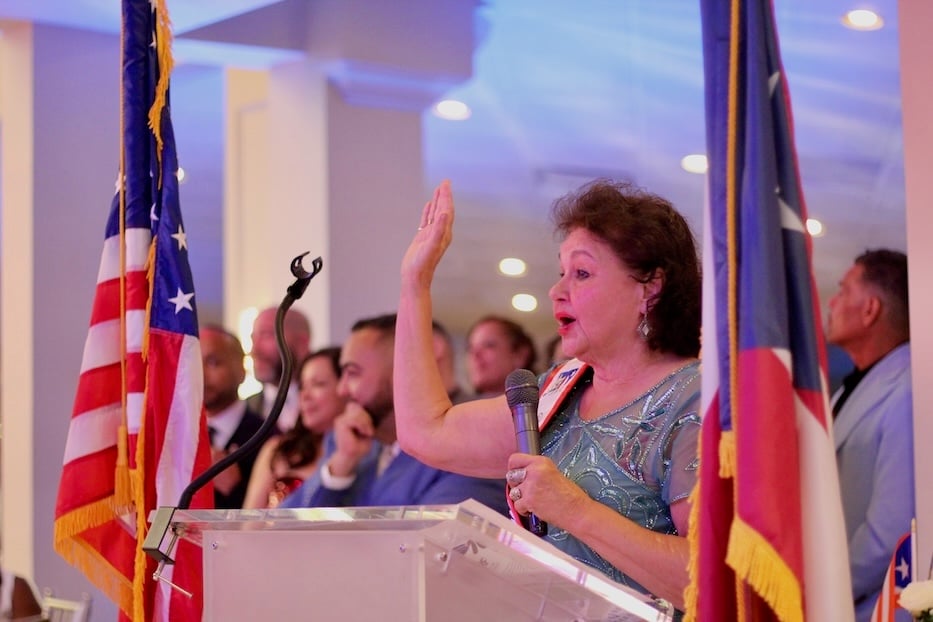
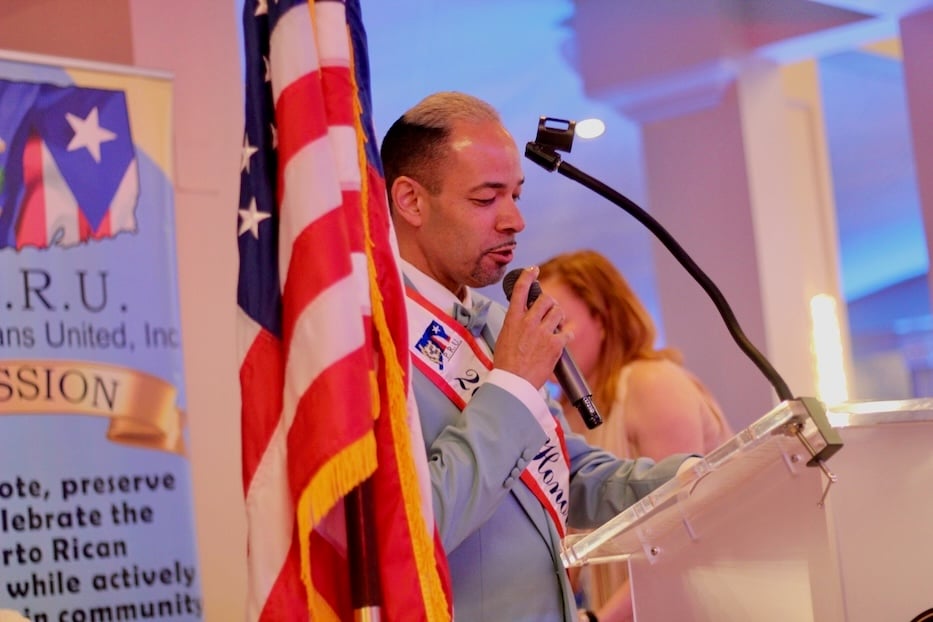
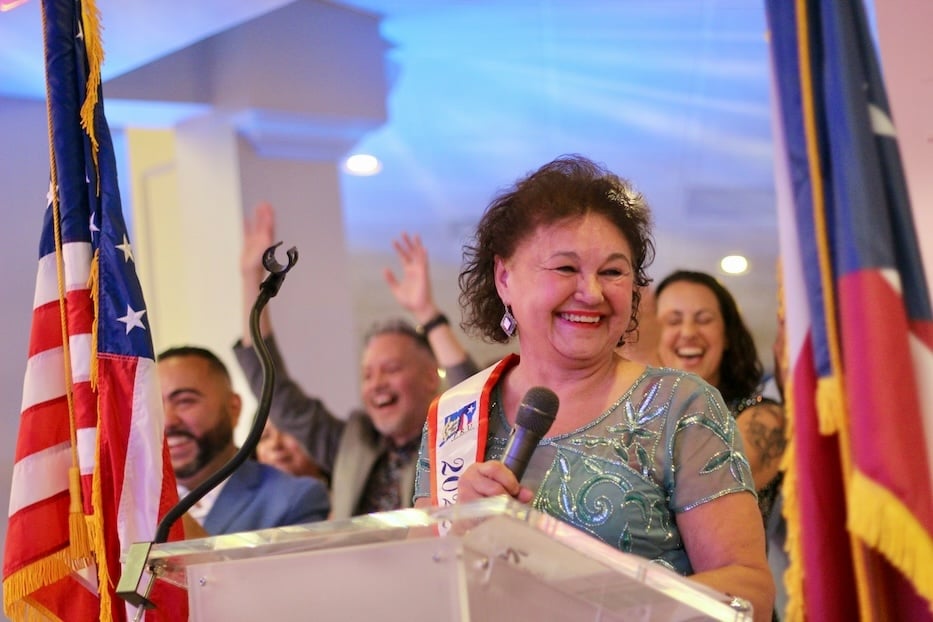
Top: Norma Rodriguez-Reyes declares, by the power vested in her, that all attendees are Puerto Rican, Bottom: Sammy Rivera accepts the President's Award. Rivera runs Budget Transmission in West Haven. West Haven Mayor Dorinda Borer, who attended, cheered him on as he accepted the award.
Those stories kept coming throughout the night. Norma Rodriguez-Reyes, publisher of La Voz Hispana de Connecticut, remembered coming to New Haven at just five years old, one of 13 siblings and two parents living in a two-bedroom apartment on Arch Street in the city’s Hill neighborhood. At the time, she remembered, she wasn’t especially proud of her Puerto Rican roots: instead, she went out of her way to hide them. She didn’t speak Spanish outside of her home. It was just part of the time period, she said.
“The last thing we wanted to do was let people know” that they were different, she remembered. Because Rodriguez-Reyes’ family was also Pentacostal—she lauded Star of Jacob Christian Church as a trailblazing presence in the neighborhood—she didn’t go to parades or celebrations of Puerto Rico in the community, “but eventually I knew” they existed.
“It wasn’t until I went to UConn that I began to be proud to be a Puerto Rican,” she continued. Then in 1972—her freshman year at the University of Connecticut—she went to her first Miss Puerto Rico of Greater New Haven pageant at Richard C. Lee High School. It changed her entire outlook on what it meant to represent the island on the mainland. She now funds a scholarship for participants in the pageant.
Rodriguez-Reyes had intended to pursue nursing at UConn, but graduated with a degree in Spanish. Then for several years, she worked at a Catholic senior center. It was only in 1993, when the Dominican journalist Abelardo King founded La Voz Hispana after migrating to the U.S., that she started to think about the role of newspapers in telling the story of Latinos in Connecticut.
“You know what? God has a funny sense of humor,” she said. King, who had started La Voz after learning that the publication Los Andes didn’t need writers, “saw the need for Spanish-language coverage” and ran with it. In 1998, Rodriguez-Reyes became his business partner.
In the decades they’ve worked together, she has bought out competition, helped found WNHH-LP 103.5 FM (also home to programming from the Online Journalism Project, which she is on the board of) and drive its Spanish-language programming, and grow La Voz’ footprint despite a shrinking market for print journalism.
“This award belongs to for Abelardo King,” she said later in the evening, using her powers as a justice of the peace and a proud Boricua to transform the room’s non-Puerto Ricans into Puerto Ricans for the night (Rodriguez-Reyes really is a justice of the peace, and has been known to perform marriages between business meetings and bilingual driver’s ed lessons in La Voz’ cramped offices on Elm Street).
Rarely did attendees or awardees sidestep the life-giving importance of the arts in their work. Accepting an award for arts and culture, Torre pointed to the arts as a space for empathy and cross-cultural bridge building, creating a space for understanding where data and research alone cannot.
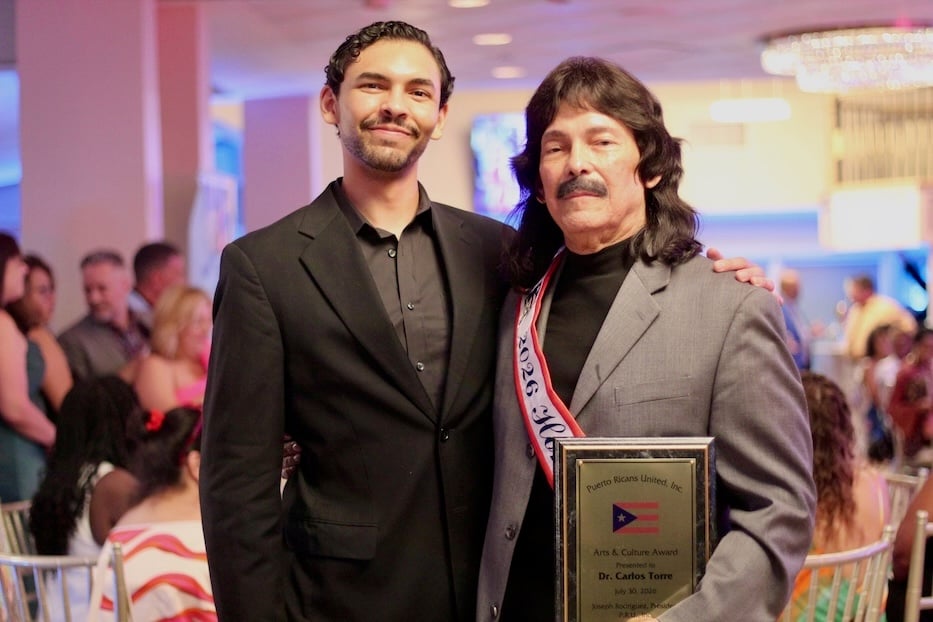
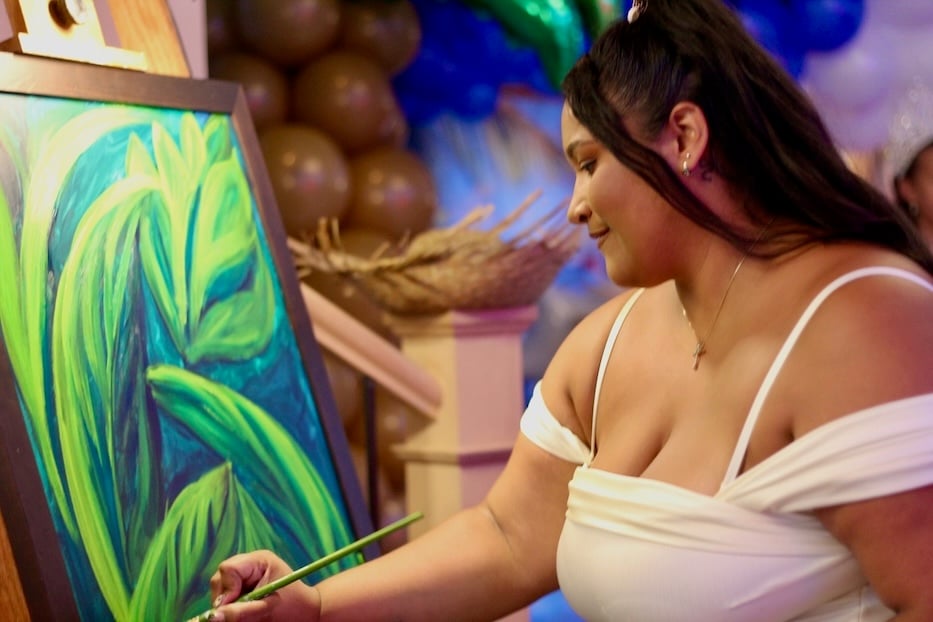
Top: Dr. Carlos Torre and his son, Kai. Bottom: Sanchez as she continues her work.
Torre, who was born and raised in the Santurce (like a borough of San Juan, although “we never say we’re from San Juan,” he said), has lived that firsthand. When he was eight years old, his mother travelled from Puerto Rico to Chicago, where he was one of just a handful of Latino kids in a majority-Polish high school. At first, Torre couldn’t wrap his mind around what had brought them there. So he started reading about Puerto Rico.
“As a kid, I was trying to figure out why my mother, who I saw as a very wise person, would pick up and take us to such a strange place,” he said. Books were the answer. “I looked at everything I could.”
Through his independent research, Torre realized he was Indigenous Taíno—and that he loved history, research, and education (he also loved songwriting, which he’s been doing since he was 17). After pursuing graduate work in education at Harvard University, Torre landed his first teaching job at Northeastern Illinois University, where he was a professor.
During his first few years, his research brought him to Yale to give a presentation that caught the eye of a few fellow academics and colleagues. Before long, Yale was courting him for a deanship—which he took for a few years, before returning to Northeastern Illinois University. By then, the administration had changed, and Torre realized it wasn’t the right fit.
When Torre went back to Yale in the late 1980s, New Haven (with a stop at the University of Puerto Rico for a year) became his home.
In the decades since moving from the Midwest, he has jumped eagerly into many educational roles: not only as a fellow at Yale and a professor at SCSU, but president of the New Haven Board of Education, a board member at CT Humanities and one of the educators who helped build out requirements for Connecticut’s African-American, Black, Puerto Rican, and Latino Studies curriculum. At SCSU, he also organizes the university’s annual Latino and Native American Film Festival (LANAFF), which is going into its 17th year.
“We’ve got a lot of good research, a ton of research, that tells the truth, but that hits the head,” he said. “It doesn’t hit the heart. The arts can hit the mind and the heart.”
As she added a vibrant, blooming flower to the lower lefthand corner of her painting, Sanchez agreed. Born and raised in Hartford to Puerto Rican parents—her dad grew up on the island, and her mom here in Connecticut—her murals are often rooted in Puerto Rican themes, from la bomba y la plena to the ecological diversity that lives within El Yunque National Forest. In the last several years, she’s painted murals in New Haven, West Haven, and Hartford, and connected with members of PRU after both dancing and live painting at their festival on the New Haven Green last year.
“I want to express identity and culture through my work,” she said as she added a coat of blue-green paint to a gem-toned leaf. “And allow the ancestors to tell their story through my art form.”
As a mom to a young son, she added, “our passion and our mission is keeping the culture alive,” and passing it on to the next generation.
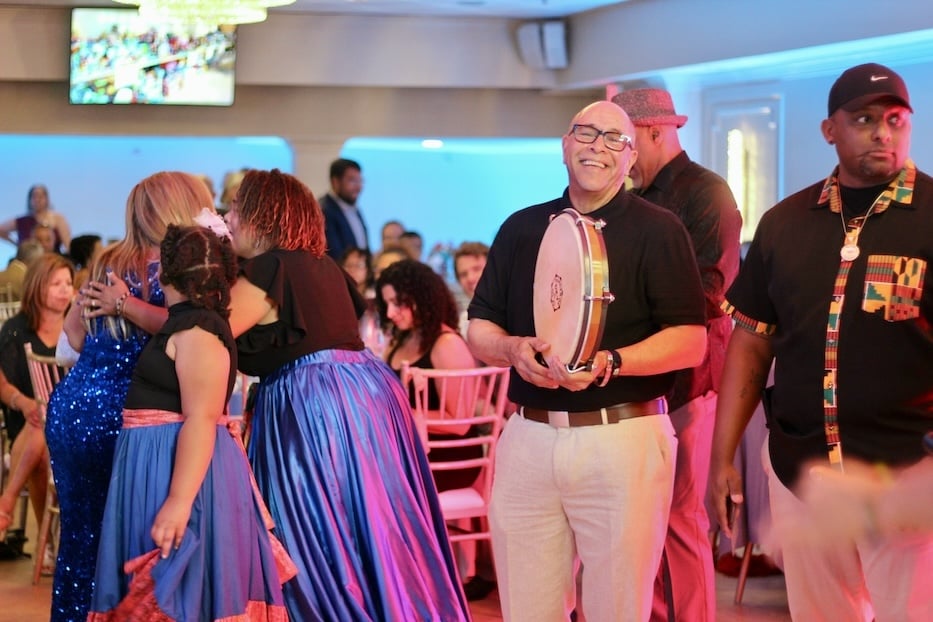
Kevin Diaz, who leads MCAC.
Puerto Ricans United Inc. continues the celebrations with a flag raising on the New Haven Green on Thursday, August 6, at 12 p.m., followed by its annual festival August 7 and 8 on the New Haven Green. For details, check out PRU's website.