

Audubon Arts | Culture & Community | Poetry & Spoken Word | Arts & Culture | Public Health
Abiba Biao Photos.
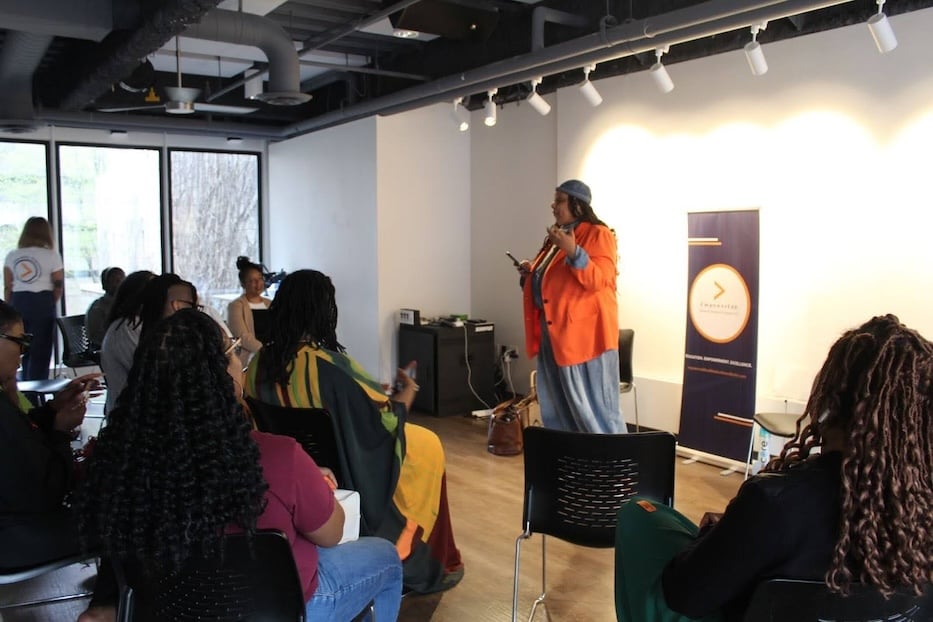
Standing in a bright orange jacket in front of a small crowd, the warm lights of the Sandbox shining above her, the poet Sun Queen was as radiant as her name suggested. As she began to speak, she unspooled an inner conversation with herself, flowing from self acceptance to internal reflection. Her warmth spread across the room with each word.
“Wellness is not just doctor visits and diagnoses,” she read. “It’s the radical act of knowing yourself. There is no one way to be whole.” The words followed an airy, melodic flow. “There is no one story of what your body should do.”
“There’s only this moment, this breath, this body that has carried you here, so be gentle,” she continued. It felt as though the whole room was listening. “Be curious. Be powerful in your softness and grounded in knowing because your body is not against you. It has been speaking to you, it has been speaking for you this whole time and today we listen. Hey girl, hey.”
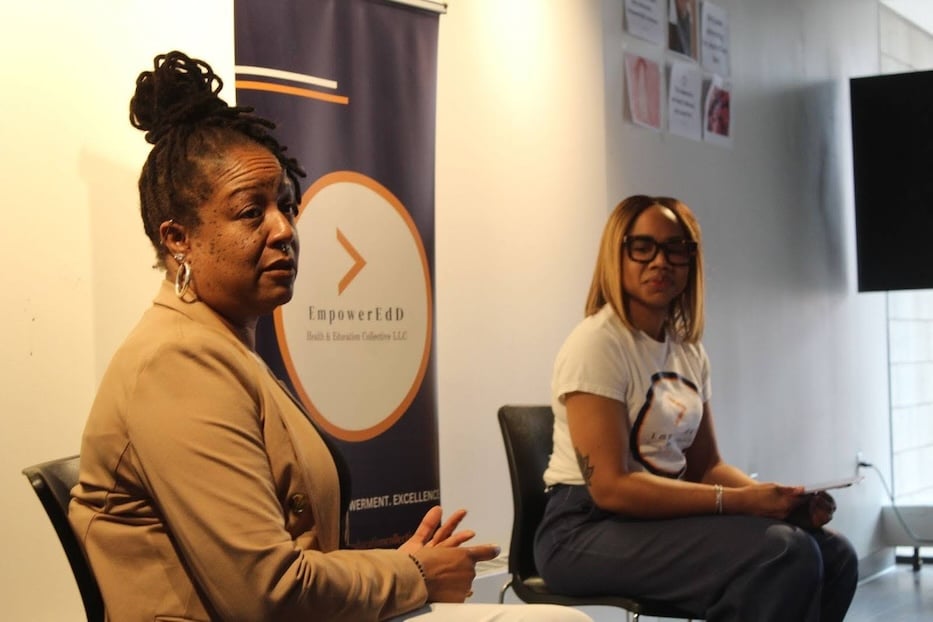
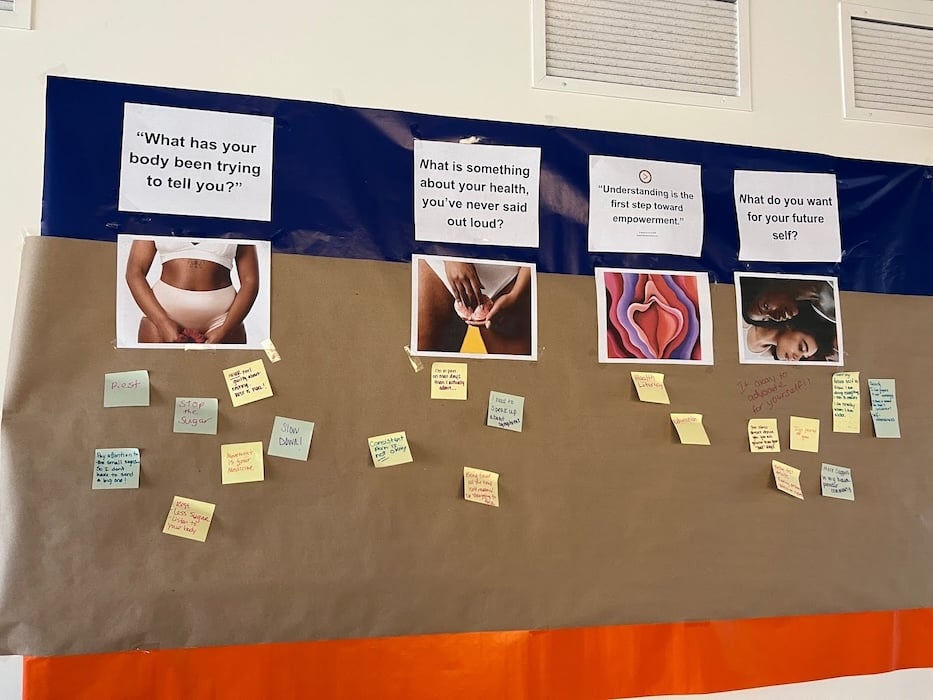
Poetry and public health collided last Saturday at 70 Audubon St., as “Spilling the Tea: Steeping in Strength” kicked off a community conversation and convening that marks the second event in its series. Organized by Tempestt Latham, the founder of EmpowerEdD Health & Education Collective and doctoral candidate in Public Health Education at the American College of Education, the event was founded to increase reproductive health literacy among Black women and girls.
This workshop discussed Polycystic Ovarian Syndrome (PCOS), fibroids, reproductive health, and family planning. Read about the first one, focused on periods and held at The Shack, here.
“Spilling the Tea” is a three-part series focusing on women's health. Collaborators for this event included Dr. Lucinda Canty, associate professor and director of the Health Equity in Nursing program at the University of Massachusetts Amherst and founder of Lucinda’s House, and performances from poets Carefree Dandelion and Sun Queen.
Thanks to its intimacy, the gathering of roughly a dozen became more of a roundtable than a buttoned-up panel, with audience participation that brought up questions for nearly every person in the room. When, for instance, attendees spoke up with their own stories of medical discrimination, Latham turned to Canty asking how she advises people to navigate the system.
Canty suggested that individuals always bring a minimum of two questions to their providers, which can improve patient caregiver dynamics and show that patients are engaging in health literacy. It can also push care providers to pay attention and not dismiss pressing health concerns.
“A lot of times, they like to diagnose you without even touching you or doing your bloodwork … So I always say ‘How are you determining what’s going on with me?’” she said. “Find some question to ask.”
She pointed to the importance of self-advocacy, from reviewing test results with physicians to using MyChart to look at personal medical records, which can provide more information that providers look over verbally through the examination, and check for any errors.
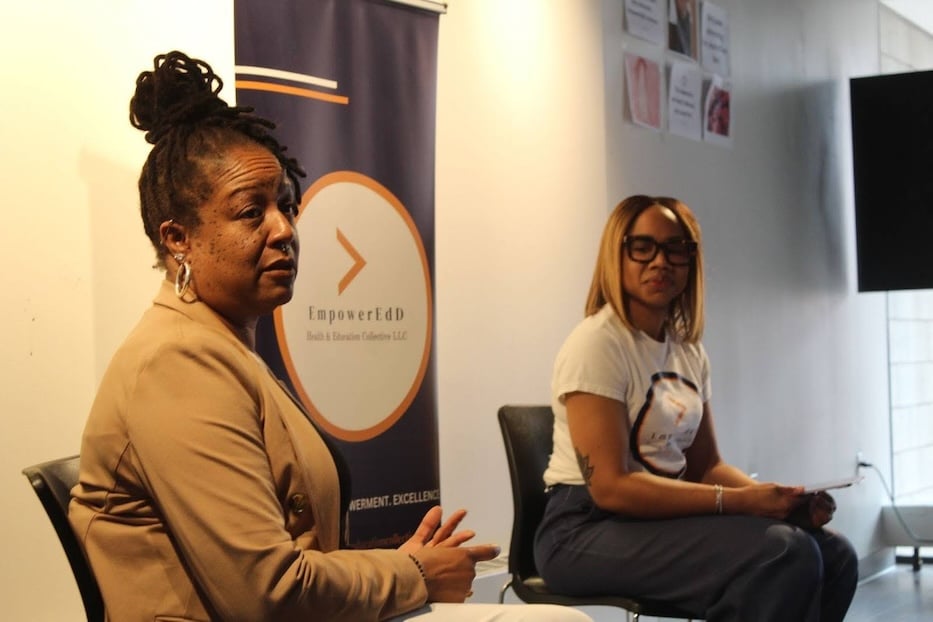
“Read what they’re putting in your chart, and always make sure you download, especially if they’re not giving you a lot of information, download your records and save it as a PDF, because I’ve seen providers go back in and change what they wrote.”
Doctors are allowed to change what they wrote through an addendum, Latham added, but that change should be stated within the document.
Canty also underlined exercising caution when using AI and Google, saying that it can direct users towards medical misinformation and worsen medical anxiety, especially due to AI’s record of amplifying racial bias in healthcare settings. It can also give a patient a false sense of assuredness, Canty added—and lead both them and a provider to believe they are more aware of their health status than they actually are.
“It’s convenient, yes,” Latham said on seeking medical knowledge using the internet and AI. “But if you don’t have the other tools that you need to navigate it and apply it based on the knowledge, the knowhow, and your circles of support — Ima be a broken record — you are actually going to do more harm than good.”
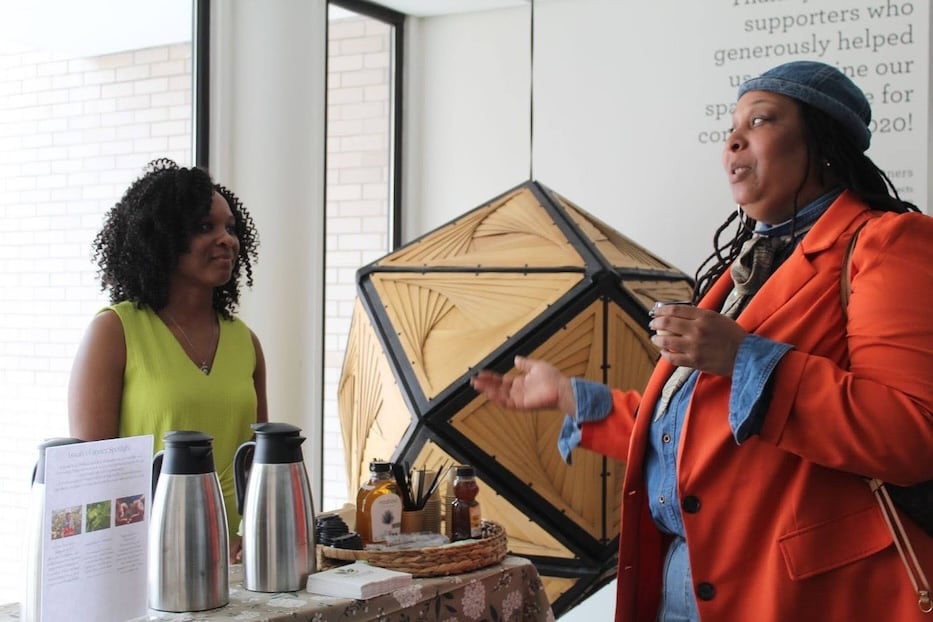
Outside in the corridor, Margo Jones stood behind an array of tea blends and herbs with her wellness tea bar Assiah Tea and Wellness. After experiencing burnout from corporate work, Jones found tea as an avenue for stress management. For her, spending time to boil water, wait for the tea to steep, and smell the tea blend, are forms of breathwork and meditation.
“And then, after drinking the tea, you find yourself in a place of calmness and stillness, only for a moment, but you have that there,” Jones said, introducing her business to the crowd. “And even though it's just a moment, it's very, very important for us to give our bodies that moment.”
The impact of her business stems beyond mindfulness. Jones added. She has also been encouraged to implement healthy habits for her reproductive health, and view health as interconnected.
“Everything that I do is really kind of related to stress on reproductive health. And I found that before, I had never thought about my reproductive health,” she said, saying that she dismissed being health conscious as something that should be prioritized at older age. “But as I got closer to perimenopause and I got closer to the transition that I'm going to eventually go into, I realize that now is the time to start and not to wait till it actually slaps me in the face.”
At the front of the table was a paper on herbs and reproductive wellness, pointing attendees to spearmint, red raspberry leaf, chasteberry, ginger root, and turmeric root as potentially beneficial in pain mitigation. Recent emerging research is exploring tea’s association on reproductive disorders. Green tea, for example, has the potential to serve as a protective factor and help alleviate symptoms in PCOS, endometriosis, and dysmenorrhea (painful menstrual periods).
“I use the word ‘support’ in tea a lot because I am not a doctor, and I am not formally an herbalist,” Jones said to attendees. “So I like to say ‘These things help support.’ So always make sure you check in with your doctors, your medical professionals, [and] advocate for yourself.”
The sisterhood that echoed throughout the workshop continued after the talk was done. Outside the Sandbox, Dr. Brionna Davis-Reyes and Charlotte Webb reflected on the event. Davis-Reyes, who earned her Ph.D. in biomedical sciences from the University of Texas Medical Branch, is currently in a class with Latham. After getting an email from Latham about her event, she signed up and brought Webb along.
The workshop topics were also personal for them: both Webb and Davis-Reyes live with PCOS. Webb also has fibroids, and expressed how complicated it can be for those with chronic conditions to find community. Webb said that she mostly got information from researching online, as well as consulting with her physician and wife.
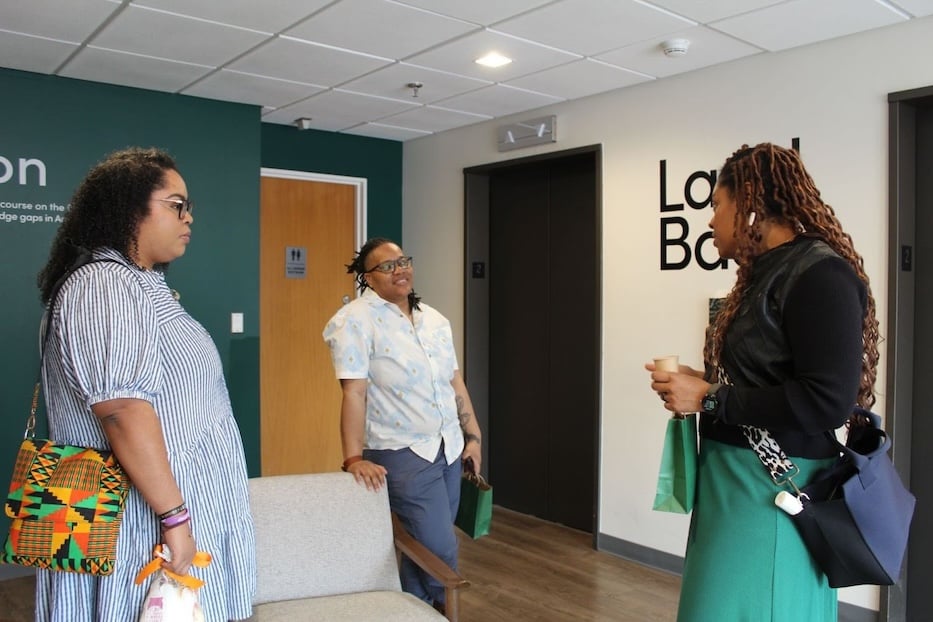
“I don't think she has a whole lot of people to talk to about these things, so I think it’s nice just seeing other Black women who are experiencing those things,” Davis-Reyes said. “And I think of all this stuff, even though we came late, like some of the stuff that they were saying, I think she really related to."
“I want to learn how to keep the fibroids from coming back, you know, so the information that I received [from this workshop] is very helpful,” Webb added. She also mentioned that she hopes to get back into fitness and create a new workout schedule after healing from fibroid surgery later this month.
As Candice Dormon rounded the corner to the exit, her ears perked up, overhearing the couple's conversation, and couldn’t help but join in. A strength coach and founder of Ekow Body Skincare and Wellness in Erector Square, Dormon works with women all the time who have gone through life transitions—including pregnancy, postpartum, menopause, and reproductive diagnoses and surgeries. She meets people where they are.
“You can't operate now based on the operating system you had before,” Dormon said. The average person doesn’t need to go to the gym everyday, she continued. They just need a routine that sticks.
It was a moment of sisterhood through resource sharing, Dormon and Webb exchanging contact information, and also sharing their new tea blends.
This sense of community is exactly what Latham hopes to foster through her workshops. Future goals for the health workshop include expanding reach, saying that she hopes to host the last “Spill the Tea” session virtually, to make it accessible for those unable to attend in person and to try online facilitating for the first time.
“There’s a need [for health education] and that’s representative of this particular topic,” she said.